How to Build Search Visibility That Drives Qualified Leads and Reduces Reliance on Paid Ads
SaaS companies face a specific and persistent problem: the moment you stop paying for traffic, it stops. PPC campaigns produce leads while the budget is running, but the moment it dries up, so does the pipeline. Meanwhile, competitors with strong organic visibility are capturing the same audience for a fraction of the ongoing cost.

A well-executed SaaS SEO strategy changes that equation. By ranking for the right keywords at the right stages of the buying journey, you attract qualified traffic that compounds over time rather than disappearing the moment you pause a campaign. This guide covers the complete process: from understanding what makes SaaS SEO distinct to the tactical steps that build lasting organic growth.
What Is SaaS SEO?
SaaS SEO is a specialized approach to search engine optimization designed for software-as-a-service businesses. The core distinction from traditional SEO is its alignment with the SaaS sales funnel, where potential customers move through awareness, consideration, and decision stages before converting.
Unlike e-commerce or content sites, SaaS companies need to optimize not just for traffic but for conversion-oriented touchpoints: pricing pages, demo request forms, free trial sign-ups, and feature comparison pages. The goal is not just visibility; it is attracting users who are genuinely likely to become paying customers.
Why SaaS SEO Is Critical for Growth
It accelerates growth and expands reach. Ranking for relevant keywords puts your product in front of users who are actively searching for solutions you provide. High-quality content that ranks consistently expands your reach globally without requiring ongoing ad spend.
It lowers customer acquisition costs. Unlike PPC, where traffic stops the moment you stop paying, organic search continues to drive leads as long as your content remains relevant and well-ranked. The upfront investment in SaaS SEO produces compounding returns over time, making it one of the most cost-efficient acquisition channels available to SaaS businesses.
It amplifies other marketing channels. SEO does not operate in isolation. Strong organic content reinforces social media campaigns, supports email marketing, and provides credibility that paid ads cannot replicate. A well-ranked piece of content that establishes authority makes every other channel more effective.
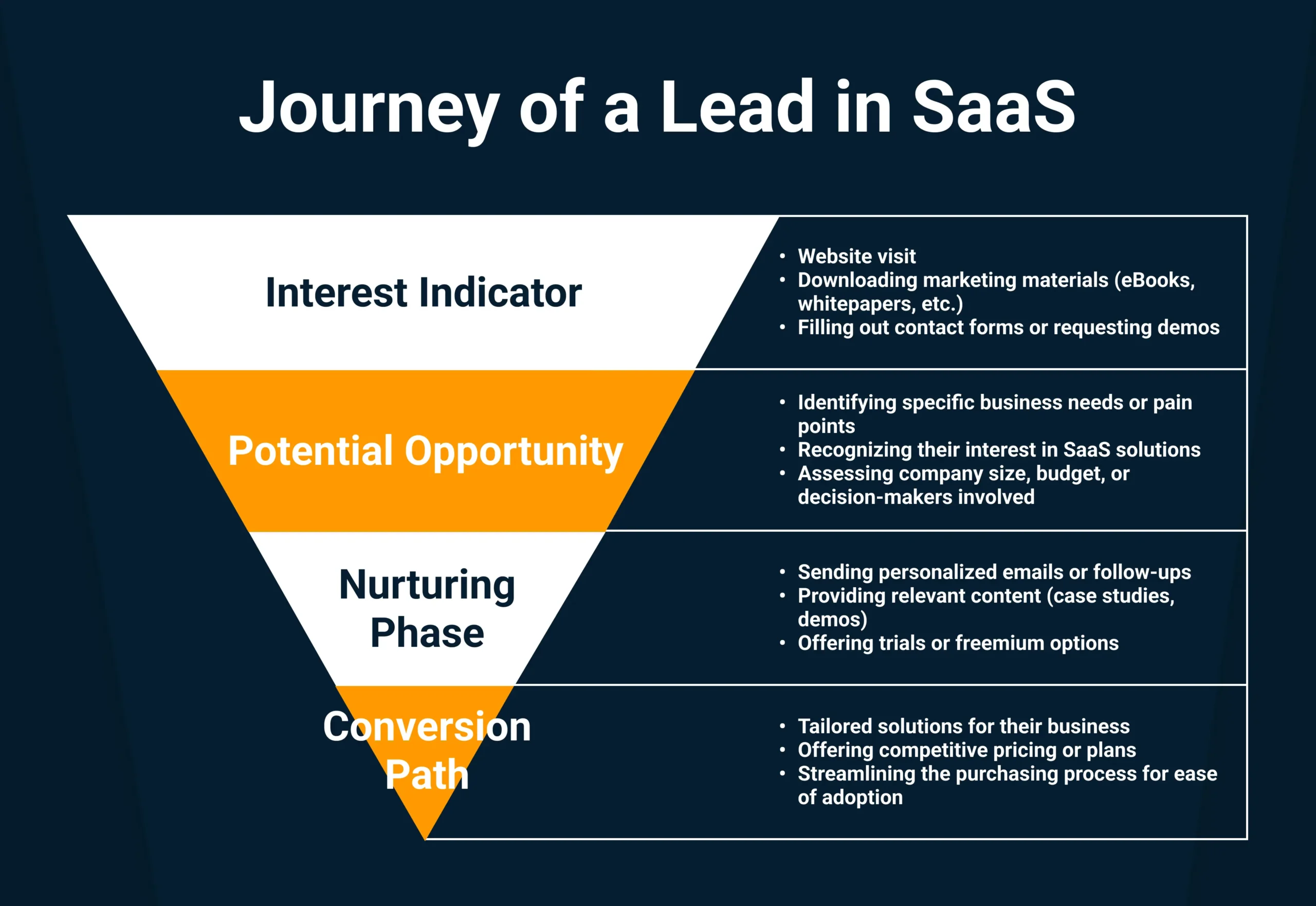
How SaaS SEO Maps to the Marketing Funnel
Each stage requires a different content approach and keyword strategy. SaaS companies that treat all content the same regardless of funnel stage leave significant organic traffic on the table.
Building Your SaaS SEO Strategy: Step by Step
Step 1: Identify Your Organic Competitors
Organic competitors are not the same as business competitors. Your direct business rivals offer similar products, but your organic competitors are any sites competing for the same keywords in search results. These include industry blogs, review aggregators, comparison sites, and relevant online platforms that target the same audience.
To identify them, use tools like Ahrefs, SEMrush, or Moz. In Ahrefs, enter a dominant site in your niche into Site Explorer and navigate to the Organic Competitors report. This reveals every site ranking for the same keywords, giving you a clear map of the competitive landscape. Run the report across several competitor domains, not just one, to ensure you are capturing the full picture.
If your site already has organic traffic, run the same report on your own URL to understand how you currently compare to the field.
Step 2: Identify What Is Working for Your Competitors
Once you know who your organic competitors are, the next step is understanding which parts of their sites are driving the most traffic and why. Key areas to examine include:
Feature pages. High traffic on feature-specific pages signals strong customer interest in particular capabilities. Understanding which features competitors are ranking for reveals gaps you can target.
Pricing pages. Significant traffic on pricing pages indicates users in the decision stage of the funnel. Competitors ranking well here have usually optimized for high-intent transactional keywords.
Resource centers. Heavily trafficked blogs, guides, and webinars demonstrate that competitors are earning trust through educational content. If users consistently return to a competitor’s resource hub, that content is doing something right.
Case studies and testimonials. Traffic to social proof pages indicates that buyers are actively researching credibility before converting. These pages often rank well for industry-specific and branded keywords.
In Ahrefs, use Site Explorer combined with the Site Structure Report to see how competitor content is organized and which pages are generating the most organic value.
Step 3: Analyze Content That Earns the Most Backlinks
Content that attracts backlinks at scale tends to be comprehensive, data-rich, and genuinely useful to others writing about the same topic. In SaaS, the formats that consistently earn links include detailed industry reports, original research, comprehensive software comparison guides, and in-depth how-to content that becomes a go-to reference.
HubSpot’s annual marketing and sales reports and Salesforce’s CRM case studies are strong examples: both earn substantial backlinks because they provide data and insights that other publishers cite as primary sources. Replicating this approach with your own data or research gives you a sustainable link-earning asset rather than a piece of content that requires active promotion indefinitely.
Step 4: Find Rankable Keywords with Real Traffic Potential
Keyword research in SaaS requires segmenting by intent and content type before evaluating metrics. The main categories to work across are:
Blog and informational content: queries like “SaaS marketing automation tips” or “how to optimize SaaS onboarding” that attract users in the awareness stage.
Knowledge base and technical content: queries like “how to integrate with CRM” or “API documentation for SaaS” that target users seeking specific solutions.
Product and landing pages: keywords like “customer success software” or “enterprise SaaS solutions” where the user is evaluating options.
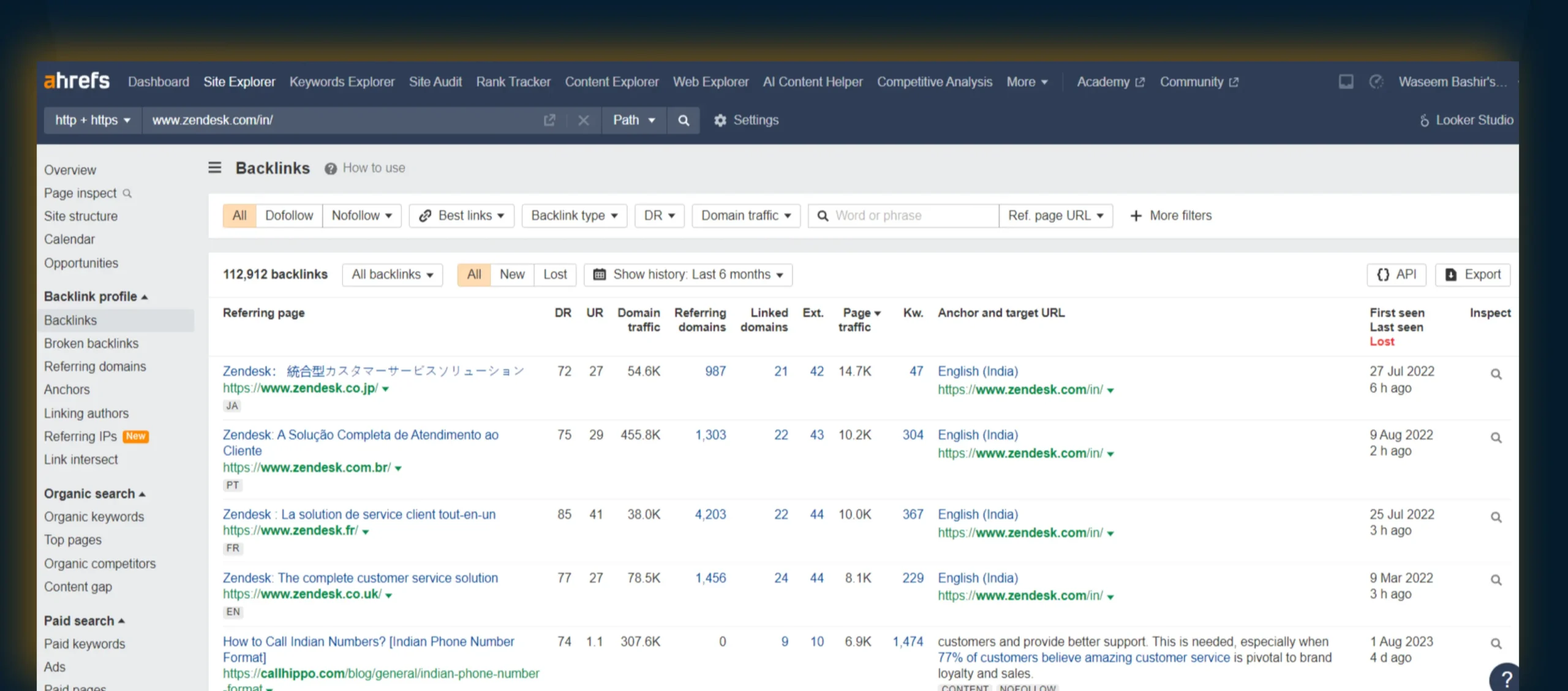
Comparison and review pages: queries like “best customer support platforms” or “Zendesk vs Freshdesk” where purchase intent is high.
When evaluating keywords, balance three metrics: search volume (popularity), traffic potential (the actual traffic the top-ranking page receives, which often exceeds volume), and keyword difficulty (how competitive the ranking landscape is). Lower difficulty scores often represent better opportunities than high-volume keywords with established, authoritative pages dominating the top results.
Step 5: Create Content That Naturally Highlights Your Product
The strongest SaaS content integrates product references into genuinely educational material rather than leading with promotional messaging. The goal is to solve a real problem first and let the product appear as a natural part of the solution.
Ahrefs does this well with its SEO guides: the content addresses common SEO challenges in depth, and the tool appears as a practical aid throughout rather than as the central subject. Asana’s content on agile methodology follows the same pattern, educating readers on a methodology while demonstrating how the platform supports implementation. This approach earns trust and drives organic traffic simultaneously.
Before committing to a content piece, assess whether it has genuine business potential. The best SaaS content addresses real pain points in ways that allow your product to appear as a helpful, relevant solution rather than as an afterthought or a sales pitch.
Step 6: Use Free Tools to Drive Traffic and Backlinks
Free tools are among the most effective link magnets available to SaaS companies. When a tool delivers genuine utility, other sites reference and link to it without being asked. Moz’s free SEO tools, including MozBar and Link Explorer, have built substantial backlink profiles simply through being widely used and cited by the SEO community.
Before building a free tool, validate demand first. Use Ahrefs’ Keywords Explorer or similar tools to confirm that users are actively searching for what you plan to build. Prioritize tools that offer something genuinely different rather than replicating what already exists.
A freemium model compounds this effect further. Allowing users to access core features for free lowers the barrier to engagement, generates organic word-of-mouth, and creates natural opportunities to demonstrate premium value through in-app messaging and targeted follow-ups.
Step 7: Build Authority with Data-Driven Research
Original data is one of the most powerful assets a SaaS company can produce for SEO. When you publish research that no one else has, your site becomes the primary source for anyone writing about that topic, and citations and backlinks follow naturally.
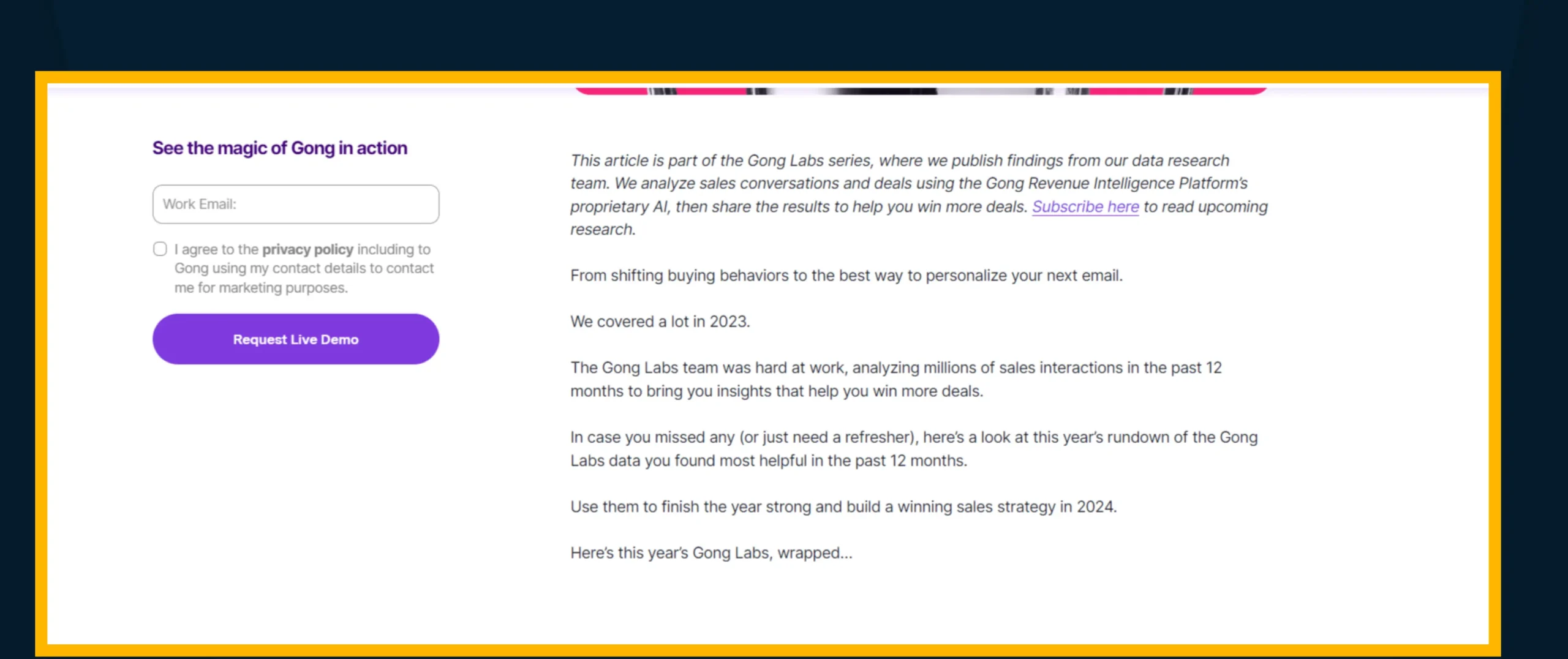
Mixpanel’s user engagement trend reports and Gong.io’s sales conversation analyses are strong examples: both earn significant backlinks because they provide data that other publications cannot replicate. Work with your data or analytics team to identify research questions that sit at the intersection of your expertise and your audience’s interests, then publish findings in formats that are easy to cite and share.
If conducting original research is not immediately feasible, curating and synthesizing data from reputable third-party sources into a single comprehensive resource can achieve a similar effect at lower cost.
Step 8: Capitalize on Branded Keywords
Branded keywords, including your company name, competitor names, product variants, and event or campaign names, attract users who are close to a purchase decision. Optimizing for these terms ensures you capture high-intent traffic that is already familiar with your brand or actively comparing you to alternatives.
Comparison and feature request keywords deserve particular attention. A user searching “Slack vs Microsoft Teams” or “Salesforce free vs paid features” is signaling that they are in the late stages of a buying decision. Creating detailed, honest comparison content that directly addresses these queries captures users at exactly the moment they are most likely to convert.
Step 9: Address Technical SEO
Even the strongest content and backlink strategy will underperform if technical SEO issues prevent search engines from properly crawling and indexing your site. Common problems that affect SaaS sites include broken links, slow page speed, duplicate content, improper meta tags, and incorrect redirect chains.
A regular technical SEO audit should cover:
- Fixing 404 errors and implementing 301 redirects where appropriate
- Eliminating duplicate or thin pages that dilute crawl budget
- Ensuring all internal links point to live, correct URLs
- Verifying that the site loads quickly and performs well on mobile
- Checking that 3XX redirects are valid and routing correctly
Technical SEO is not a one-time task. As your site grows and content is added, updated, or removed, new issues emerge. Quarterly audits at minimum keep the site in a state where rankings reflect the actual quality of your content rather than being held back by infrastructure problems.
Frequently Asked Questions
How is SaaS SEO fundamentally different from traditional SEO? The core difference is funnel alignment. Traditional SEO often focuses on driving traffic volume, but SaaS SEO is built around matching content and keywords to specific stages of the buying journey: awareness, consideration, and decision. SaaS companies also need to optimize for conversion-specific pages like pricing, demo requests, and free trial sign-ups that simply do not exist in most traditional SEO contexts.
What is a realistic ROI timeline for SaaS SEO investment? Industry data puts the average ROI for B2B SaaS SEO at around 702%, with a typical break-even point of seven months. That said, meaningful ranking movement generally takes three to six months, and the compounding returns that make SEO so cost-effective for SaaS businesses develop over twelve to twenty-four months of consistent investment.
How should SaaS companies prioritize technical SEO versus content creation? Both are necessary, but technical SEO should be addressed first. Content and backlinks cannot overcome fundamental technical barriers to crawling and indexing. Once the technical foundation is solid, content and link building produce results proportionate to the quality of the work rather than being suppressed by infrastructure issues.
What keyword difficulty threshold should SaaS companies target? There is no universal answer, but early-stage SaaS companies with low domain authority should focus on keywords with difficulty scores below 30 to 40. Established SaaS brands with strong DR can realistically compete for higher difficulty terms. A mix of low-difficulty informational keywords and higher-difficulty commercial terms produces the most balanced results: the informational content builds authority while the commercial content captures high-intent traffic.
How important is topical authority for SaaS SEO specifically? Extremely important. Google increasingly rewards sites that demonstrate comprehensive expertise across a defined subject area rather than publishing scattered content across multiple topics. For SaaS companies, this means developing content clusters around core product use cases, building out supporting content that addresses related questions in depth, and linking systematically between related pieces to signal topical depth to search engines.
Should SaaS companies create separate landing pages for each feature? Yes, in most cases. Individual feature pages allow you to target specific, high-intent keywords that users searching for particular functionality will use. They also allow for more precise optimization of conversion elements like CTAs, demo requests, and trial sign-ups. Consolidating all features onto a single page typically means ranking for none of the specific keywords that would attract the most qualified traffic.
How should SaaS companies approach link building differently from other industries?
SaaS link building benefits most from strategies that leverage existing assets: original research, free tools, and data-driven content. These formats earn links naturally because other publishers cite them as credible sources. Digital PR and expert commentary through platforms like Connectively also work particularly well in SaaS because the industry has a strong ecosystem of trade publications, newsletters, and thought leadership platforms that actively seek expert input.
What metrics should SaaS companies track to measure SEO performance? Beyond organic traffic and keyword rankings, SaaS companies should track: organic traffic by funnel stage (to assess whether content is reaching the right audience), demo and trial sign-up rates from organic traffic (to connect SEO directly to revenue), referring domain growth over time (as a proxy for backlink campaign effectiveness), and branded keyword search volume growth (which indicates whether SEO is contributing to overall brand awareness). Google Analytics and Google Search Console combined with Ahrefs or SEMrush provide the data needed to track all of these consistently.
Final Thoughts
SaaS SEO is one of the most leverage-efficient growth strategies available to software companies. Unlike paid acquisition, it produces compounding returns: the content and authority you build today continues to drive qualified traffic for years. But it requires a systematic approach that aligns keyword strategy with the buying journey, produces content with genuine depth, builds authority through ethical link building, and maintains a technically sound foundation.
At LinkPanda, we specialize in SaaS link building and B2B SEO strategies designed to drive qualified traffic and build lasting authority. From advanced link building and digital PR to targeted outreach campaigns, we help SaaS companies turn search visibility into measurable revenue growth. Get in touch to find out how we can help you build an organic presence that scales.
About The Author

Christopher Lier
Christopher is an experienced Search Engine Optimization (SEO) marketer and digital marketing specialist. He is Co-Founder of LinkPanda and leads the marketing and sales teams. Mostly known as a Software-as-a-Service co-founder of LeadGen App, he has helped grow the website to become a renowned player in the lead generation space with steadily growing user base and readership.