Resources
The SaaS SEO Checklist
Read our proven SaaS SEO checklist: a step by step guide to grow your organic search traffic and generate more customers and subscribers.
8 components : 45+ checkpoints : free PDF download





This checklist has been developed by
Christopher Lier
Founder and CEO of LinkPanda, SaaS Co-Founder, Google Analytics Individual Qualification (GAIQ), GA Advanced, and Ahrefs-Certified


The 8 SEO Components
Everything That Powers SaaS SEO Results
Before we dive into the checklist, here is a quick overview of the eight components that together drive compounding SEO growth for any SaaS business.
Strategy
Planning your SEO strategy is absolutely crucial because SEO requires a 6 to 12 month horizon. Spend enough time on goal setting, strategy and tool set-up.
Tracking
Define your key metrics that matters most in relation to your goals. This could be total website traffic, organic traffic, domain rating or leads generated.
Content Strategy
Content marketing is the backbone of SEO and arguably responsible 50% or more of your SEO results. Plan your content production based on search demand and audience data.
On-Page SEO
On-Page optimization refers to the optimization of content considering various factors that Google and other search engines pay attention to. This includes images and keyword optimization and internal linking.
Technical SEO
Technical SEO is also an important aspects of search engine optimization strategy. Factors involve page speed, accessibility, mobile responsiveness, code optimization and crawlability for search engines.
Content Marketing
Content marketing is closely linked to your content strategy and is the execution, involving writing and optimization of existing content. Focus on both blog posts and product pages.
Link Building
Link building is the process of growing domain authority with the acquisition of incoming link mentions. Links are the fuel for SEO without which your site simply cannot make big moves and gain traction.
Check
SEO needs a continuous feedback loop. This process involves reviewing your results such as keyword rankings, traffic and backlink profile and making continuous adjustments.
You can also download our SaaS SEO Checklist here
Jump to any section
Table of Contents
1. Strategy
Every SEO program starts with an honest baseline. Before investing in strategy or execution, get a clear view of your current performance and the tactics already in play.
Build your baseline with four core metrics:
- Domain Rating (via Ahrefs) : the overall strength of your backlink profile and your site’s potential to rank in search engines.
- Total Monthly Traffic : the volume of visitors your site is already attracting across all channels.
- New User Monthly Traffic (via Google Analytics) : a clearer signal of how well you’re drawing in fresh, potential customers.
- Keywords Ranking on Page 1 (via Google Search Console) : the terms already driving visibility, and the best starting point for expansion.
The rule is simple: you can’t manage what you can’t measure. Start by understanding your situation inside out, and every decision that follows will be sharper.
With your baseline in hand, the next step is deciding what success looks like. Macro goals are your 1 to 4 most important targets over a 6 to 12 month horizon : the north-star metrics that steer every tactical decision downstream.
Set macro targets across four dimensions:
- Traffic : targets for both Total Traffic and New User Traffic, so you’re retaining your existing audience AND pulling in fresh demand.
- Keywords on Page 1 : the commercial keywords that matter most to your business, with explicit targets for Page 1 rankings.
- Domain Rating : an authority trajectory you’re willing to commit to, built through ongoing, high-quality link acquisition.
- Conversions : leads or sales tied to organic traffic. This is how you prove SEO is driving pipeline, not just pageviews.
Write the numbers down, revisit them quarterly, and let them filter everything else : content priorities, keyword selection, link-building intensity. If a tactic can’t be traced to one of these four, it’s a distraction.
Micro goals turn strategy into motion. Where macro goals point 6 to 12 months out, micro goals break them into manageable monthly targets that tell you, right now, whether your SEO program is on track.
Focus on two fast-signal metrics:
- New User Traffic : aim for 5 to 10% month-over-month growth. Steady enough to be believable, ambitious enough to matter. Track it in a simple spreadsheet so trends and flat spots jump out before they become problems.
- Conversions : set monthly targets in whatever form matters to your business : leads captured, trials started, or sales closed. Watch the rate, not just the number, so you catch the case where traffic grows but visitor quality drops.
Log these side-by-side every month. The spreadsheet is your feedback loop : it tells you which tactic to double down on and which to pull, before rankings can.
Macro goals define the destination. Deliverable goals define the work. These are output targets that force action: how much content you ship and how many links you earn each month, regardless of how rankings happen to look that week.
Set two deliverable targets:
- Blog Posts Published Per Month : 1 to 4 high-quality posts. Enough to keep the site active, build topical coverage, and signal relevance to search engines, without the quality drop that comes from over-producing.
- Backlinks Built Per Month : 3 to 4 high-authority placements, ideally through guest posting or editorial outreach on sites in your niche. Quality over quantity, but consistency is non-negotiable.
Deliverable goals are the only ones you can fully control. Rankings lag. Output doesn’t. Hit these numbers month after month and the results show up 6 to 12 months later.
Goals without owners don’t get hit. Once macro, micro and deliverable targets are set, assign a single name against each one. SEO stalls when responsibility is shared; it compounds when one person is accountable for each motion.
At minimum, assign three roles:
- Content Creation : one owner for the 1 to 4 monthly blog posts. They handle topic research, keyword selection, content development, and the publishing schedule.
- Link-Building : one owner for the 3 to 4 monthly backlinks. They identify guest-post opportunities, run outreach, vet sites, and track what actually goes live.
- KPI Tracking : one owner for the dashboard. Weekly review of traffic, keyword movements, conversions, and DR, with a short written update shared with the team.
Small teams can combine roles, but never to the point where a goal has no clear owner. Every target should have one name next to it.
2. Tracking
Google Search Console is the closest thing SEO has to source-of-truth data. It pulls directly from Google, showing exactly how your site is performing in search : clicks, impressions, indexing status, and per-query performance.
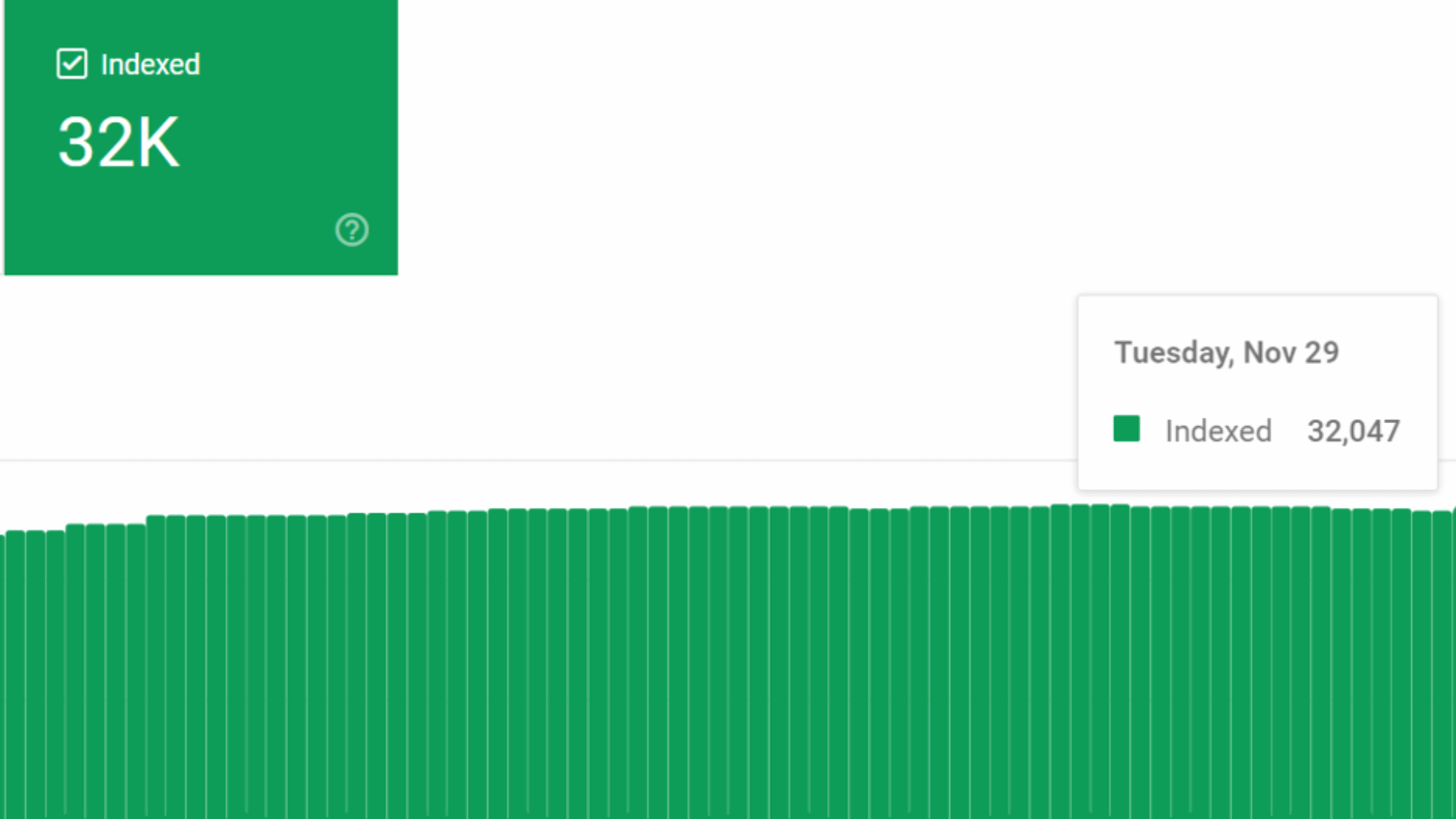
What you get out of GSC:
- Performance trends : clicks, impressions, CTR, and average position at domain, page, and keyword level.
- Indexing status : which pages Google has actually indexed, and which ones have been rejected and why.
- Query-level visibility : the exact keywords driving clicks, including opportunities to optimize for terms already just outside Page 1.
Set GSC up for your domain from day one. If it’s already running, verify it’s recording clean data (no double-counts, no stale properties). If you’re not looking at GSC weekly, you’re guessing.
Google Analytics tells you what visitors do once they land. A solid GA4 setup tracks real user behaviour, filters out noise, and ties traffic to conversions you actually care about.
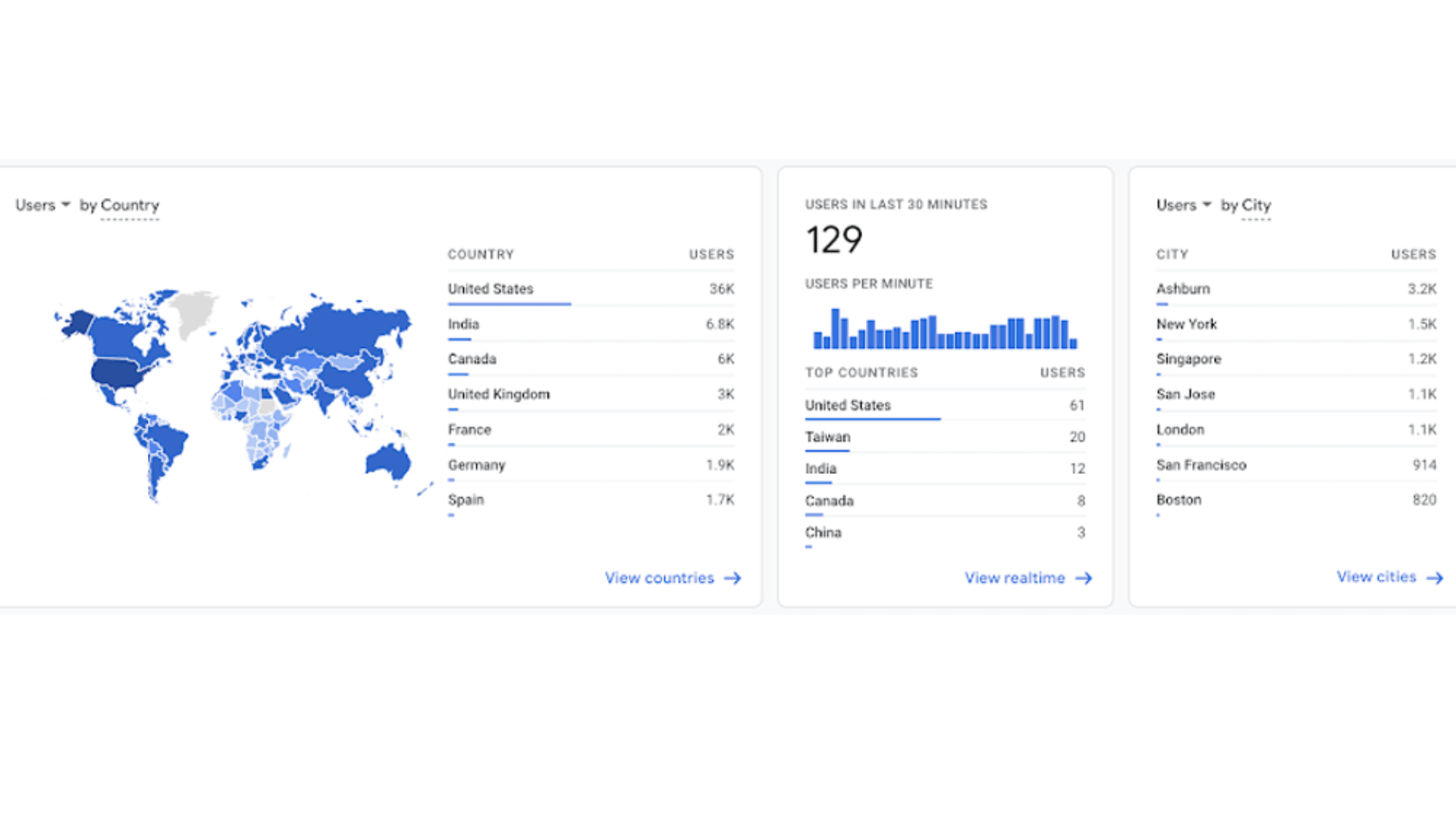
Get the foundations right:
- Views and scope : define which URLs and sub-domains are in or out. Views control the dataset, so bad scoping produces bad decisions.
- Conversion events : track the moments that matter : lead forms, signups, trials, purchases. These are the metrics your macro goals are built on.
- IP filters : exclude internal team traffic via Admin > Account Settings > All Filters so your data reflects real users, not staging clicks.
Once configured, GA4 is the ground truth for everything downstream : which pages convert, which channels deliver, and where traffic quality is dropping. Clean setup now saves a quarter of debugging later.
Conversion goals are how you prove SEO is driving pipeline, not pageviews. In GA4, every action that matters to your business : signup, purchase, form fill : should be tracked as a conversion event.
To set one up in GA4:
- Log in : open Google Analytics and select your GA4 property.
- Navigate to Events : click Configure in the left menu, then Events.
- Create or mark an event : click Create Event to define a new one, or toggle Mark as Conversion on an existing event.
- Define event parameters (if creating new) : name the event (e.g.
purchase) and add the conditions that qualify a conversion. - Save : hit Create for new events, or simply leave the conversion toggle on for existing ones.
- Monitor : view conversions under Reports > Events or Reports > Conversions.
Done once, this unlocks every downstream analysis : which landing pages convert, which channels generate revenue, which campaigns pay back. No conversion tracking, no SEO ROI conversation.
3. Content Strategy
Great SEO starts with a clear picture of who you are trying to reach. Before you write a single word of content, you need to know both who the audience is and what they are actively searching for. This is how content investment turns into pipeline instead of pageviews.
Build a working persona for your ideal customer:
- Demographics : role, industry, company size, region : whatever shapes how they evaluate solutions.
- Goals and pain points : what outcome they are trying to achieve and what’s currently blocking it.
- Content preferences : the formats and depth they actually consume : long-form guides, short tactical posts, comparison pages, video.
Review personas every quarter against real feedback and analytics. A persona that never changes is a persona nobody is actually talking to.
Keyword research decides the quality of every visitor you’ll ever earn. Pick the right terms and SEO compounds. Pick the wrong ones and you rank for traffic that never buys.
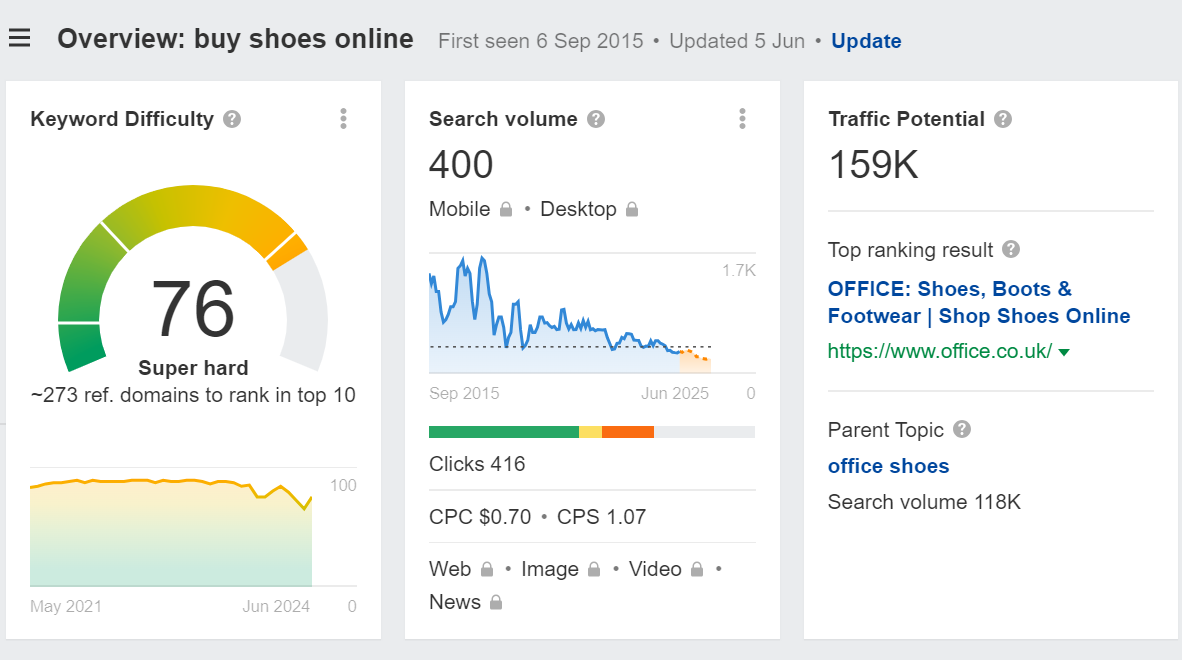
Use this 5-step framework to shortlist keywords worth targeting:
- Search Volume : use Ahrefs or Semrush to find keywords with meaningful demand : ideally 30+ searches per month.
- Keyword Difficulty : aim for KD between 0 and 30 early on. Competitive terms come later, once DR is higher.
- Search Intent : identify transactional, informational, or navigational intent. Prioritize transactional for conversion.
- Top 10 Assessment : review the current Page 1. Check DR, referring domains and content depth to judge whether you can realistically rank.
- Business Relevance : weight keywords toward your highest-margin products or services : not the easiest wins, the most valuable ones.
Run every candidate through all five checks before committing a content slot to it. Most content flops start with a keyword that should never have made the list. For the deep dive, see our full keyword research guide.
Content marketing is half the game in SEO. To rank ahead of competitors, you need content that’s better, more useful, and link-worthy : plus a plan for producing it consistently.
Map keywords to blog topics:
- Keyword analysis : group shortlisted keywords by relevance and intent.
- Topic development : translate each cluster into a concrete blog topic. Example: “effective SEO strategies” becomes “10 Proven SEO Strategies to Boost Your Rankings.”
- Content calendar : schedule posts to keep a steady publishing rhythm; 1 to 4 per month, consistently.
- Optimization : weave target keywords naturally into titles, H1/H2s, meta description, and body copy.
Why blogging still earns its place:
- Visibility : regular posts grow the number of queries your site shows up for.
- Keyword coverage : blogs are where you rank for long-tail and mid-funnel terms product pages can’t hold.
- Engagement : quality posts keep visitors on-site and surface signals Google rewards.
- Backlinks : content people actually want to cite is the single biggest driver of referring-domain growth.
Content calendar plus keyword discipline equals compounding SEO. Skip either and you are running in place.
4. On-Page SEO
On-Page optimization is how you make each blog post and web page competitive for the keywords you’re targeting. The goal is simple: when someone searches on Google, your page should be the most relevant, highest-quality answer they land on. Every element on the page, from headings to images to internal links, either helps or hurts that goal.
- Meta Titles and Descriptions: Give every page a unique meta title and meta description, and work the primary keyword in naturally.
- Header Tags: One H1 per page for the main title, then H2 and H3 tags to structure everything beneath it.
- Content Length: Thin pages under 300 words rarely rank. Aim for 300 words minimum on landing pages and 500 words on blog posts.
- Image Optimization: Keep every image under 500 KB, and add alt and title attributes that describe the image and include a target keyword where it fits.
- Internal Links: Link out to 5 to 10 other pages per post, and make sure every page has at least 3 incoming links from elsewhere on your site.
- Sitemaps: Keep your Sitemap.xml, HTML sitemap, and Image sitemap current and submitted in Google Search Console.
- Robots.txt: Double-check that robots.txt isn’t accidentally blocking pages you want indexed.
- SSL Certificate: Confirm your site runs on HTTPS with a valid SSL certificate.
Traffic without sign-ups is just traffic. For SaaS, the point of every on-page optimization is to move a visitor closer to starting a trial or booking a demo. That means building lead capture directly into the pages that rank, and removing any friction between interest and conversion.
-
SaaS Sign-Up Forms: Put prominent sign-up forms for trials and demos on every page that matters, starting with your homepage and main landing pages. Keep them short, keep them inviting, and reduce the number of fields to the absolute minimum.
-
Multi-Step Contact Forms: Turn your contact page into a multi-step form. Lead with qualifying questions about what the visitor actually needs, then collect their message and contact details on the next step. You capture better leads, and visitors are more likely to finish what they started.
-
Lead Magnets and Capture Forms: Drop lead magnets throughout your site and blog. Calculators, downloadable guides, templates, and benchmark reports all work, as long as the resource is valuable enough that someone will trade an email for it.
Ongoing content optimization is what keeps your existing blog posts and pages ranking over time. Search intent shifts, competitors publish new content, and what ranked last year won’t rank next year without maintenance. In many cases, revisiting and upgrading pages you’ve already published produces bigger gains than writing new ones.
Steps for Ongoing Optimization:
-
Analyze Performance:
- Google Search Console: Check impressions, clicks, and average position. Flag underperforming pages and keywords where you’re close to page 1 but not quite there yet.
- Ahrefs: Track keyword rankings and backlink profiles. Spot movement, good or bad, and look for content gaps your competitors are filling.
-
Content Refinement:
- Update Content: Close content gaps, add new information, and work in any keywords the page is missing. The page needs to match current search intent, not the intent that existed when you first published it.
- Enhance User Experience: Improve readability, add multimedia where it genuinely helps, and tighten your internal linking so users and Google can both navigate easily.
-
Follow SEO Best Practices:
- SEO Checklist: Run through this SEO checklist to confirm you haven’t missed the basics like meta tags, heading structure, and image optimization.
-
Request Recrawl:
- Submit a recrawl request in Google Search Console so Google picks up your changes quickly.
-
Monitor and Adjust:
- Revisit performance metrics after two weeks to measure what actually moved. Adjust based on the data, and keep iterating, because optimization is never a one-time task.
This iterative process keeps your content relevant and compounding over time, which is how sustained SEO performance actually happens.
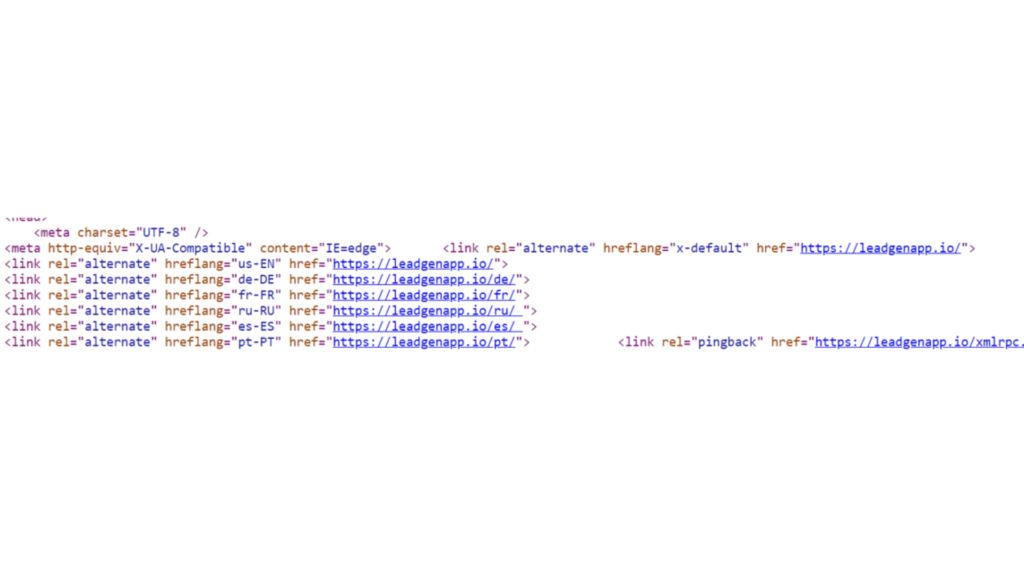
Hreflang code set-up in website source. It’s not strictly necessary but a good practice for multi-lingual SaaS sites.
5. Technical SEO
Technical SEO is the groundwork that lets the rest of your SEO actually perform. If Google can’t crawl your site properly, or pages load slowly or break on mobile, your on-page work and backlinks won’t move the needle. The checklist below covers the technical hygiene every SaaS site should audit on at least a quarterly basis.
- Fix 404 Errors: Update internal links that point to dead URLs where you control the source. For broken links from external sites pointing to yours, add 301 redirects so the link equity still flows somewhere useful.
- Remove Duplicate and Dead Pages: Prune pages that serve no purpose, and consolidate duplicates with canonical tags or redirects. Thin and duplicate content drags down how Google evaluates the rest of your site.
- Clean Up HTTP Links: Find and update any remaining links pointing to HTTP URLs, both on your own domain and out to external sites. Everything should resolve over HTTPS.
- Block Irrelevant Pages: Use robots.txt to stop Google from crawling login pages, admin pages, internal search results, and anything else that shouldn’t appear in search.
- Audit Your Redirects: Delete obsolete 3XX redirects that no longer serve a purpose, and confirm the ones you still need are returning the correct status codes and not chaining through multiple hops.
- Test Responsiveness and Speed: Make sure every page loads fast and behaves well on desktop, tablet, and phone. A site that works on one device but breaks on another costs you both rankings and conversions.
Site speed matters twice over. Visitors abandon slow pages, and Google treats speed as a ranking signal. Getting this right isn’t about shaving milliseconds for their own sake. It’s about removing every point of friction between a visitor landing on your page and actually using it.
- Analyze Load Time: Start with Google PageSpeed Insights to baseline your current load times and identify the biggest wins. Always run the test on mobile as well as desktop, because Google ranks the mobile version of your site.
- Optimize Images: Compress every image and serve them in modern formats like WebP or AVIF. Images are almost always the single largest contributor to page weight.
- Minify CSS, JavaScript, and HTML: Strip whitespace, comments, and unused code from every file you serve. Most modern build tools do this automatically; confirm it’s enabled in your production build.
- Enable Compression: Turn on Gzip or Brotli compression at the server level so CSS, JS, and HTML files travel smaller over the wire. Usually one config change, usually a big win.
- Improve Server Response Time: Your TTFB (time to first byte) should ideally come in under 200 milliseconds. If it doesn’t, look at hosting, database queries, and any heavy logic running on every request.
- Use a CDN: A content delivery network serves your assets from a location close to the visitor, which cuts latency meaningfully for any audience that isn’t already sitting next to your origin server.
- Optimize Web Fonts: Limit the number of custom font weights you load, subset fonts where possible, and use font-display: swap so text renders before the font file arrives.
Core Web Vitals are Google’s framework for measuring how a page actually feels to load and use. They’re part of the search ranking algorithm and they track three specific things: how fast the main content appears, how responsive the page is to user input, and how visually stable it stays while loading.
- Largest Contentful Paint (LCP)
- Interaction to Next Paint (INP)
- Cumulative Layout Shift (CLS)
-
Largest Contentful Paint (LCP): LCP measures how long it takes for the main content of a page to render, which is what users actually perceive as “loading time.” Aim for LCP under 2.5 seconds on 75% of visits.
-
Interaction to Next Paint (INP): INP measures page responsiveness across the entire session, not just the first interaction. A good INP is under 200 milliseconds, meaning visitors get visual feedback almost instantly when they click, tap, or type. INP replaced the older First Input Delay (FID) metric in March 2024 as Google’s official interactivity measurement.
-
Cumulative Layout Shift (CLS): CLS tracks how often elements on the page jump around as they load. You’re aiming for a score below 0.1. Poor CLS is the reason you sometimes click the wrong button because an ad or image loaded in where your finger was headed.
Together, these three metrics feed directly into how Google ranks your pages. Optimizing them isn’t only a ranking exercise though. Faster, more responsive, and more visually stable pages convert better, and that’s where the real payoff sits.
Core Web Vitals are some of the trickier areas of SEO to improve, and often need developer support to get right. But they make a substantial difference to rankings and search impressions, and the direction Google is moving is unambiguous: speed and user experience are weighted more heavily every year, across every device.
6. Content Marketing
This is where the content strategy meets the keyboard. Step 6.1 is the execution of the content calendar you built back in step 3, writing the long-form blog posts that will eventually earn you search visibility. Skip this and nothing else in the checklist actually moves you up the rankings.
The golden rule of SEO content marketing in 2026: average content no longer works. Your content needs to match search intent better, be more unique, and cover the topic in more depth than whatever is currently ranking in the top 3. That’s the bar, and AI-generated filler has raised it, not lowered it.
Steps involved:
- Brief Your Writer: Assign topics and target keywords based on what you identified in step 3.3 (Plan Content Creation and Distribution). A good brief includes the target keyword, related terms, search intent, target word count, and the competitor content the post needs to out-perform.
- Publish and Ship: Move posts through your production process and get new articles live on the site. Don’t let drafts pile up in backlog; velocity compounds.
- Optimize Each Post for SEO: Apply the full on-page checklist from step 4 to every post you publish. Meta title, meta description, H1 and H2 structure, internal links, image alt tags, schema markup, none of it is optional.
- Promote Beyond Search: Share new blog posts on social media and have team members re-share. The initial traffic signal helps Google evaluate the page, and the reach helps you earn early backlinks.
- Involve Others: Run round-up posts, interview series, or bring in guest contributions from experts in your industry. Multi-author content earns broader reach and often picks up backlinks organically when contributors share the result.
Blog content is the backbone of a SaaS SEO strategy, but it isn’t the whole structure. Your service pages and product pages are what actually convert visitors into trials, demos, and paying customers. Without them, all the blog traffic in the world won’t move the needle on revenue.
What’s the difference between blog posts and service or product pages?
-
Blog Posts: Primarily educational. These exist to engage readers, build trust, and drive top-of-funnel traffic. They target broader informational keywords like “what is X” or “how to Y” to attract a wide audience who aren’t yet ready to buy.
-
Service and Product Pages: Built to convert. These are tight, persuasive pages that explain exactly what your product does and why someone should sign up. They target commercial-intent keywords like “best X software” or “X vs Y” where the visitor is evaluating options.
Short version: blog posts attract and inform. Service pages convert.
How many of each to produce:
-
Blog posts: Aim for at least 3 to 4 new, high-quality posts per month. If you’re in the early stages of your SEO program, push that higher. Momentum matters when you’re starting from zero.
-
Service and product pages: 1 or 2 new pages per month is usually sufficient for a mature site. If your SaaS app has a lot of distinct features, produce a uniquely optimized page for each feature. Feature-specific pages rank on commercial long-tail terms and convert at far higher rates than general landing pages.
7. Link Building
Link building is the process of earning incoming hyperlinks to your website, either actively (through outreach and content partnerships) or indirectly (by publishing content so useful that other sites cite it without being asked). Both approaches matter. Indirect links tend to come once your blog content has enough volume and authority that journalists, bloggers, and creators in your space start referencing it on their own.
The active side is where most of the early momentum comes from, especially in the first 6 to 12 months of an SEO program. Here is how the main tactics break down:
-
Guest Posting and Link Insertions: Reach out to relevant websites and pitch content ideas on an ongoing basis. You earn backlinks by contributing new guest content they publish, or by getting a link inserted into one of their existing posts where your page is genuinely useful. Aim to build at least 3 to 5 high-quality links per month and monitor the effect on your domain rating and referring domain count over time.
-
Other Link-Building Methods: Broader tactics worth running in parallel:
- Find broken links on other sites and offer your page as the replacement.
- Find unlinked brand mentions via Google search or Google Alerts, then email the site owner asking for a proper link back.
- Get links from customer, client, and partner websites where a mention genuinely fits.
- Contribute to podcasts in your industry and get a link in the show notes.
- Get interviewed on relevant sites and newsletters.
- Find quality directory sites in your niche and claim listings.
- Create and share infographics as linkable assets other sites can embed.
Link building is a fundamental pillar of search engine optimization. It’s the work of acquiring hyperlinks from other websites to your own. Those hyperlinks, usually called backlinks, function as a vote of confidence from one site to another. Every time another site links to you, it’s telling search engines that your content is credible enough to be worth citing.
Why backlinks matter:
-
Improves Search Rankings: Backlinks remain one of Google’s most significant ranking factors. Sites with a strong backlink profile are treated as more authoritative and relevant, which pulls them higher in search results for competitive keywords.
-
Enhances Domain Authority: Links from reputable sites contribute to your domain authority, a metric that measures the overall strength and credibility of your domain. Higher domain authority makes it easier to rank for new keywords, because Google extends trust from the domain to every page on it.
-
Establishes Credibility and Trust: When authoritative sites link to your content, it signals to both search engines and users that your site is worth trusting. That reputation compounds. The more reputable sites that cite you, the easier it becomes to earn the next link.
8. Check
KPI tracking is how you close the loop on your SEO program. Without consistent measurement, you’re guessing at what’s working. With measurement, you can see which pages are gaining momentum, which keywords are close to page 1, and where to invest your next round of effort. Track results weekly, review trends monthly, and adjust the content and link-building roadmap based on what the data actually says.
- Dashboards: Use a reporting tool like Databox.com or Looker Studio to pull your key SEO metrics into a single view the whole team can access. Build the dashboard around the KPIs you defined back in step 1, so progress is always measured against the goals that matter.
- Google Analytics and Google Search Console: Check these weekly for traffic, impressions, click-through rates, and ranking movement. Search Console in particular will surface keywords you’re ranking for that you didn’t target on purpose, which often points straight to your next content piece.
- Keyword Rank Tracking: Use a dedicated tool like Ahrefs, SEMrush, or Whatsmyserp for daily keyword position monitoring. Track every keyword that matters to your business, not just the ones you’re actively optimizing for; movement on adjacent keywords often reveals what’s working and what isn’t.
Thank You For Making It To The End!
Ethical Authority SaaS Link Building
Links are the fuel for SaaS SEO growth. We help B2B and SaaS brands earn handpicked, editorial links on high authority sites that compound into traffic, rankings, and domain authority over 6 to 12 months.
Thank You For Making It To The End!
If this checklist helped, share it with another SaaS founder or marketer, or link it from your own website/blog.