The Smarter Way to Build SEO Authority and Climb the Rankings
Is your website’s search performance not matching the SEO effort you’re putting in? The problem might not be your content. It could be your backlink strategy.
Automated tools and link schemes might look like a shortcut, but they regularly lead to penalties that damage your visibility and undo months of work. Manual link building takes the opposite approach: authentic, high-value connections that are relevant, lasting, and built to withstand algorithm changes.
In this guide, we’ll break down exactly what manual link building is, why it matters, and how to execute it effectively.
What Is Manual Link Building?
Manual link building is a proactive strategy where SEO professionals or marketers directly engage with website owners to earn backlinks. Rather than relying on software to generate bulk links, it’s a deliberate, relationship-driven process focused on quality over volume.
The goal is to identify websites within your niche or aligned with your target audience and secure links within meaningful, high-value content. Done right, it strengthens your site’s authority and builds genuine connections across the web that compound in value over time.
Core Principles of Manual Link Building
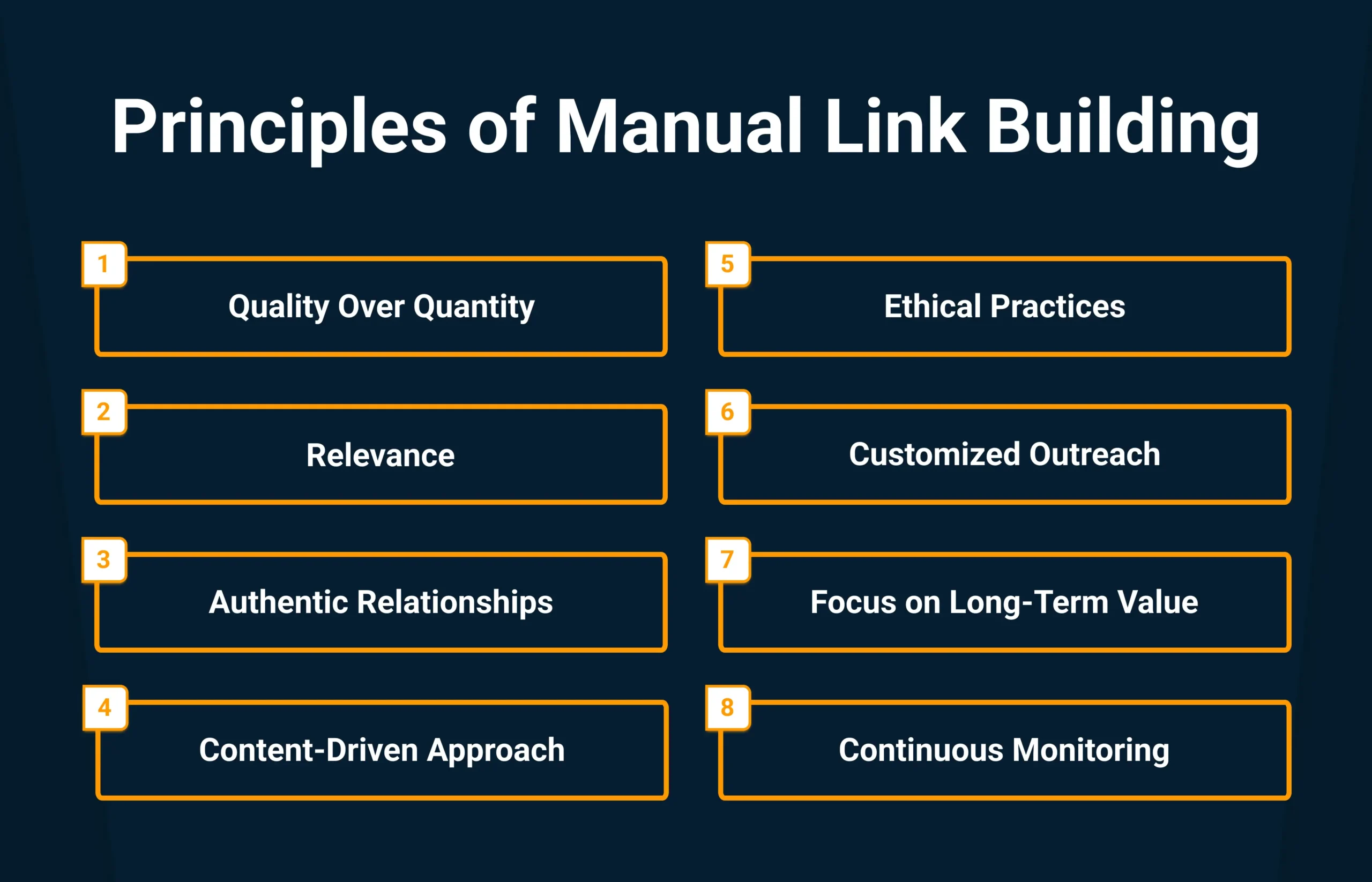
Quality over quantity. A single backlink from a reputable, high-authority site outweighs dozens of links from low-quality ones. Always prioritize the caliber of the source over the count.
Relevance. The linking site should be relevant to your niche or industry. Relevant links improve user engagement and signal to search engines that the connection is natural and contextually appropriate.
Authentic relationships. Real connections with website owners, bloggers, and industry influencers tend to produce more meaningful and lasting backlinks than cold, transactional outreach.
Content-driven approach. Valuable, unique content is the foundation of any successful manual link-building effort. Guest posts, resource pages, and collaborative content give other sites a genuine reason to link to you.
Ethical practices. Stick to search engine guidelines and avoid manipulative tactics like buying links or using automated tools. White-hat strategies protect your long-term credibility and keep you clear of penalties.
Customized outreach. Tailor every message to the recipient, clearly showing how your content aligns with their site and audience. Generic, spray-and-pray pitches get ignored.
Long-term value. Prioritize links that drive sustained traffic, authority, and credibility rather than chasing short-term wins that don’t hold up.
Continuous monitoring. Track your backlinks regularly to ensure they remain active, relevant, and contributing positively to your SEO performance.
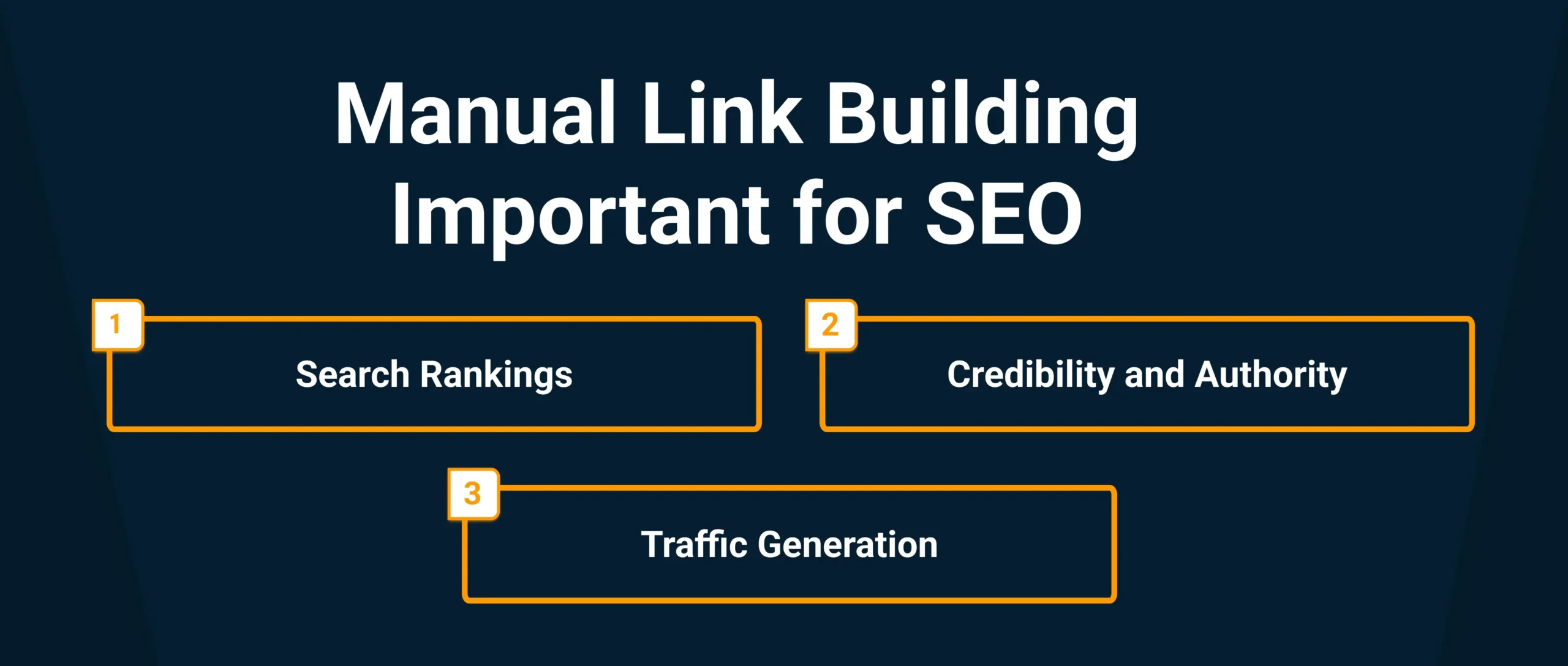
Why Manual Link Building Matters for SEO
Search rankings. Backlinks remain one of the most powerful signals in search engine algorithms. When reputable sites link to your content, it tells search engines your site is authoritative and relevant, helping you rank higher for targeted keywords and strengthening your domain’s overall competitive position.
Credibility and authority. Links from trusted, relevant websites do double duty: they boost your site’s authority in the eyes of search engines and build confidence with real users who encounter those links. Over time, a strong backlink profile reinforces your brand as a credible expert in your field.
Traffic generation. Quality backlinks drive referral traffic directly to your site. Links placed in popular or evergreen content can deliver a consistent stream of engaged visitors long after they’re first published.
How to Assess Domain Quality for Manual Link Building
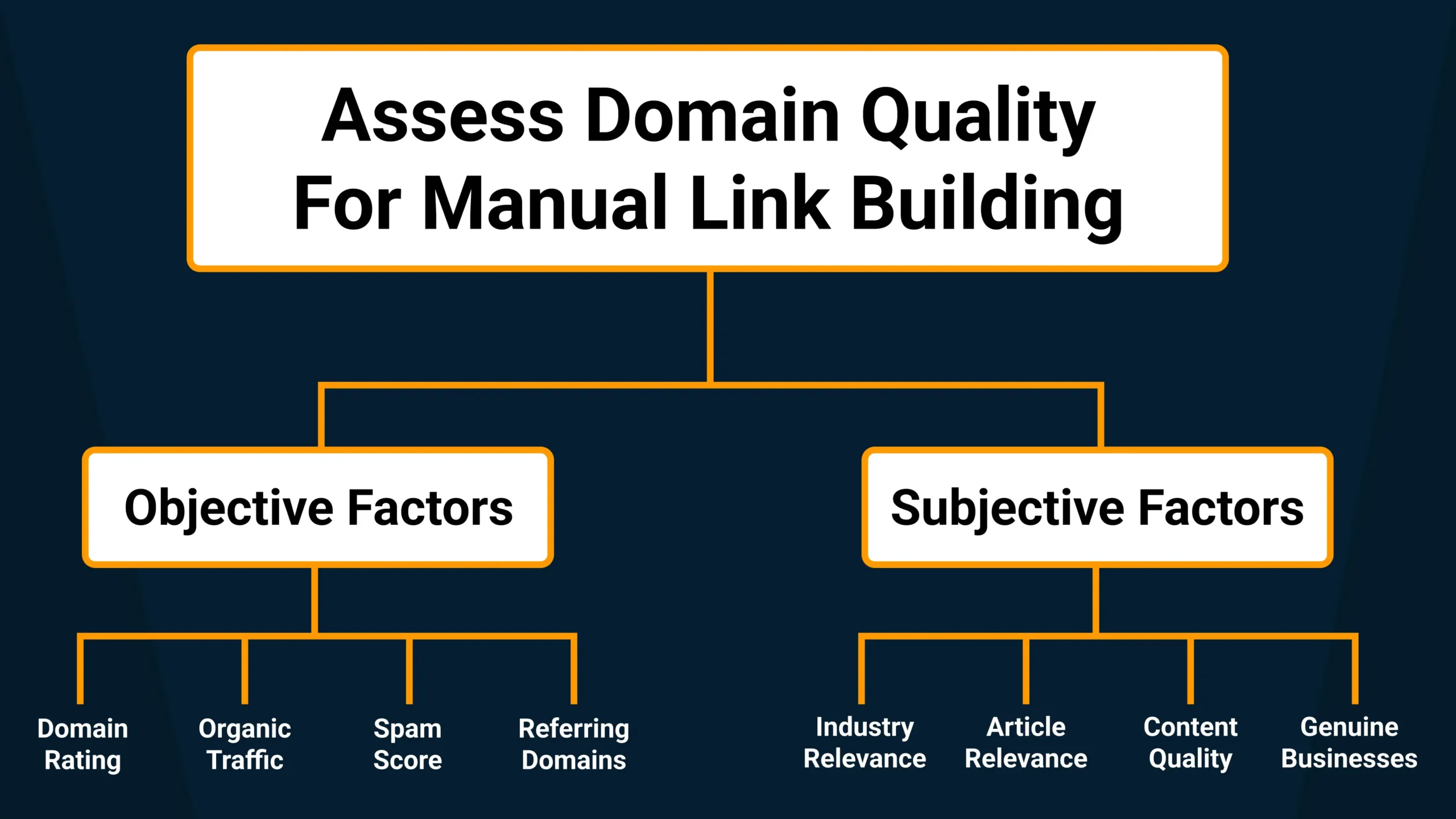
Not all domains are worth pursuing. Evaluating potential link sources requires both hard data and human judgment.
Objective Factors
These are quantifiable metrics you can pull directly from SEO tools:
Domain Rating (DR). A high DR signals that a domain is recognized and trusted by search engines and other reputable sites. Authoritative domains contribute more to improving your rankings than low-DR ones.
Organic traffic. Domains that consistently attract search traffic demonstrate real relevance and value. High organic traffic signals credibility to both users and search engines.
Spam score. A low spam score indicates a clean, reputable site. Backlinks from high-spam domains can actively hurt your SEO, so this is a non-negotiable filter.
Referring domains. A site with many high-quality referring domains carries greater authority. Diversity and quality of those referring sources both matter.
Subjective Factors
These require manual review and judgment:
Industry relevance. The linking domain should align with your industry. If it’s not an exact match, article-level relevance (the specific page where your link appears) becomes the priority.
Article relevance. The piece containing your backlink should be contextually tied to your site’s topic. Links that fit naturally within relevant content appear more organic to both users and search engines.
Content quality. Well-written, original, error-free content on the linking domain reflects positively on your backlink. Avoid domains with thin, spammy, or AI-churned content.
Genuine businesses. Link from real, operational websites with verifiable products or services. Avoid blog-only sites or link farms with no legitimate business presence behind them.
Domain Selection Process
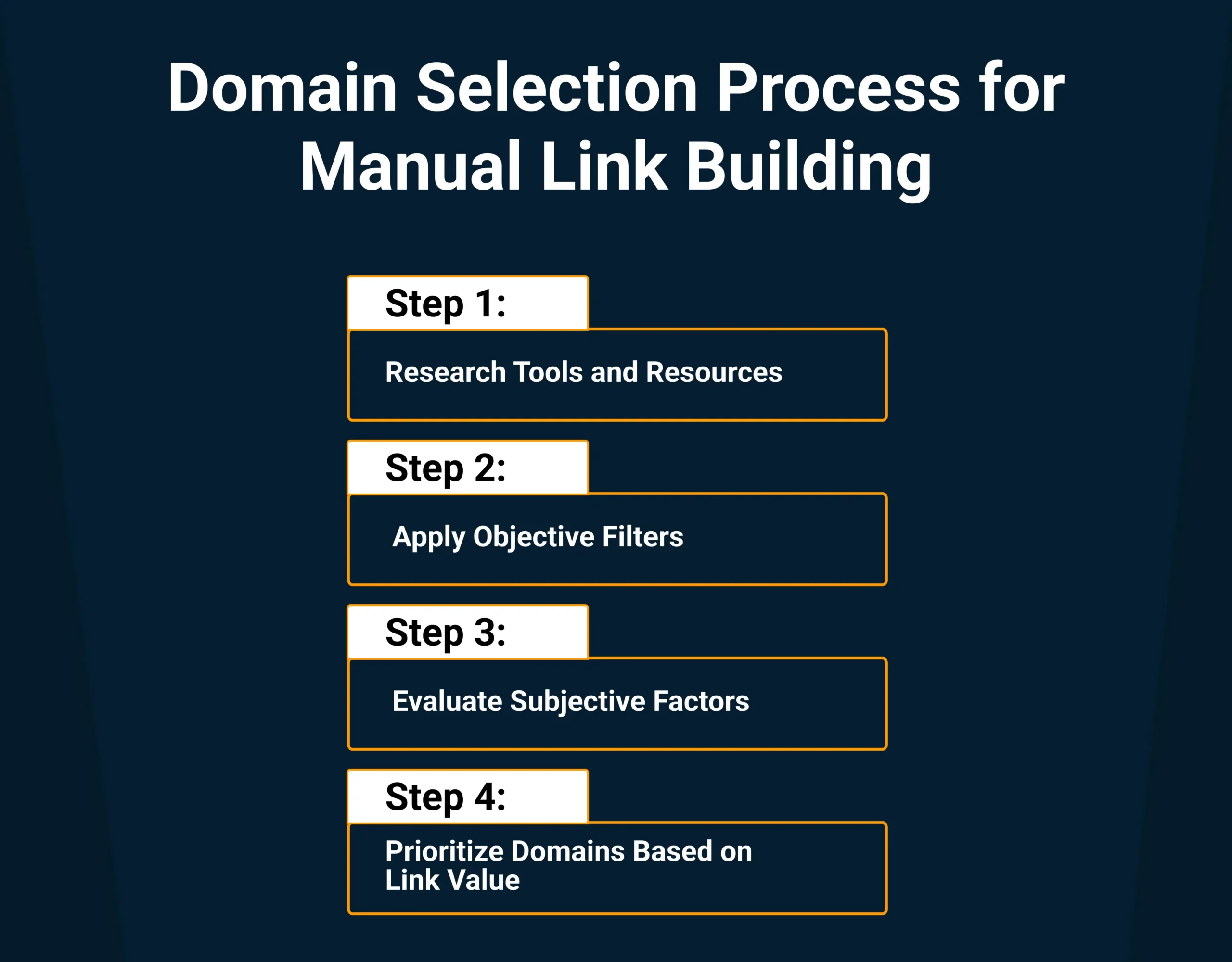
Step 1: Research Using SEO Tools
Build your initial list of potential domains using trusted platforms:
- Ahrefs for DR, backlink profiles, and organic traffic
- Moz to check spam scores
- SEMrush for traffic trends, keyword rankings, and domain performance
Step 2: Apply Objective Filters
Narrow your list using specific benchmarks:
- DR 50 or higher for authority
- At least 1,000 monthly organic visitors
- Spam score below 10%
- 100 or more quality referring domains
Step 3: Evaluate Subjective Factors
Manually review your shortlist for qualitative alignment:
- Confirm industry or article-level relevance
- Check that content is well-written, human-created, and free of errors
- Verify the domain represents a legitimate business, not a link farm
Step 4: Prioritize by Link Value
Rank remaining domains by combining objective data with manual assessments. Favor high DR, strong referring domains, and contextually rich content. Exclude domains from restricted industries (gambling, crypto, etc.) or articles already overloaded with external links, as these dilute the SEO value of any link placed there.
Manual Link Building Strategies
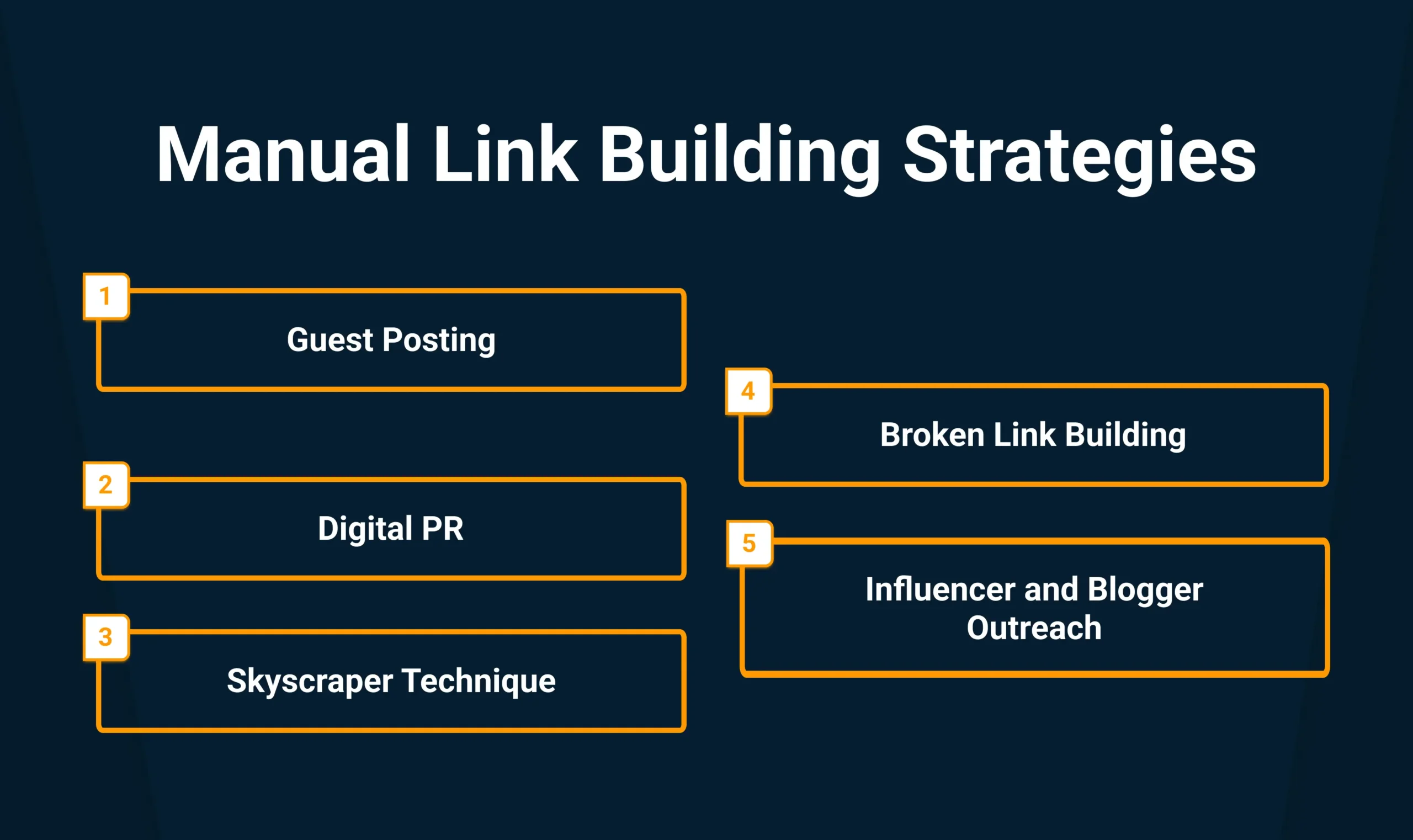
1. Guest Posting
Contributing valuable content to authoritative sites in your niche earns you backlinks while simultaneously building brand visibility and establishing credibility. The key is to write for the audience of the host site first and let the backlink serve as a natural part of the content rather than the centerpiece.
2. Digital PR
Digital PR is about earning media coverage through relationships with journalists, influencers, and industry publications. Press releases, expert commentary, surveys, case studies, and product launches can all generate high-authority backlinks from outlets that would be impossible to reach through traditional outreach alone.
3. Skyscraper Technique
Find the top-performing content in your niche, create a more comprehensive and valuable version, then reach out to sites already linking to the original. By offering a clearly superior resource, you give them a compelling reason to update their link to yours.
4. Broken Link Building
Identify broken links on authoritative sites using tools like Ahrefs or Screaming Frog, then pitch your content as a relevant replacement. It’s a win-win: you help the site owner fix a dead link while earning a backlink in a natural, editorial context. This method requires effort but can be highly effective when executed well.
5. Influencer and Blogger Outreach
Partnering with industry influencers and bloggers may not always produce a direct backlink, but it builds visibility, credibility, and social promotion that often leads to organic links over time. Focus on building genuine partnerships rather than one-off transactions.
Choosing the Right Manual Link Building Service Provider
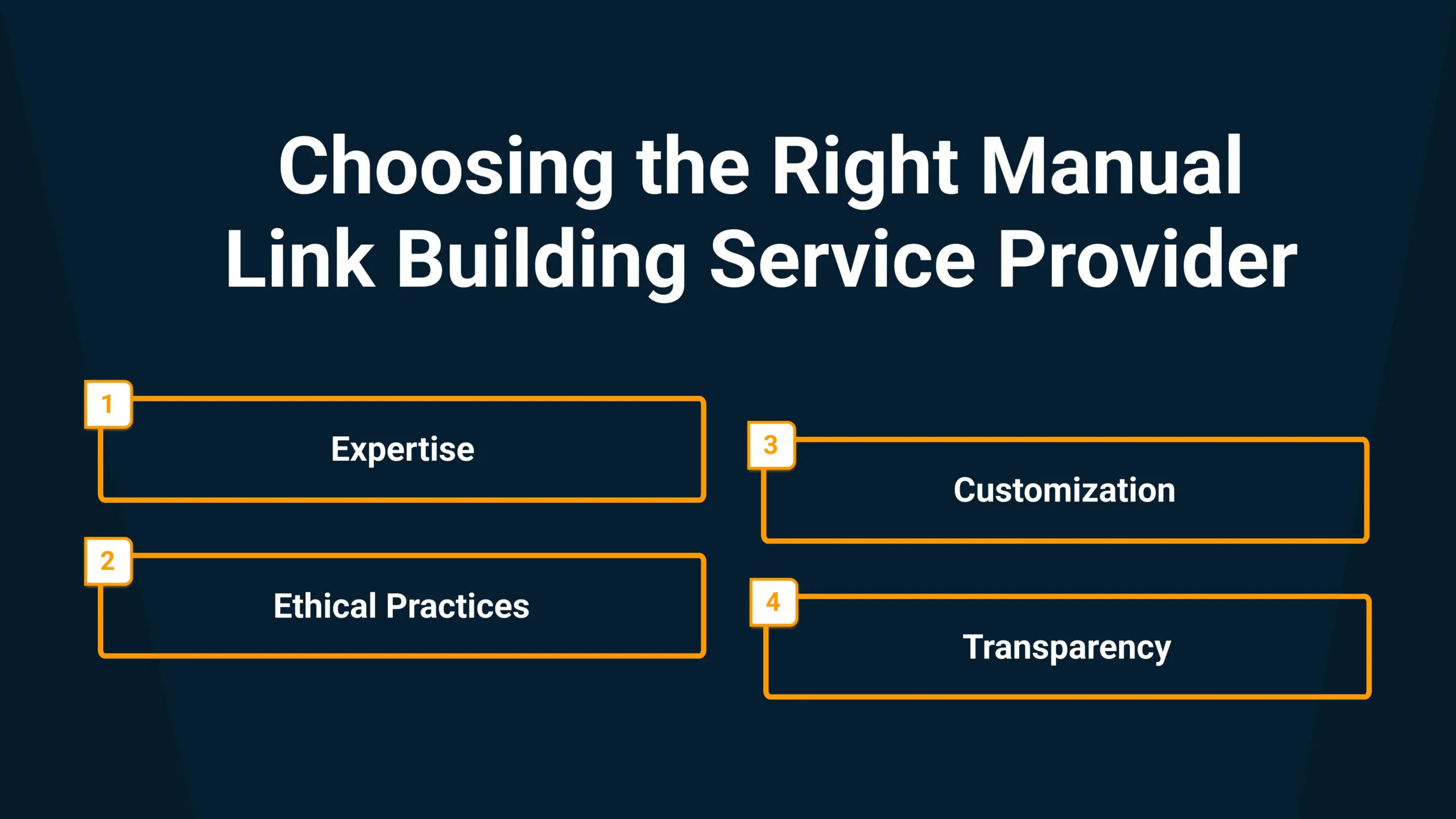
If you’re outsourcing your link building, the provider you choose makes all the difference. Look for:
Expertise. A proven track record and deep knowledge of manual link-building strategies, not just promises.
Ethical practices. A commitment to white-hat SEO only. Any provider willing to use black-hat tactics for you will eventually get you penalized.
Customization. Your industry, audience, and goals are unique. The strategy should reflect that rather than applying a cookie-cutter approach.
Transparency. Regular updates on which sites are being targeted, what links are being built, and how the campaign is progressing. If a provider is vague about their methods, that’s a red flag.
Frequently Asked Questions
How long does Google take to index backlinks? Backlinks on high-authority, frequently crawled sites can be indexed within days. Links on lower-authority or less active sites may take several weeks to months.
How often does Google crawl my website? It varies. High-authority sites with frequent updates are crawled more often, sometimes every few days. Smaller or less active sites may see intervals of several weeks.
What is the Google index rule? Google will index any URL it discovers unless blocked by a noindex directive or restricted through Search Console. Pages can be discovered via links, sitemaps, or direct submission.
What is a sitemap URL? A sitemap is a file that helps search engines identify and index the key pages on your website, ensuring important content isn’t missed during crawling.
Final Thoughts
Manual link building is not the fastest path to a higher DR, but it is the most reliable one. Automated shortcuts might show early movement, but the penalties and lost trust that follow rarely make them worth it.
By focusing on relevant domains, personalized outreach, and genuinely valuable content, you build a backlink profile that improves your rankings and holds up over the long term. That’s what sustainable SEO growth actually looks like.
At LinkPanda, we specialize in manual link-building strategies tailored to your specific business goals, from outreach campaigns and guest posts to PR links, all earned through ethical, white-hat practices. Let’s connect and build something that lasts.
Frequently Asked Questions
Topical FAQ
LinkPanda Service FAQ
About The Author

Christopher Lier
Christopher is an experienced Search Engine Optimization (SEO) marketer and digital marketing specialist. He is Co-Founder of LinkPanda and leads the marketing and sales teams. Mostly known as a Software-as-a-Service co-founder of LeadGen App, he has helped grow the website to become a renowned player in the lead generation space with steadily growing user base and readership.