How to Build Backlinks That Strengthen Your Site Instead of Putting It at Risk
Some websites climb to the top of search results and stay there. Others spike briefly then disappear after an algorithm update or manual penalty. The difference often comes down to one thing: how their backlinks were built.
The temptation to take shortcuts is real. Buying links, running link exchanges, or spinning up PBNs can produce visible results in the short term. But Google’s guidelines on this are unambiguous, and the consequences of getting caught range from ranking drops to complete deindexing. Ethical link building is not just the safer option; it is the only approach that produces results you can actually rely on.
This guide covers what ethical link building is, why it matters, and the strategies that consistently deliver results without putting your site at risk.
Ethical vs. Unethical Link Building

Search engines treat backlinks as votes of confidence. When reputable sites link to yours, it signals that your content is trustworthy and worth ranking. But not all backlinks carry the same weight, and not all link building methods are equal.
Ethical link building means acquiring backlinks through legitimate means: creating content worth referencing, building genuine relationships, contributing expertise to other publications, and earning placements through real editorial value. These methods align with white hat SEO principles and comply fully with search engine guidelines.
Unethical link building relies on manipulation: buying links, using link farms, creating networks of sites purely to inflate authority, or gaming algorithms through deceptive patterns. Google penalizes these practices, and when it does, recovery is slow and painful. In the worst cases, penalized sites disappear from search results entirely.
Ethical link building is not just a best practice. For any organization serious about long-term online presence, it is a requirement.
Why Ethical Link Building Matters
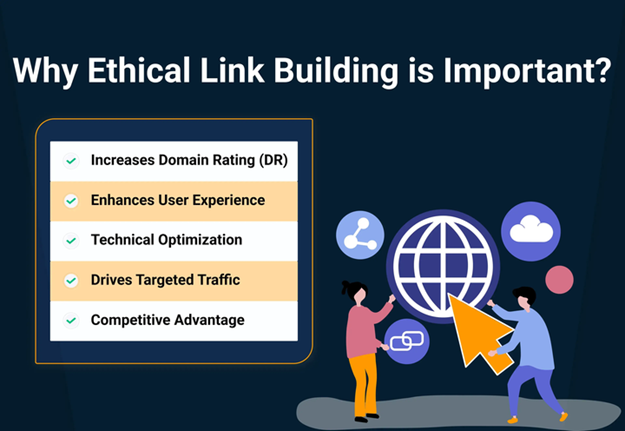
It increases Domain Rating (DR). High-quality backlinks from authoritative sources strengthen your backlink profile and push your DR upward. A higher DR signals trustworthiness to search engines and directly improves your ability to rank competitively.
It drives targeted traffic. Backlinks from relevant, reputable sites bring visitors who are already interested in what you offer. That intent-driven traffic converts at a higher rate than generic visitors, making ethical link building valuable beyond just SEO.
It creates competitive advantage. A backlink profile built on genuine editorial value is difficult for competitors to replicate quickly. Every quality link you earn through ethical means is a durable asset that compounds in value over time.
10 Proven Ethical Link Building Strategies
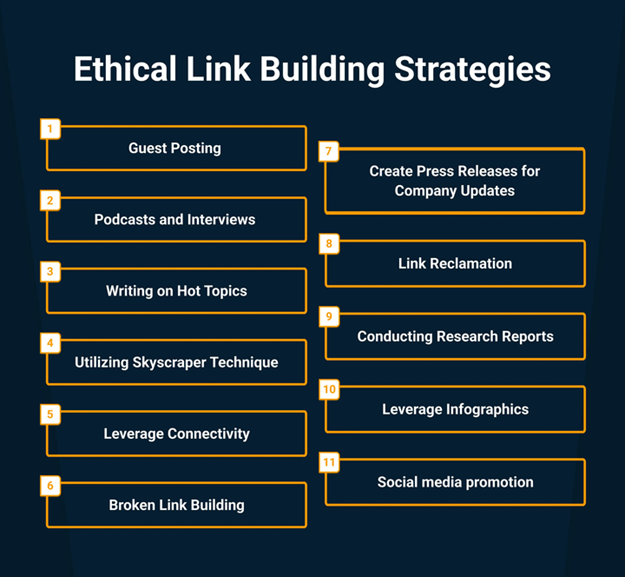
1. Guest Posting
Contributing high-quality content to relevant websites in your niche remains one of the most reliable ways to earn authoritative backlinks. Done well, guest posting also builds your brand visibility, expands your audience, and creates networking opportunities that can lead to further collaboration down the line.
2. Podcasts and Interviews
Appearing as a guest on industry podcasts or in expert interviews gives you exposure to established audiences while earning backlinks from the podcast or publication’s website. These placements tend to be evergreen, meaning they continue driving traffic and passing link equity long after the original appearance.
3. Writing on Trending and High-Demand Topics
Creating timely, well-researched content around topics that are gaining traction in your industry positions your site as a go-to reference. Content that offers fresh perspective or new data on a trending subject attracts links naturally as other publishers look for credible sources to cite.
4. The Skyscraper Technique
Identify top-performing content in your niche that has already earned significant backlinks, then create a version that is demonstrably more comprehensive, more accurate, or more up to date. The follow-up step is critical: reach out to the sites linking to the original and make a clear case for why your version is the better resource. The outreach needs to be specific and value-focused, not generic.
5. Connectively (Formerly HARO)
Connectively connects journalists and content creators with expert sources. By registering as a source and responding to relevant queries with concise, well-informed answers, you earn backlinks from the publications that use your input. The quality of sources that use this platform, ranging from niche trade publications to major media outlets, makes it one of the highest-leverage ethical link building tools available.
6. Broken Link Building
Find broken links on authoritative sites in your niche using tools like Ahrefs or Screaming Frog, then reach out to the site owner with a relevant replacement from your own content. You are solving a real problem for them while earning a backlink. It is one of the few link building strategies that delivers clear mutual value from the first contact.
7. Press Releases for Company Milestones
Publishing press releases around significant company news, product launches, partnerships, or research findings can earn coverage from journalists and bloggers who include backlinks to your site as the original source. The key is ensuring the news is genuinely newsworthy; press releases that read as thinly veiled promotional content get ignored.
8. Link Reclamation
Any time your brand, product, or content is mentioned online without a corresponding backlink, that is a missed opportunity you can reclaim. Use tools like Ahrefs or Google Alerts to find unlinked mentions, then contact the author or webmaster and politely ask them to convert the mention into a link. The conversion rate on these requests tends to be high because the person has already demonstrated they value your content enough to reference it.
9. Original Research and Reports
Publishing your own research, surveys, or data studies gives other sites a reason to link to you as a primary source. Web admins and content creators are constantly looking for credible data to support their arguments. If yours is the only place that data exists, your site becomes the reference point by default.
10. Social Media Amplification
While social media shares do not pass direct link equity, they expand the reach of your content to audiences who may link to it organically. Publishing strong content and actively promoting it across relevant platforms increases the pool of people who can discover it, share it, and ultimately link to it from their own sites.
Tools for Ethical Link Building
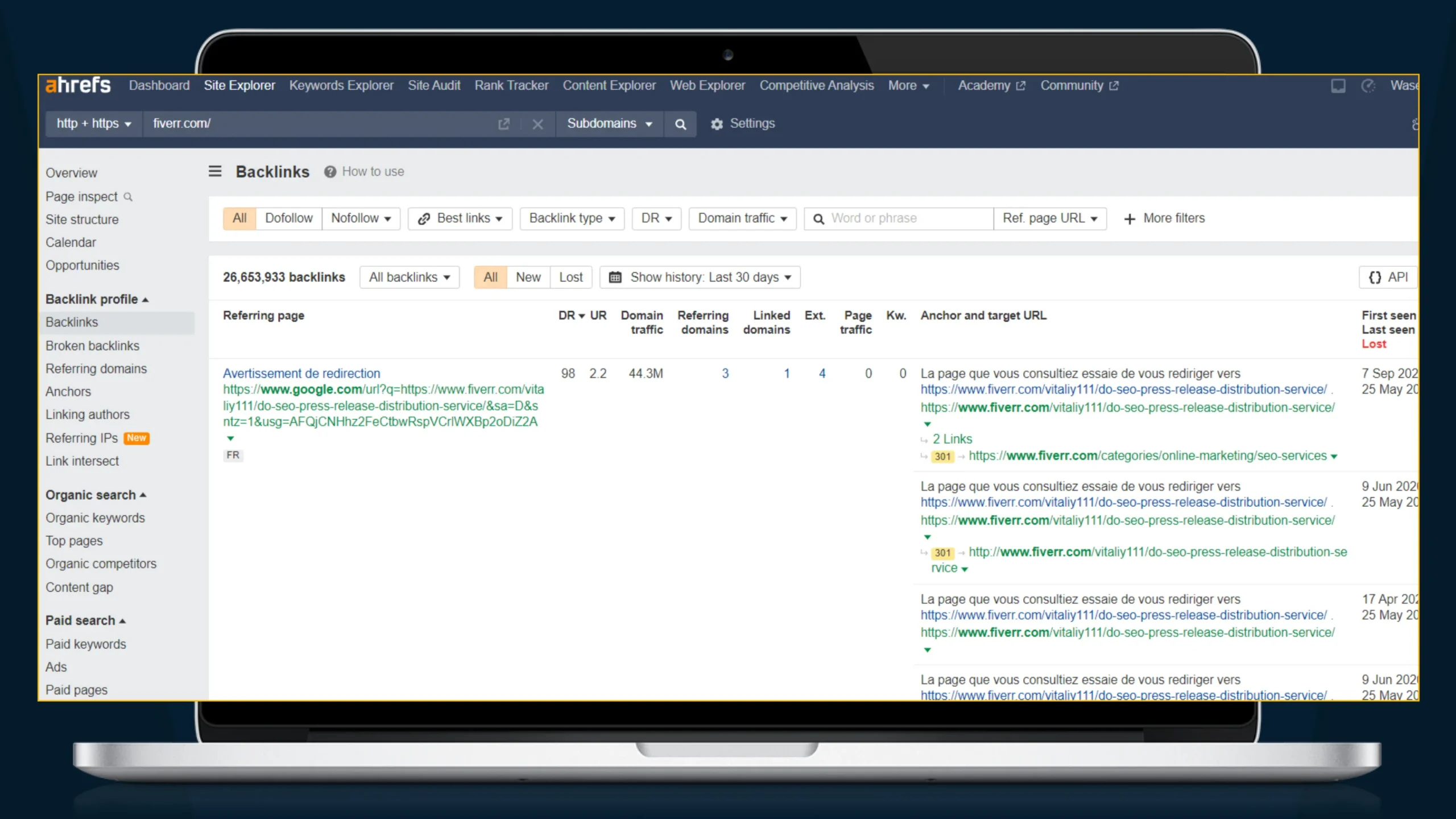
Ahrefs is the most comprehensive tool for backlink analysis, competitor research, broken link discovery, and tracking referring domain growth over time. It is the standard for serious link building work.
Moz provides domain authority metrics and spam score data, useful for qualifying potential link targets before investing outreach effort.
SEMrush rounds out the toolkit with keyword tracking, traffic analysis, and backlink auditing capabilities that complement Ahrefs for a more complete picture.
Regularly auditing your backlink profile using these tools ensures your link profile stays clean. If harmful or spammy links appear, Google’s Disavow Tool gives you a way to instruct search engines to ignore them before they cause ranking damage.
Frequently Asked Questions
What is the difference between ethical link building and white hat link building? They refer to the same thing. White hat link building is the industry term for ethical link building: acquiring backlinks through methods that comply with search engine guidelines, prioritize genuine value, and avoid manipulation. The two terms are interchangeable.
How do search engines distinguish between earned and manipulated backlinks? Search engines analyze patterns: the velocity of link acquisition, the diversity of anchor text, the relevance of linking domains, and the editorial context in which links appear. Manipulated links tend to cluster around specific anchor text, arrive in unnatural bursts, or come from domains with thin or unrelated content. Earned links look messier and more organic because they are.
How many backlinks do I actually need to rank competitively? There is no universal number. What matters is the quality and relevance of your backlinks relative to the competition for a given keyword. A single link from a highly authoritative, contextually relevant domain can outweigh dozens of links from low-quality sources. Analyze the backlink profiles of pages currently ranking for your target keywords and use that as your benchmark.
Is it possible to build ethical backlinks in a highly competitive niche? Yes, though it requires more creativity and patience. In competitive niches, differentiation through original research, proprietary data, or genuinely unique perspectives becomes even more important. The sites that earn the most organic links are rarely the ones producing the most content; they are the ones producing the most useful content.
Should I prioritize DR or topical relevance when evaluating a link opportunity? Both matter, but relevance increasingly takes precedence as search engines become more sophisticated. A link from a lower-DR site that is directly relevant to your niche will often outperform a link from a high-DR site with no topical connection. Ideally, target domains that score well on both dimensions.
How do I identify and remove toxic backlinks? Use Ahrefs or SEMrush to audit your backlink profile and filter for links with low DR, high spam scores, or irrelevant content. Once identified, you can either request removal from the linking site directly or use Google’s Disavow Tool to instruct search engines to ignore the links. Regular audits, at least quarterly, prevent toxic links from accumulating unnoticed.
What role does anchor text play in ethical link building? Anchor text signals to search engines what the linked page is about. A natural backlink profile contains a mix of branded anchors, generic anchors like “click here,” and some keyword-rich anchors. Over-optimizing for exact-match keyword anchors is a common signal of manipulative link building and can trigger algorithmic penalties. Ethical link building naturally produces diverse, varied anchor text because you are earning links in real editorial contexts rather than controlling them.
How do I build ethical backlinks without a large content budget? Focus on formats with the highest link-earning potential per unit of effort. Original data from surveys or industry polling is often more link-worthy than long-form articles and can be conducted affordably. Connectively and Help a B2B Writer provide backlink opportunities through expertise rather than content production. Broken link building and link reclamation require time rather than budget. A modest but focused effort in these areas will consistently outperform a high-volume, low-quality content strategy.
Final Thoughts
Ethical link building is the foundation of an SEO strategy built to last. Every quality backlink you earn through genuine value is an asset that compounds over time, strengthening your domain authority, improving your rankings, and bringing in traffic that actually converts.
The sites that dominate search results in competitive niches are rarely there by accident. They have invested consistently in building a backlink profile that reflects real credibility, and that profile becomes increasingly difficult for competitors to displace.
At LinkPanda, we build ethical link building strategies tailored to your specific goals, from guest posting and digital PR to outreach campaigns and link reclamation. Every link we build is earned through white hat methods designed to strengthen your site for the long term. Get in touch to find out how we can help you get there.
About The Author

Christopher Lier
Christopher is an experienced Search Engine Optimization (SEO) marketer and digital marketing specialist. He is Co-Founder of LinkPanda and leads the marketing and sales teams. Mostly known as a Software-as-a-Service co-founder of LeadGen App, he has helped grow the website to become a renowned player in the lead generation space with steadily growing user base and readership.