Why Email Still Pays Off for Small Businesses
Email is still one of the most profitable channels a small business can own. Unlike social media, your list belongs to you, and no algorithm decides who sees your message.
The challenge is choosing the right platform. Some charge by contacts, some by emails sent, and some by subscribers. Picking the wrong model can double your bill as your list grows.
Email also works best alongside other channels. Visitors you earn through SEO, link building, and digital PR become subscribers, and email turns them into repeat customers.
Below, we compare eight popular platforms on pricing, free plans, automation, and fit for different types of small businesses. Most prices were checked in October 2026, so confirm them on each vendor’s site before you buy.
 MailerLite

Simple, fast, and generous, with automation included on the free plan. Paid plans start at $9 per month for 1,000 contacts.
 Learn More ›Brevo

Prices by emails sent, not contacts, so large lists stay cheap. The free plan stores up to 100,000 contacts.
Mailchimp
The best-known name in email marketing, with a huge integration library. Essentials starts at $13 per month for 500 contacts.
Kit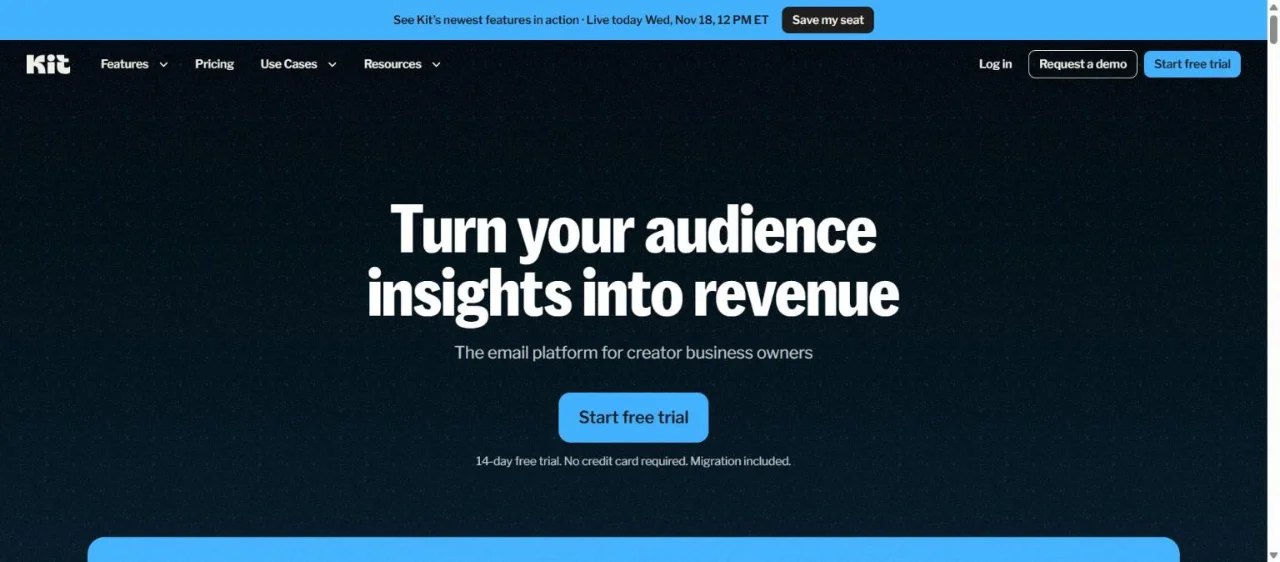
Built for creators who sell digital products, courses, and paid newsletters. The free plan supports up to 10,000 subscribers.
ActiveCampaign
The platform you grow into when automation outgrows simpler tools. Starter costs $15 per month billed yearly for 1,000 contacts.
Klaviyo
The leading ecommerce email platform, with revenue attribution on every plan. The Email plan starts at $20 per month.
Constant Contact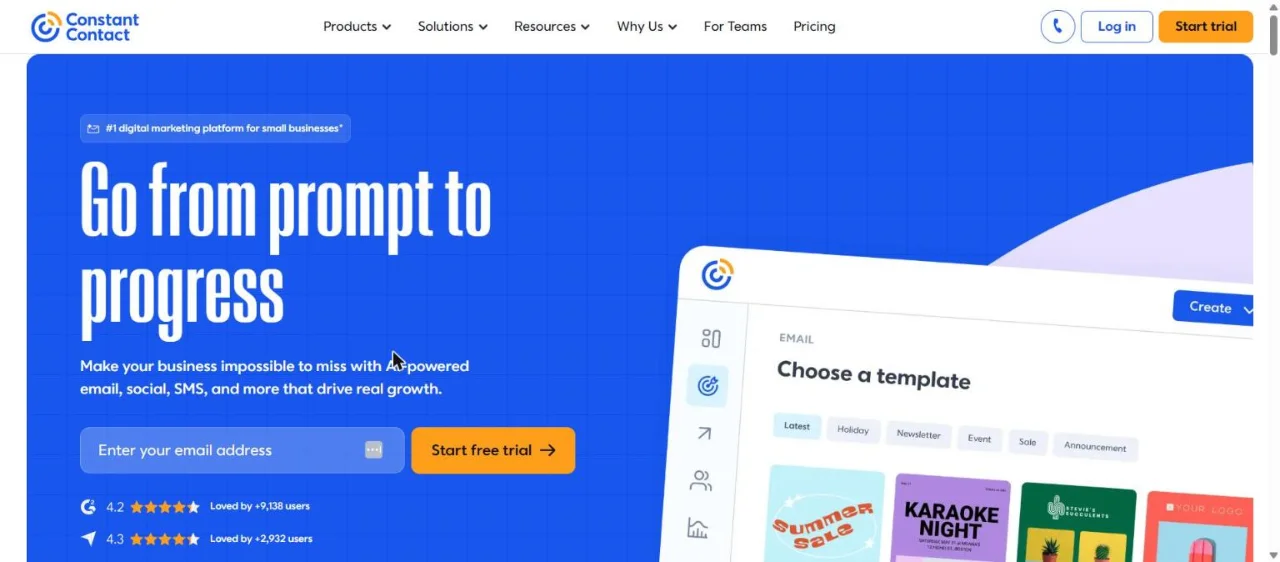
Strong for local businesses, nonprofits, and events, with live support on every plan. Lite starts at $12 per month.
GetResponse
Bundles email with landing pages, webinars, and online courses. Starter costs $15.58 per month billed annually for 1,000 contacts.
1. MailerLite

MailerLite is the best all-round choice for most small businesses. It is simple, fast, and includes features many rivals lock behind higher plans.
The interface is clean and the free plan is generous. Advanced behavioral automation needs Zapier or a more powerful tool.
Key Features
- Drag-and-drop email editor
- Automation on the free plan
- Landing pages, pop-ups, and forms
- Basic segmentation
Pricing and Fit
- Free plan: up to 1,000 subscribers and 12,000 emails/month
- Growing Business: from $9/month for 1,000 contacts
- About $32/month for 5,000 contacts
- Best for services and consultants
2. Brevo

Brevo prices by emails sent, not by contacts. That makes it the cheapest option for businesses with large lists that only email occasionally.
It also covers SMS, WhatsApp, and transactional email, plus a free CRM. The daily sending limit on the free plan slows down bigger campaigns.
Key Features
- Email, SMS, and WhatsApp campaigns
- Transactional email for receipts and resets
- Free built-in CRM
- Marketing automation workflows
Pricing and Fit
- Free plan: 300 emails/day, up to 100,000 contacts
- Starter: $9/month for 5,000 emails
- Yearly billing saves 10%
- Best for local businesses with big lists
3. Mailchimp

Mailchimp is the best-known name in email marketing. It is familiar, well integrated, and suitable for many business types.
It is easy to learn and connects with hundreds of tools. Costs grow fast as your list grows, and the free plan is now very limited.
Key Features
- Large template library
- Hundreds of integrations
- Audience segmentation and A/B tests
- Customer journey builder on higher plans
Pricing and Fit
- Essentials: $13/month for up to 500 contacts
- Includes 5,000 sends per month
- Free plan: 250 contacts and 500 sends/month
- Free trial: 14 days on Essentials and Standard
4. Kit
Kit (formerly ConvertKit) is built for creators who sell digital products, courses, and paid newsletters. It focuses on subscriber tagging and simple, powerful automations.
It has the largest free subscriber allowance in this list. Paid plans cost more than MailerLite or Brevo, and design options are basic.
Key Features
- Tag-based subscriber management
- Visual automation builder
- Digital product and paid newsletter sales
- Creator Network for audience growth
Pricing and Fit
- Free plan: up to 10,000 subscribers (no automations)
- Paid plans: $39 to $79/month
- Pricing scales with subscriber count
- Best for digital product sellers
5. ActiveCampaign

ActiveCampaign is the platform you grow into when your automation needs outgrow simpler tools. It supports multi-step automations on every plan.
It has the deepest automation and segmentation in this list. It has a steeper learning curve and is overkill for simple newsletters.
Key Features
- Advanced multi-step automation builder
- Lead scoring and CRM options
- Predictive send times on Pro
- Conditional content inside emails
Pricing and Fit
- Starter: $15/month billed yearly for 1,000 contacts
- No free plan
- Free trial: 14 days, no card needed
- Best for automated sales funnels
6. Klaviyo

Klaviyo is the leading choice for ecommerce. It connects deeply with Shopify and other store platforms, and it shows how much revenue each email generates.
Its ecommerce data and flows are the best in this list. Costs climb quickly as your list grows.
Key Features
- Revenue attribution on every plan
- Abandoned cart and browse flows
- Product recommendations
- Email and SMS in one platform
Pricing and Fit
- Email: $20/month for 500 active profiles and 5,000 emails
- Free plan: 250 active profiles and 500 emails/month
- SMS billed per message
- Best for Shopify stores
7. Constant Contact
Constant Contact has served small businesses for decades. It is strong for local businesses, nonprofits, and anyone who runs events.
Support is excellent and it is easy for beginners. Automation is basic compared to ActiveCampaign or Klaviyo.
Key Features
- Event registration and RSVP tools
- Easy drag-and-drop templates
- Social media posting
- Live phone and chat support
Pricing and Fit
- Lite: $12/month, or $10.20/month prepaid annually
- Live phone and chat support on every plan
- 30-day money-back guarantee
- Free trial, no card needed
8. GetResponse

GetResponse bundles email marketing with landing pages, webinars, and online courses. It suits businesses that want several marketing tools in one account.
You get many tools in one plan, plus unlimited sends on paid plans. The interface can feel crowded, and advanced features sit on higher tiers.
Key Features
- Unlimited sends on paid plans
- Landing page and funnel builder
- Webinar hosting
- Online course creation
Pricing and Fit
- Starter: $15.58/month billed annually ($19 monthly)
- Covers 1,000 contacts
- Free plan: 500 contacts and 2,500 newsletters/month
- Best for educators and webinar sellers
How to Choose the Right Email Marketing Platform
Start with how you make money. Online stores should pick Klaviyo. Creators selling digital products should pick Kit. Service businesses and consultants usually do well with MailerLite.
Next, look at how often you send. If you have a big list but email once or twice a month, Brevo’s send-based pricing will save money. If you send weekly, contact-based plans may work out better.
Then think about automation. If you need complex funnels and lead scoring, ActiveCampaign is worth the higher cost.
Finally, protect your deliverability. Authenticate your domain with SPF, DKIM, and DMARC, and clean inactive contacts every few months.
Four Steps to an Email Program That Sells
Whichever platform you choose, deliverability decides whether your emails are seen at all.
Important: Only email people who opted in. Buying lists breaks the terms of every platform in this guide, hurts your sender reputation, and can get your account suspended.
Email converts visitors you already have. To bring more of them in from search, you need authority, and that is what we build.
Want More Visitors to Turn Into Subscribers?
LinkPanda builds white hat links on real, high-traffic sites to grow your organic traffic.
Frequently Asked Questions
About The Author

Danish Khan
Danish is a Content Writer who specializes in translating complex SaaS and B2B concepts into clear, compelling copy that drives growth. With a foundational expertise in data analytics and programming, he doesn't just write about technical topics - he understands them. This allows him to craft content that is not only engaging but also deeply accurate and insightful. Danish is passionate about creating narratives that don't just inform - they convert, helping brands build authority, connect with their ideal customers, and achieve measurable results.
You May Also Like
SEO Experiments: How We Test What Actually Moves Rankings at LinkPanda
Best Customer Support Software for Startups
Best Time Tracking Software for Agencies and Small Teams
Best Cold Email Software Tools for B2B Outreach
Best AI Content Detectors for Businesses


AI Search Visibility for SaaS: The Metrics That Actually Predict Discovery
How to Build a B2B Prospect List Before Your First Outreach Campaign
Link Reclamation: How to Find and Recover Lost Backlinks

23 Best Tech Startups in Finland: The Nordic’s Startup Hall of Fame

Best Enterprise SEO Agency Picks for 2026