Entity SEO: How Google Understands Brands, Topics and Authority
Entity SEO refers to optimising how Google understands and represents your brand, people, products, and topics as distinct entities in its Knowledge Graph.
Google does not just index keywords and documents: it builds a semantic understanding of the real-world things those documents describe.
Entities are the nodes in this understanding: your company, your key personnel, your products, your industry topics.
How well Google understands your brand as a credible, authoritative entity in its subject area directly influences your rankings, your appearance in knowledge panels, and your visibility in AI-driven search experiences.
The shift towards entity-based understanding has been building since Google’s Hummingbird update in 2013 and has accelerated with the integration of Knowledge Graph data into core ranking signals.
Today, entity optimisation is not a niche technical tactic: it is a fundamental dimension of how well-established brands maintain and extend their organic visibility as search increasingly moves beyond simple keyword matching towards contextual understanding of who and what is being searched for.
Key Point: Backlinks from authoritative sources are one of the strongest entity recognition signals available. When established publications in your industry consistently mention and link to your brand, Google’s systems build a stronger association between your brand entity and its subject area. This entity-level authority signal reinforces your rankings for brand-adjacent queries and provides a quality foundation that complements traditional link equity transfer.
How Google’s Knowledge Graph Works
Google’s Knowledge Graph is a database of entities and the relationships between them.
An entity can be a person, organisation, place, product, concept, or any other identifiable real-world thing.
Each entity has attributes (properties associated with it) and connections (relationships to other entities).
When Google processes a search query, it attempts to identify which entities the query relates to and retrieves information about those entities from the Knowledge Graph to inform both the ranking of results and the direct answers shown in rich features like knowledge panels.
For brands, being well-represented in the Knowledge Graph means Google has high confidence about what your brand is, what it does, who leads it, where it operates, and what topics it is authoritative on.
This confidence is built from structured data on your own site, information on your Wikipedia page if one exists, structured citation data across the web — key for your backlink profile, and the pattern of editorial mentions and links your brand receives from authoritative sources.
Key Entity SEO Signals
Consistent NAP data — also relevant to referring domains: Name, address, and phone number consistency across all web mentions, directories, and structured data sources. Inconsistent brand information creates conflicting entity signals that reduce Google’s confidence in its understanding of your organisation.
Wikipedia and Wikidata presence: A Wikipedia page and corresponding Wikidata entry are among the strongest entity recognition signals available.
They are not achievable for all brands and require meeting notability standards, but for brands that qualify, the Knowledge Graph enrichment from a Wikipedia presence is substantial.
Schema markup: Implementing Organisation, Person, Product, and other relevant schema types on your own site provides structured data that directly communicates entity attributes to Google in machine-readable format.
This is the most controllable entity signal available and should be a baseline technical SEO requirement for any brand serious about entity optimisation.
Editorial brand mentions: Mentions of your brand name in editorial contexts on authoritative publications are one of the most powerful entity enrichment signals — especially when they include followed links.
When Google’s systems see your brand name consistently appearing in credible editorial content alongside relevant topic keywords, it strengthens the semantic association between your brand entity and its subject domain. Author entity signals:
- For content-producing brands, establishing recognised author entities for key personnel, with consistent author profiles, bylines on published work, and social profile links, builds the personal entity signals that contribute to E-E-A-T assessments for individual content pieces
- Which topics your brand is consistently associated with
- Which other entities sit next to yours in the graph
- How often authoritative publishers choose to cite you
- Where your authority naturally clusters in the niche
- Place brand mentions in authentic editorial contexts
- Come from sites already recognised as topical authorities
- Appear consistently near the topics you want to own
- Accumulate steadily rather than in suspicious bursts
Link Building as an Entity Signal
High-quality editorial backlinks serve a dual function in entity SEO. They pass direct ranking equity through PageRank flow, as they always have.
But they also serve as entity recognition signals: each editorial link from an authoritative source in your industry strengthens Google’s confidence that your brand is a credible, established entity in that subject area.
This entity-level authority signal operates above the level of individual pages and contributes to the domain-level quality assessment that affects all of your pages.
This is why digital PR that generates editorial coverage on major industry publications is particularly valuable from an entity SEO perspective.
A feature in a DR 85 trade publication does not just pass link equity: it contributes a strong editorial endorsement to your brand’s entity profile in Google’s Knowledge Graph.
Over time, consistent editorial coverage across multiple authoritative sources builds a brand entity profile that signals industry authority at a level that on-page optimisation and standard link building alone cannot achieve.
Optimising Your Google Business Profile and Knowledge Panel
For local businesses and brands with physical presence, Google Business Profile is a primary entity optimisation touchpoint.
Complete, accurate, and regularly updated profile information directly feeds Google’s entity understanding for local search.
For larger brands, a Google Knowledge Panel, populated from Wikipedia, Wikidata, and verified brand information, is the most visible expression of your entity in search results.
Claiming and verifying your Knowledge Panel through Google’s entity verification process allows you to provide corrections and additions that improve the accuracy of your brand representation.
Entity SEO for Topical Authority
Beyond brand entity, entity SEO applies to the topics your content covers. Google’s semantic understanding of topic entities means that sites consistently publishing high-quality, well-linked content on a coherent set of related topics build topical authority signals that reinforce their relevance for queries across that topic cluster.
This is the mechanism behind topic cluster content strategies: by comprehensively covering a topic area with well-interlinked content supported by editorial links, you build the topical entity associations that help Google understand your site as an authoritative source for that entire topic domain.
Building topical authority through content requires both content depth and external validation.
Content depth comes from comprehensive coverage of a topic cluster. External validation comes from editorial links and mentions from other authoritative sources covering the same topics.
The combination of deep topical content and strong editorial endorsement from topically relevant sources is the most reliable way to establish the entity-level authority that produces competitive rankings across an entire topic area rather than just on individually targeted keyword pages.
A managed link building programme targeting topically relevant referring domains directly strengthens the topical entity signals that support rankings across your full keyword universe.
Important: Entity SEO is a long-term investment rather than a quick-win tactic. Building a well-recognised brand entity in Google’s Knowledge Graph requires consistent, coherent brand information across many sources over extended periods. The brands that invest in entity optimisation early find that their advantage compounds over time as Google’s confidence in their entity grows and their presence in AI-driven search experiences expands.
Measuring Entity SEO Progress
Entity SEO improvements are harder to measure than traditional ranking metrics because the signals are more diffuse. Useful proxy metrics include:
- the appearance and enrichment of a Google Knowledge Panel for your brand, improvements in branded search volume over time (indicating growing brand recognition), increases in brand mention frequency across authoritative publications tracked through Brand24 or Mention, and the growth of topically relevant editorial links from publications covering your subject area
Each of these is a leading indicator that Google’s understanding of your brand entity is strengthening, even when specific ranking improvements have not yet fully materialised.
The clearest evidence of successful entity SEO is when your brand appears in AI-generated search answers and Google’s featured snippets for queries where you are a relevant expert source.
These appearances depend on Google having high confidence in your entity’s authority on the relevant topics, which is the precise outcome that consistent entity optimisation efforts produce over time.
Frequently Asked Questions
Topical FAQ
LinkPanda Service FAQ
Sources
External Sources

Google Search Central A Guide to Google Search Ranking Systems
Google’s official ranking systems guide, which explicitly lists Hummingbird as a major improvement in August 2013 — the update that shifted search from keyword matching towards semantic understanding of queries and entities.
Google Blog Introducing the Knowledge Graph: Things, Not Strings
Google’s original 2012 Knowledge Graph announcement explaining its approach to understanding real-world entities and their relationships — the foundational infrastructure behind entity-based ranking signals and knowledge panels.
Google Blog Google’s Knowledge Graph and Knowledge Panels
Google’s own explanation of how the Knowledge Graph draws from Wikipedia, Wikidata, and hundreds of licensed sources — confirming that Wikipedia presence is one of the strongest entity recognition signals feeding brand knowledge panels, with over 500 billion facts across five billion entities.
Google Search Central Organization Schema Markup — Google Search Central
Google’s official documentation for Organisation structured data — the schema types (Organisation, Person, Product) that communicate entity attributes directly to Google in machine-readable format, the most controllable entity signal available to site owners.
Google Search Central Creating Helpful, Reliable, People-First Content — E-E-A-T
Google’s E-E-A-T documentation explaining how editorial mentions, author credentials, and consistent third-party recognition build the trust and authority signals that strengthen brand entity assessments, particularly for author entity signals in content-producing organisations.
Internal References

LinkPanda White Hat Link Building Strategies
How editorial link building from authoritative industry publications serves a dual function — passing PageRank equity and strengthening brand entity signals in the Knowledge Graph simultaneously.
LinkPanda Keyword Clustering: How to Group Keywords for Better SEO Results
How topic cluster content strategies build the subject-matter entity associations that help Google understand your site as an authoritative source across an entire topic domain.
Build the Editorial Links That Strengthen Your Brand Entity
Editorial links from authoritative industry sources are the strongest external entity signal available. LinkPanda builds those links on a consistent monthly basis.
About The Author

Afshan Mairaj
Afshan is an experienced Account Manager and Sales professional with a deep focus on client relationship management and business development. She collaborates closely with her partners to identify their core needs and deliver tailored solutions that foster long term success. With a dedication to clear communication and measurable results, she consistently drives business growth while ensuring a high standard of client satisfaction across every project.
You May Also Like
Link Reclamation: How to Find and Recover Lost Backlinks
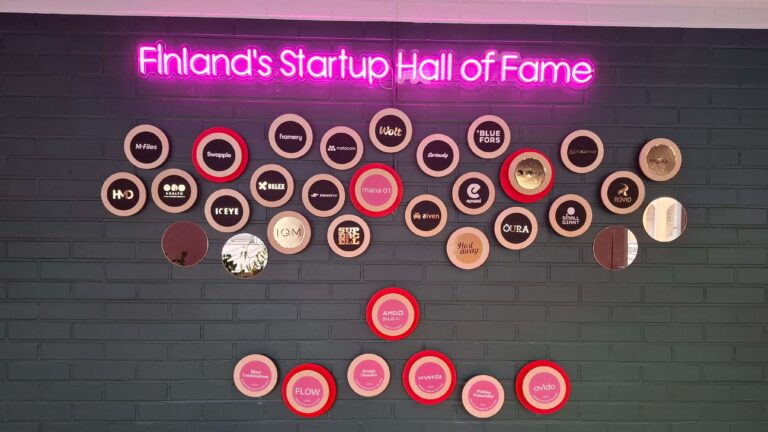
23 Best Tech Startups in Finland: The Nordic’s Startup Hall of Fame

Best Enterprise SEO Agency Picks for 2026
Best AI SEO Tools for 2026 (Reviewed and Compared)
Best Link Building Tools for 2026 (Reviewed and Compared)
Top SEO Companies & Agencies in the USA
The 15 Best SEO Agencies in the UK (2026)
Backlinks vs. Referring Domains: The Metric That Actually Predicts Rankings
How to Build a Global SEO Strategy That Actually Scales
Getting Cited by ChatGPT and Perplexity: A Practical SEO Playbook
How AI Overviews Are Rewriting the Rules of Link Building in 2026