Analysing the Link Building Landscape in 2026: The Data Report
Most link building statistics posts rehash the same Ahrefs and Backlinko numbers you’ve already seen. We wanted to do something different.
Over the past three years, we’ve placed 3,000+ backlinks for 800+ brands. We know what these numbers look like from the inside – what the surveys get right, where they miss, and what actually changes campaign outcomes. So we pulled together 34 statistics from Ahrefs, Backlinko, editorial.link, BuzzStream, and uSERP, then added our own campaign data where it tells a more complete story.
Every stat links to its published source. Here’s the full picture.
Quick snapshot – link building in 2026:
- Average cost per quality backlink: $508.95 (editorial.link, 2025)
- Most effective tactic: Digital PR (voted #1 by 48.6% of SEOs)
- Outreach response rate: 8.5% (Backlinko/Pitchbox, 12M emails)
- Positive ROI reported by: 78% of SEO professionals
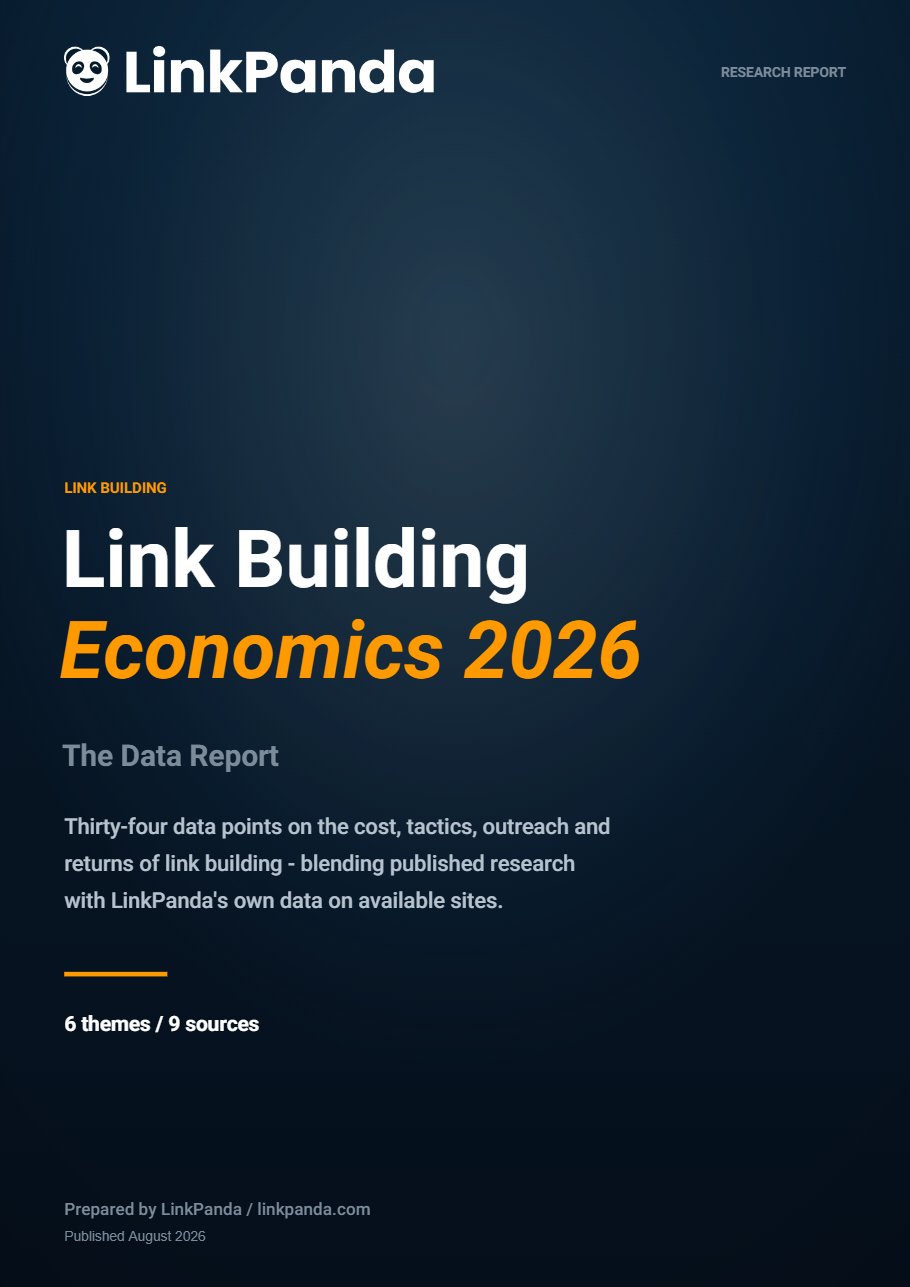
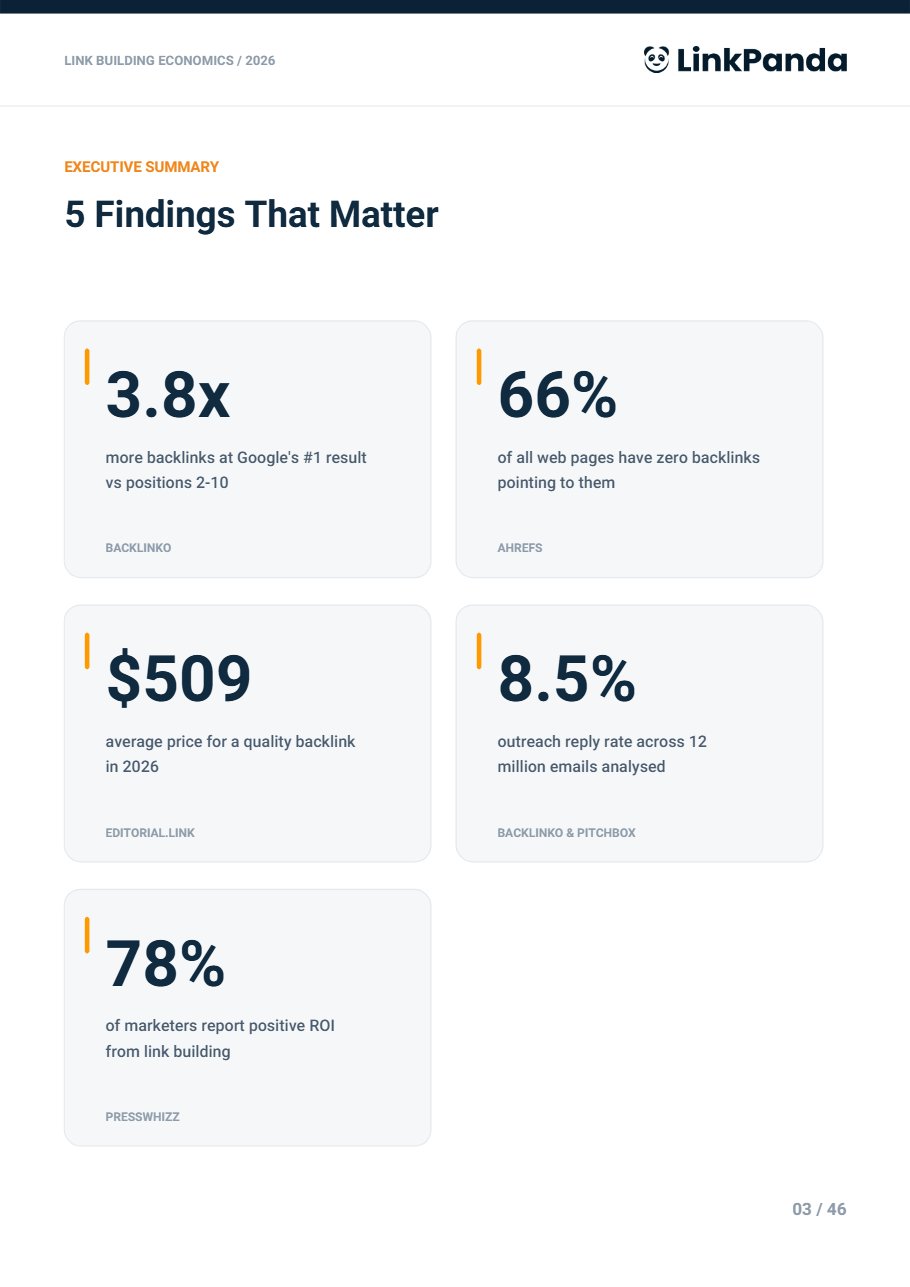
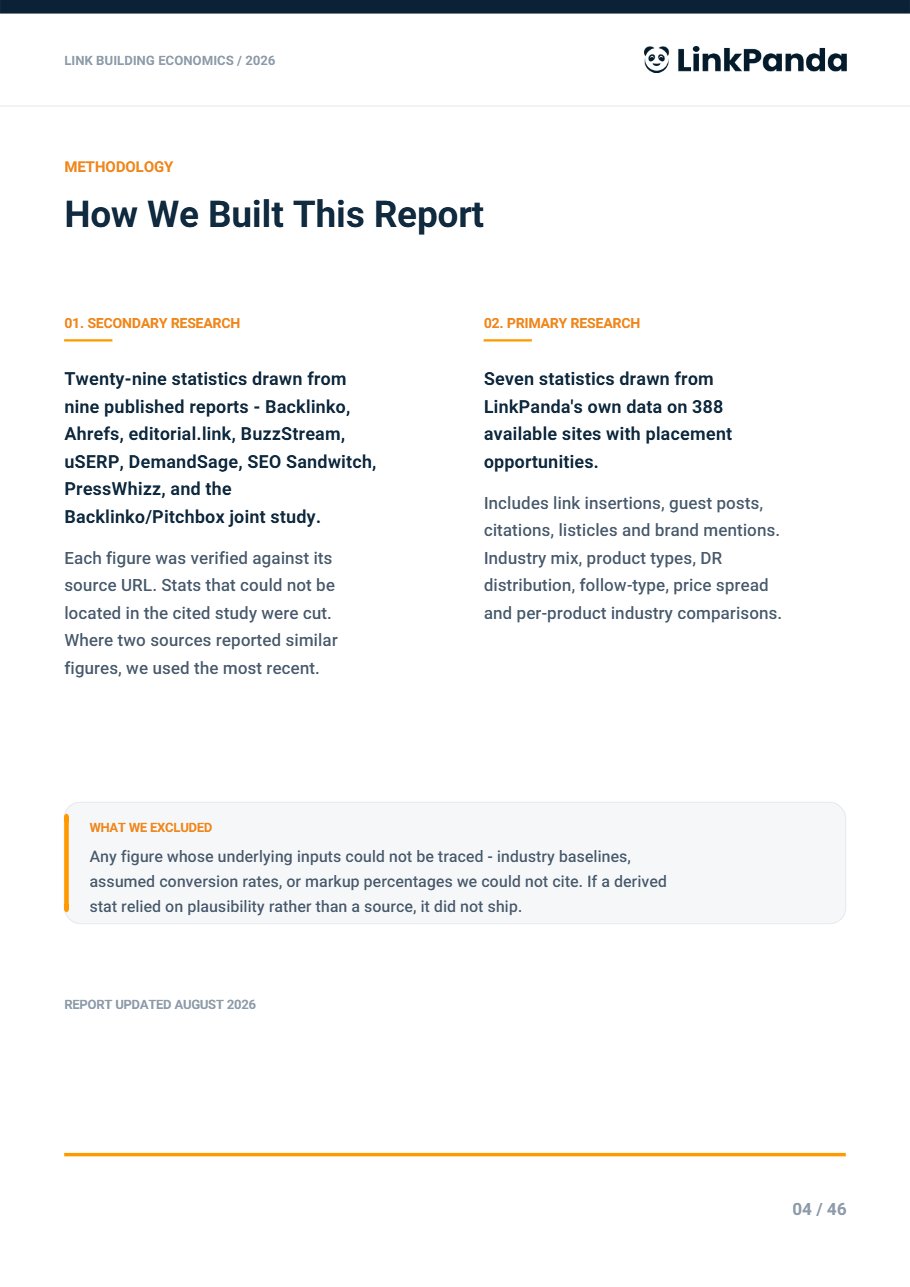
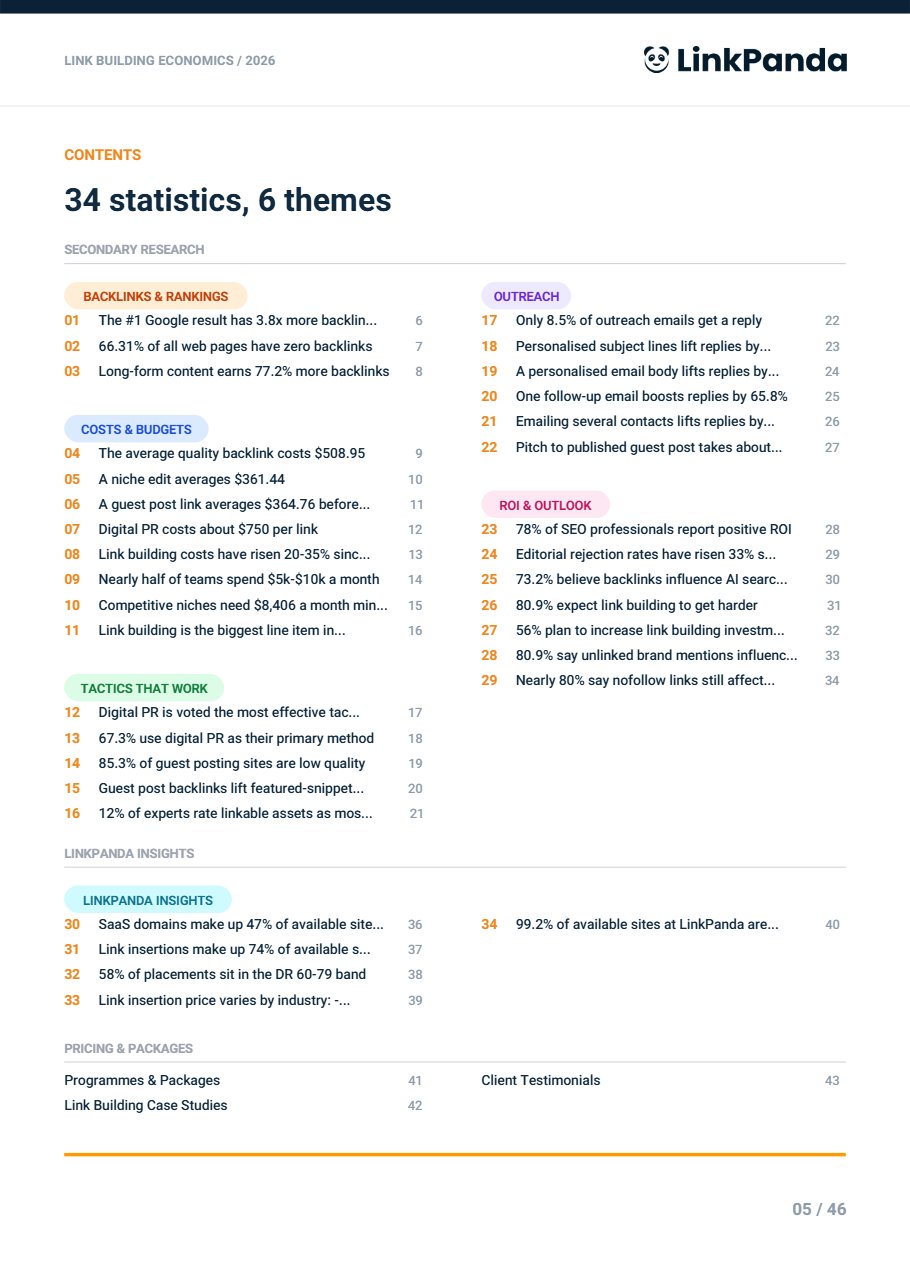
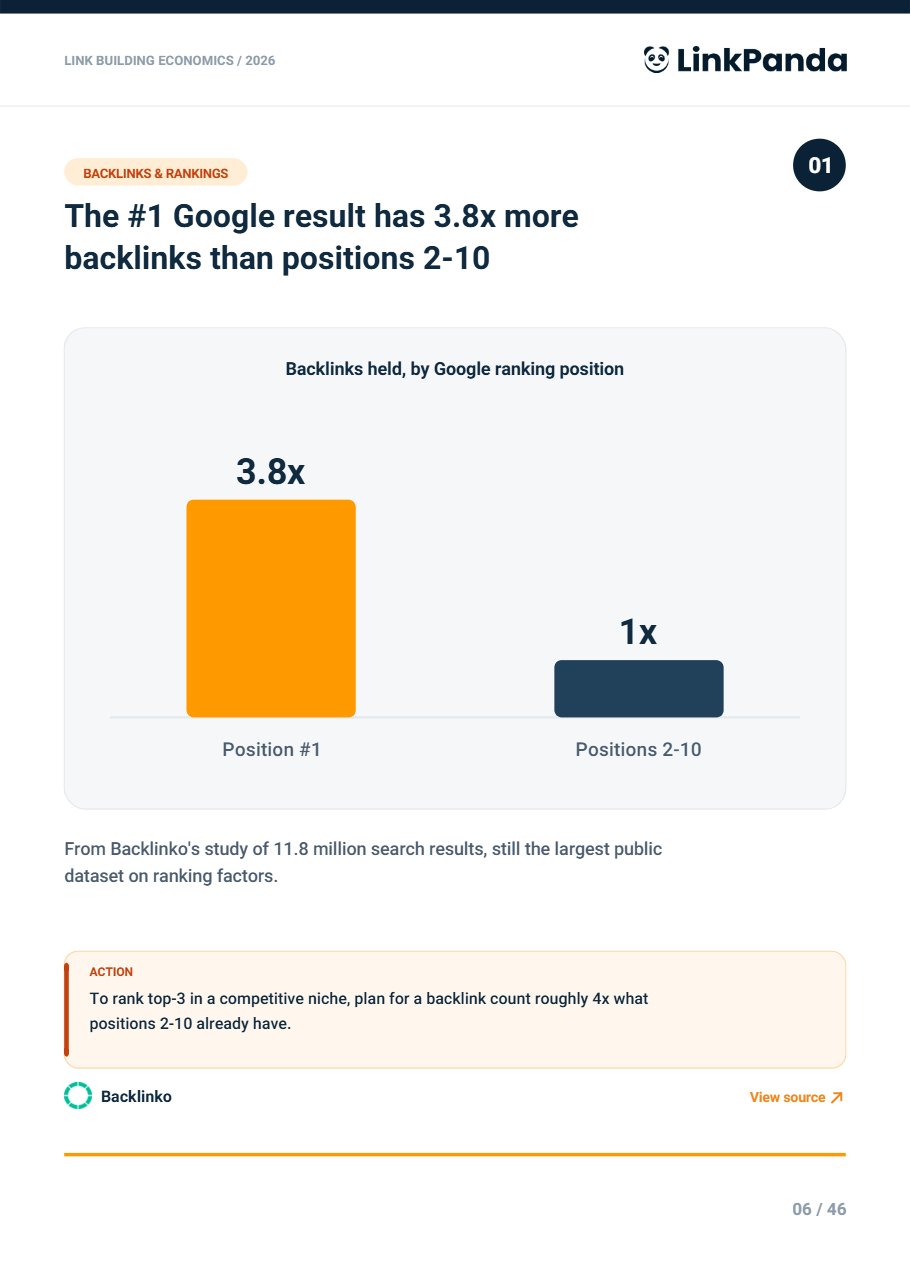
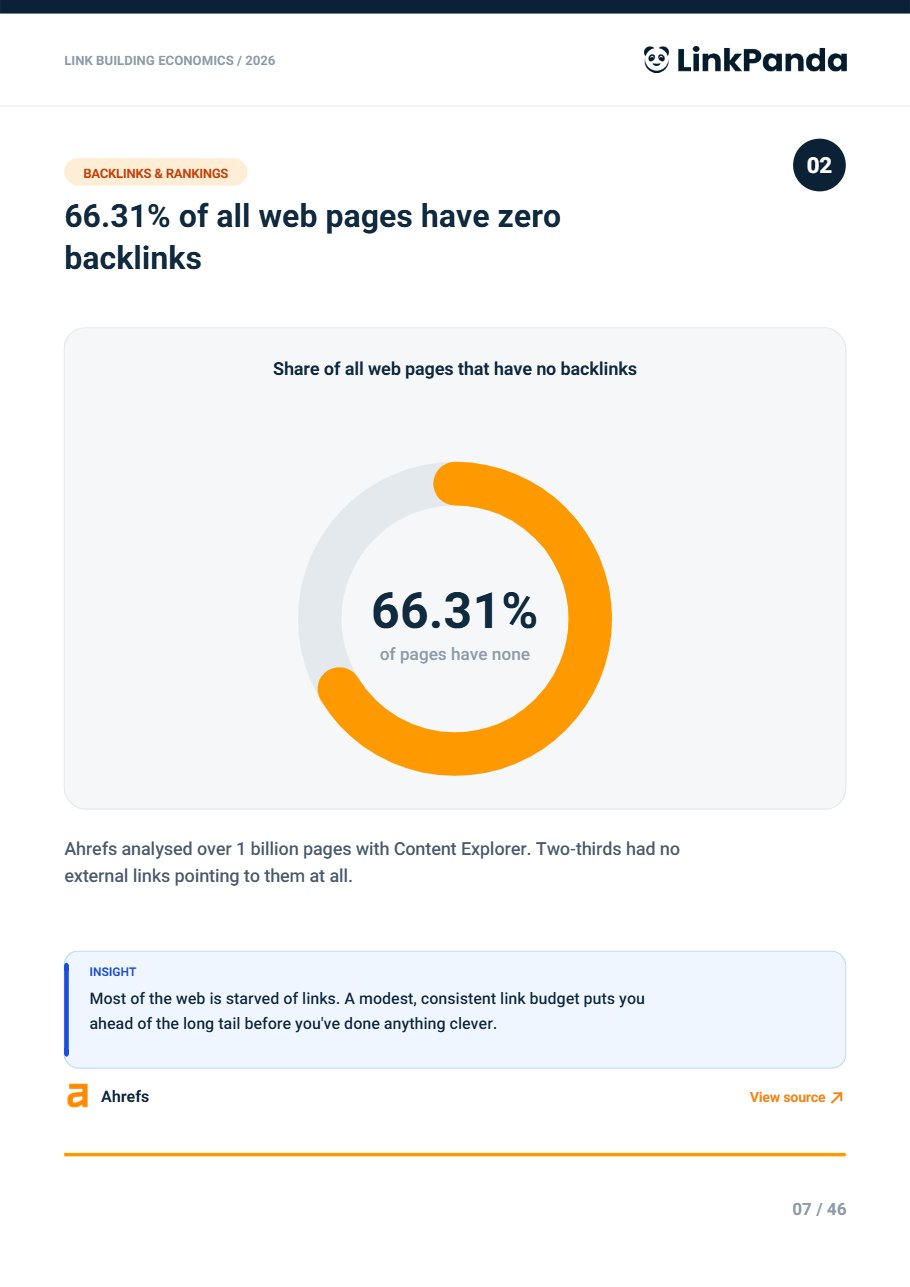
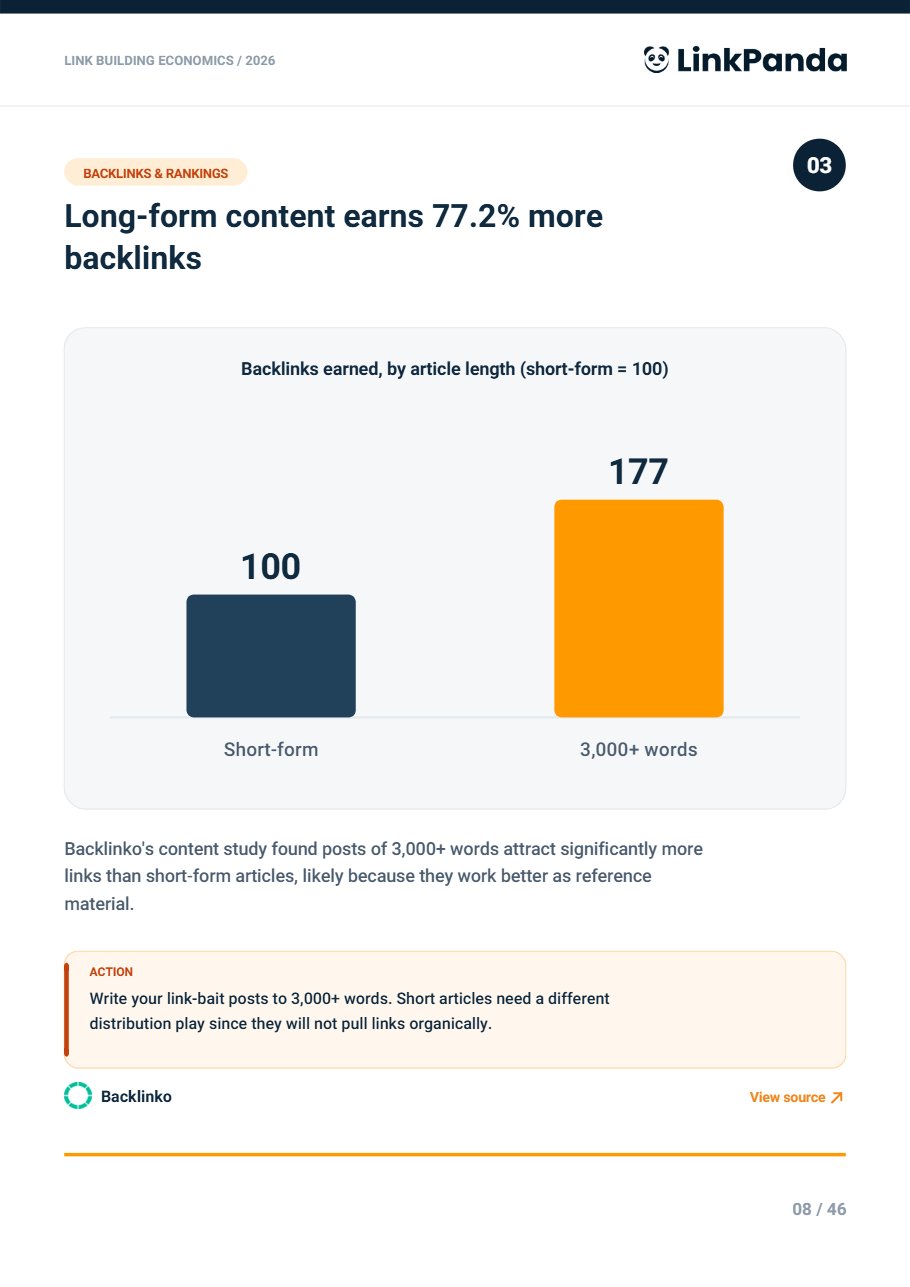
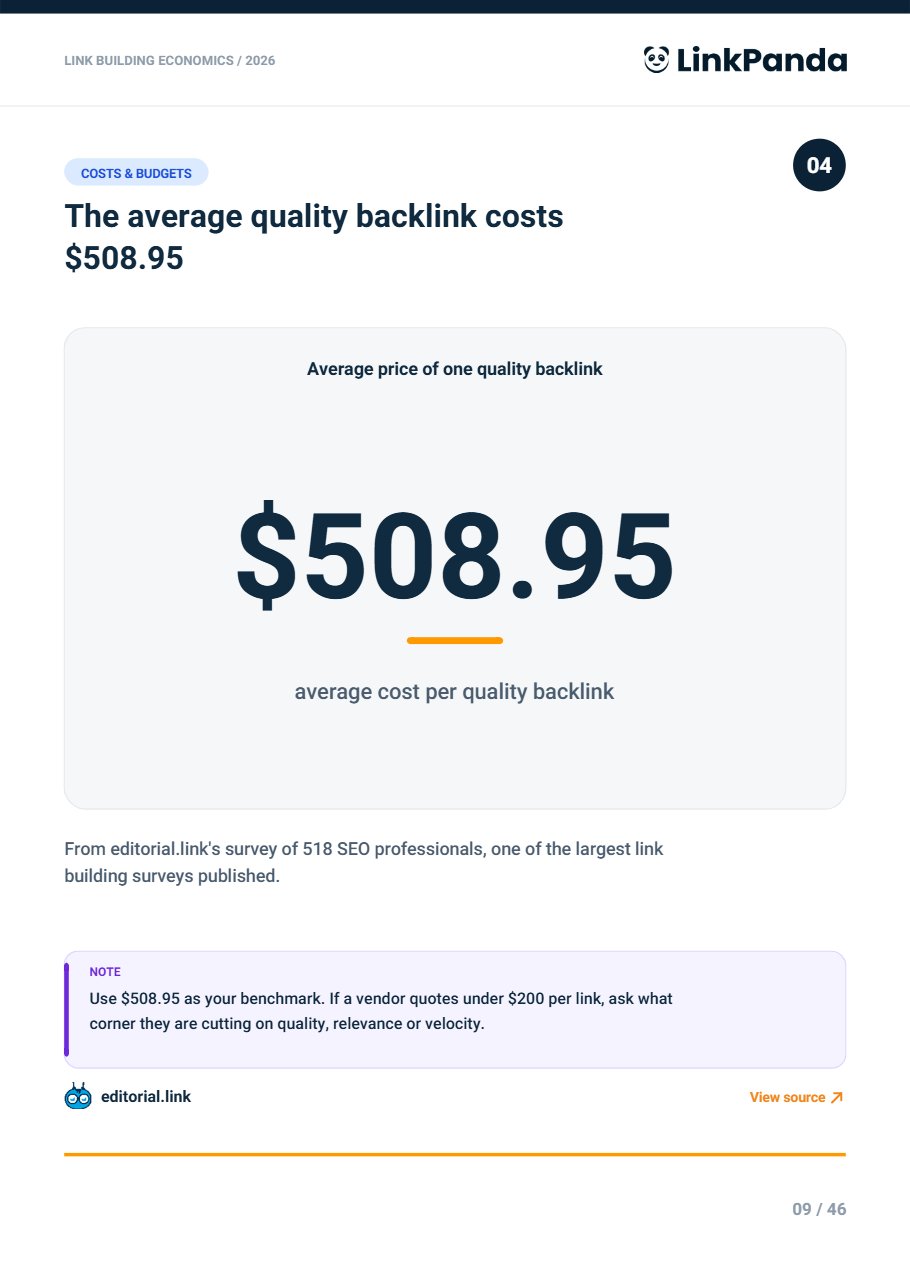
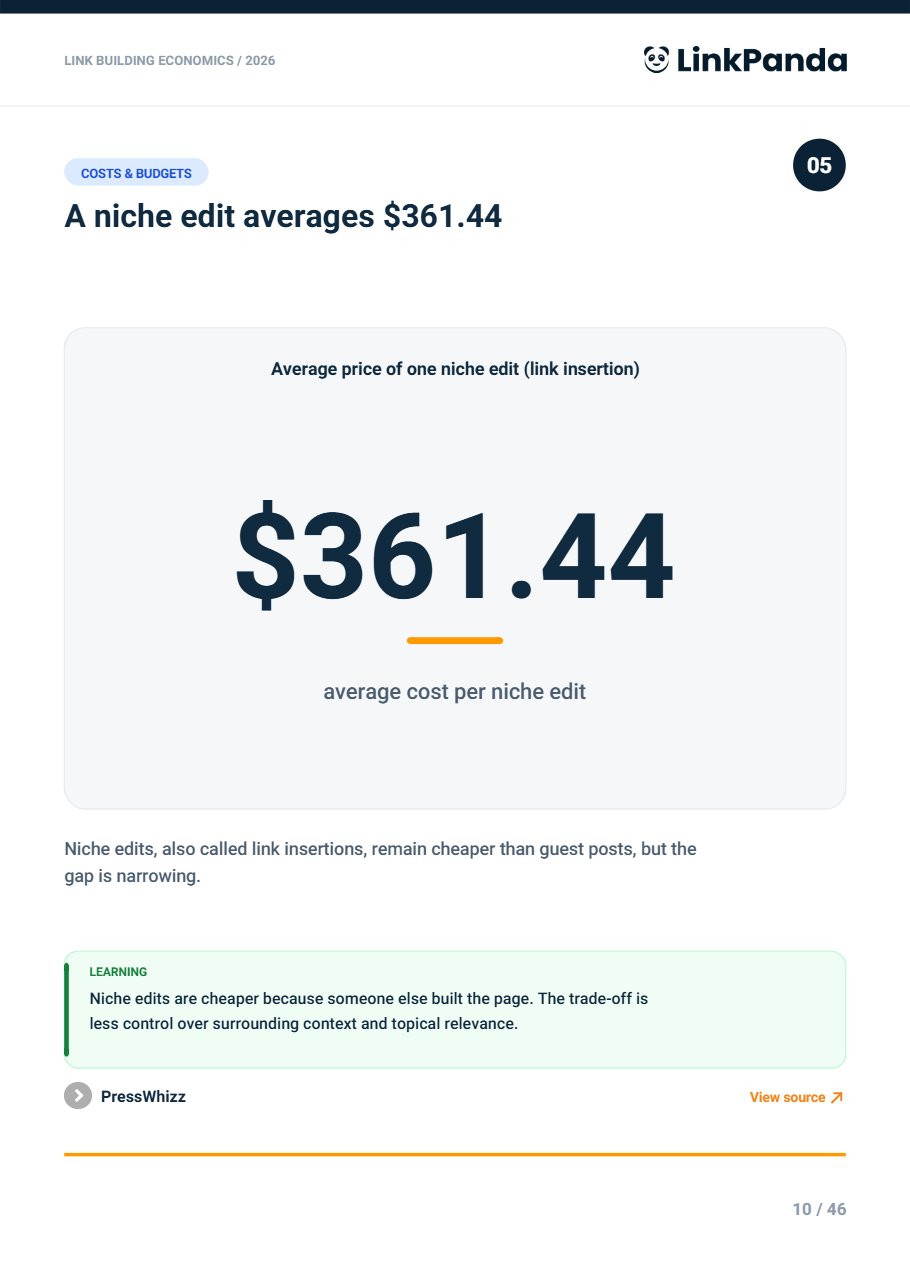
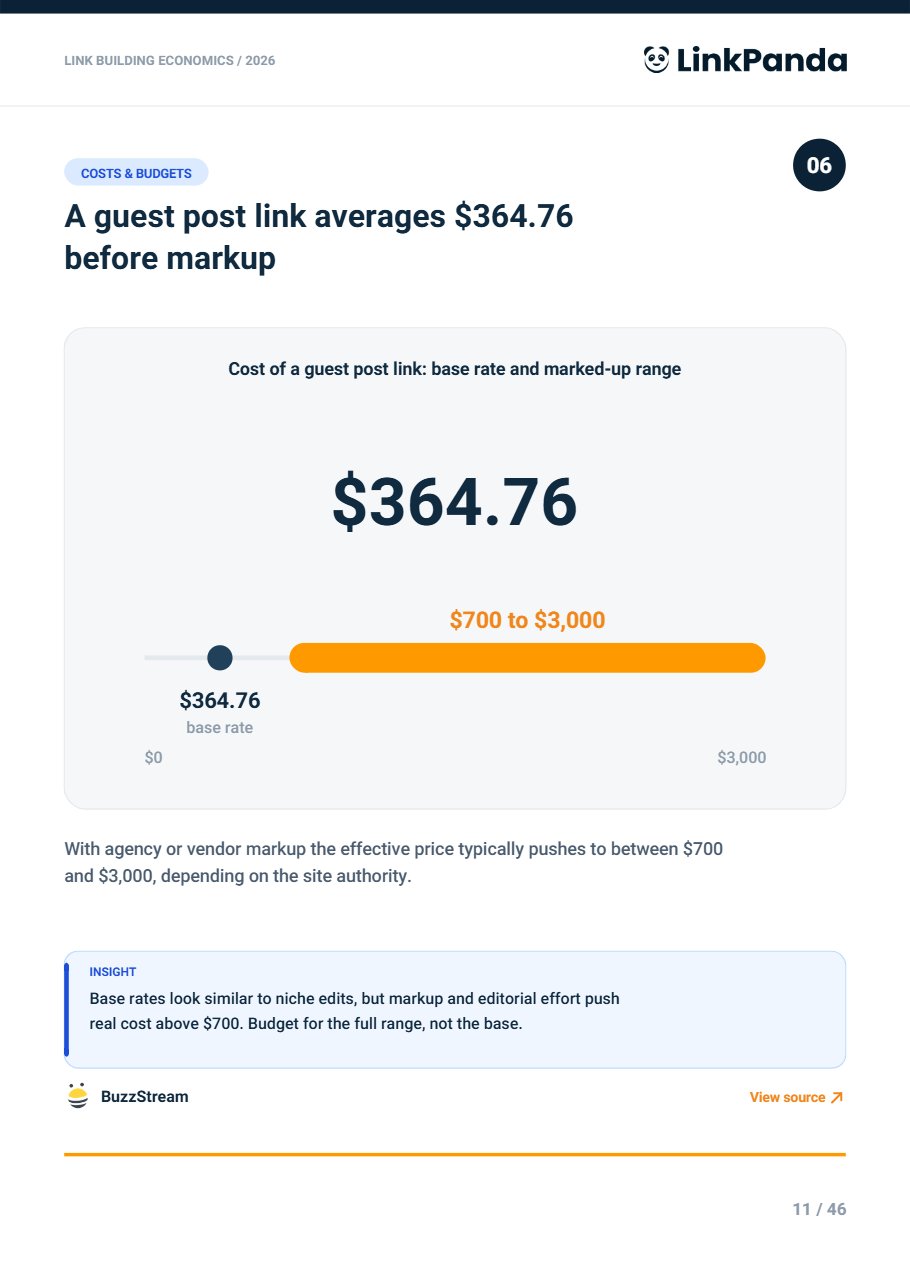
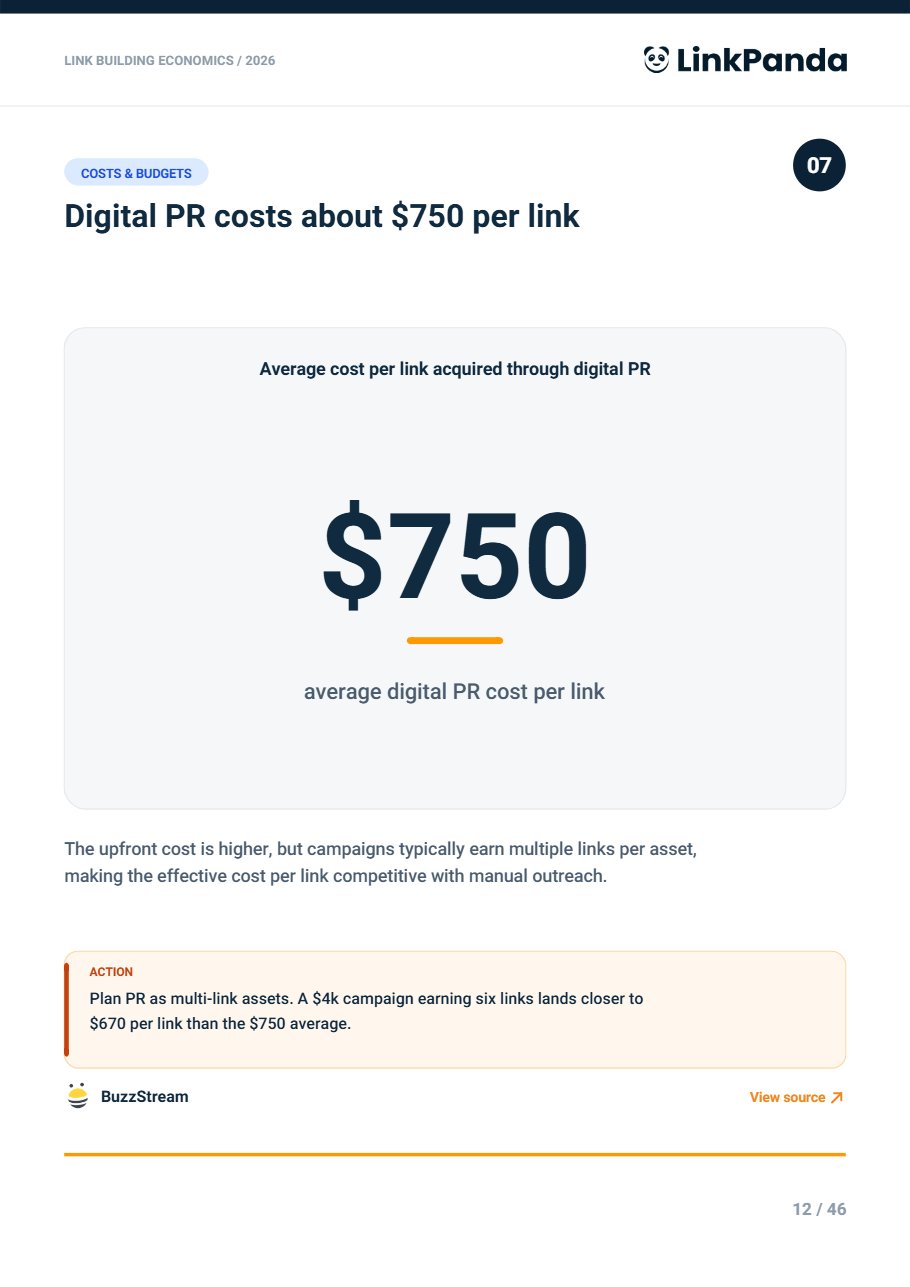
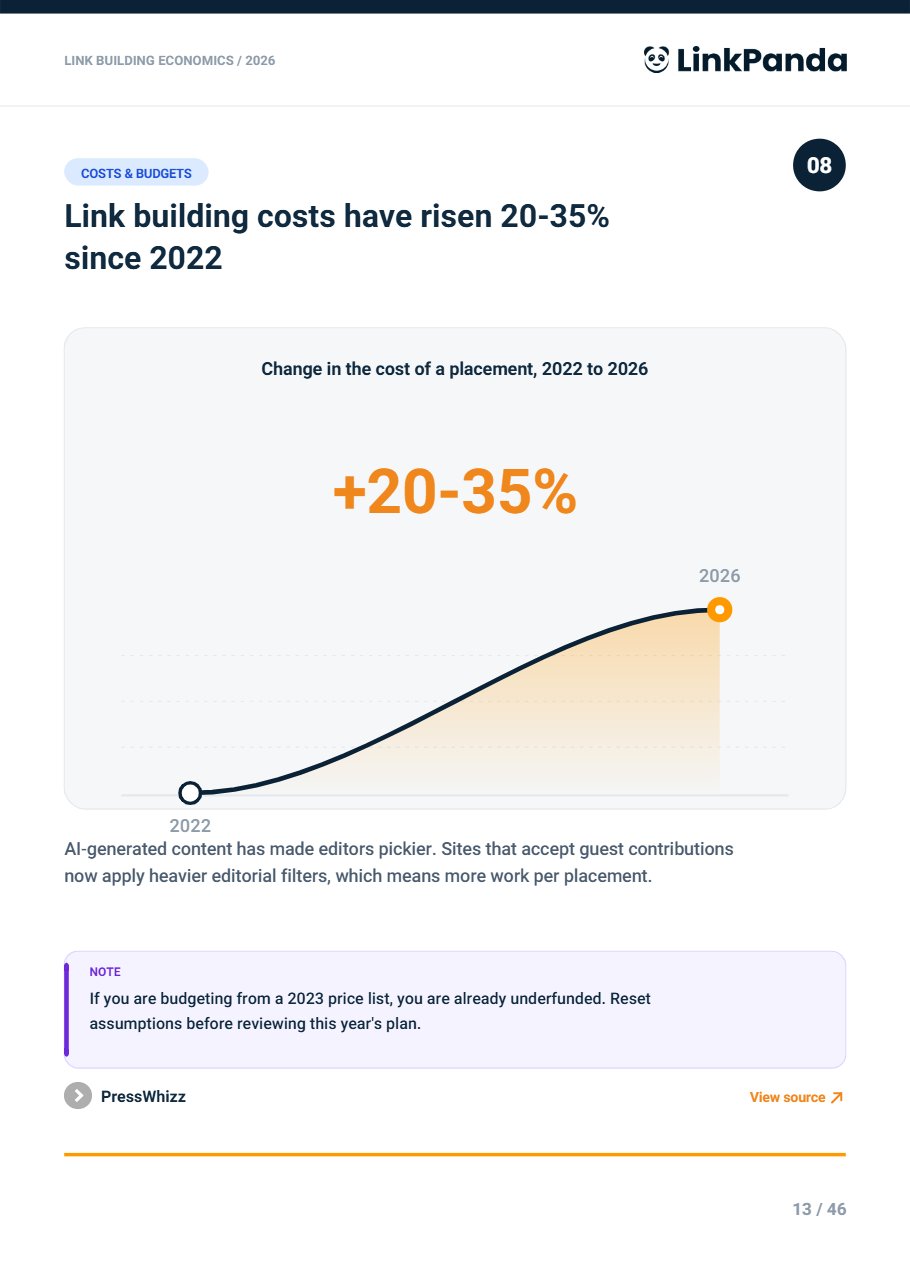
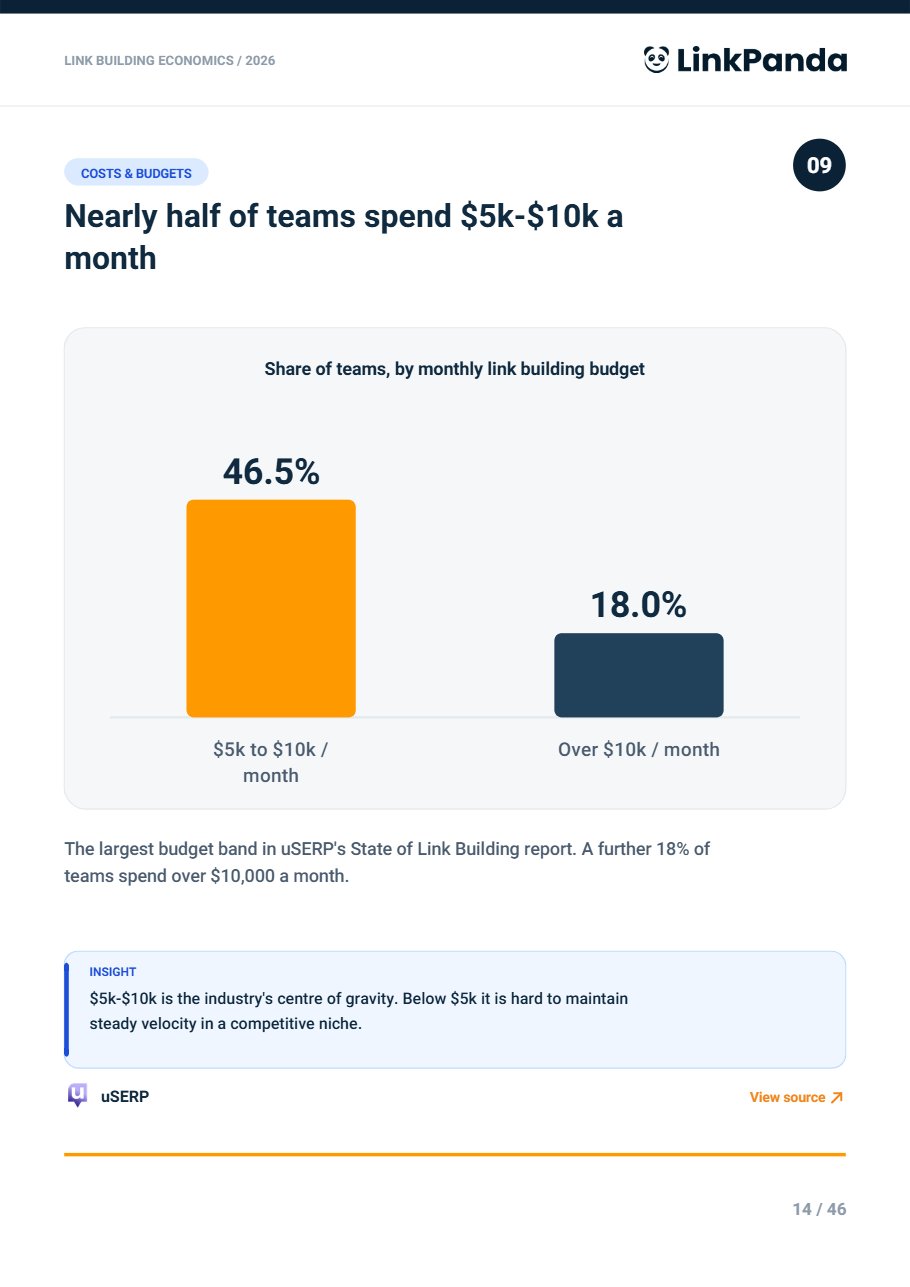
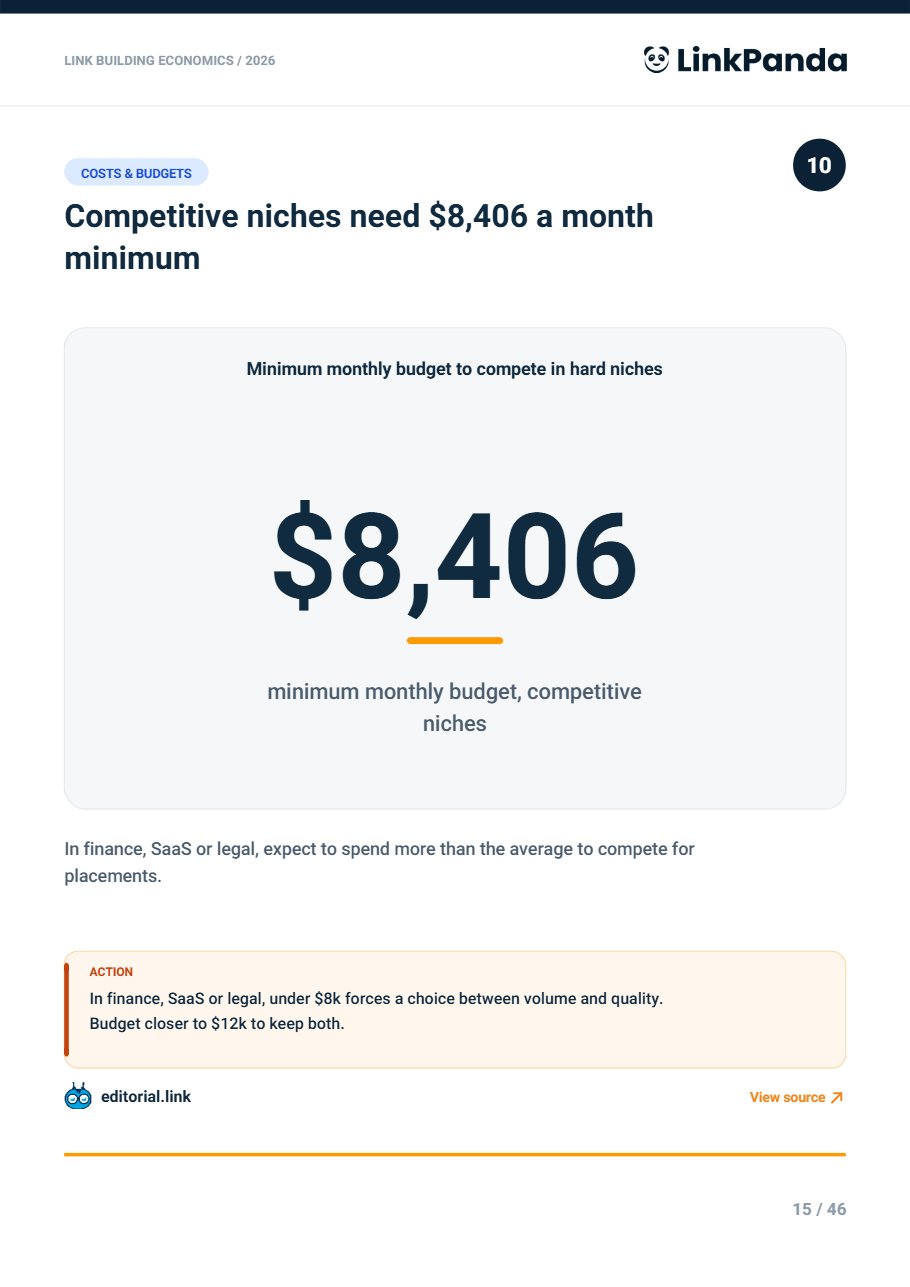
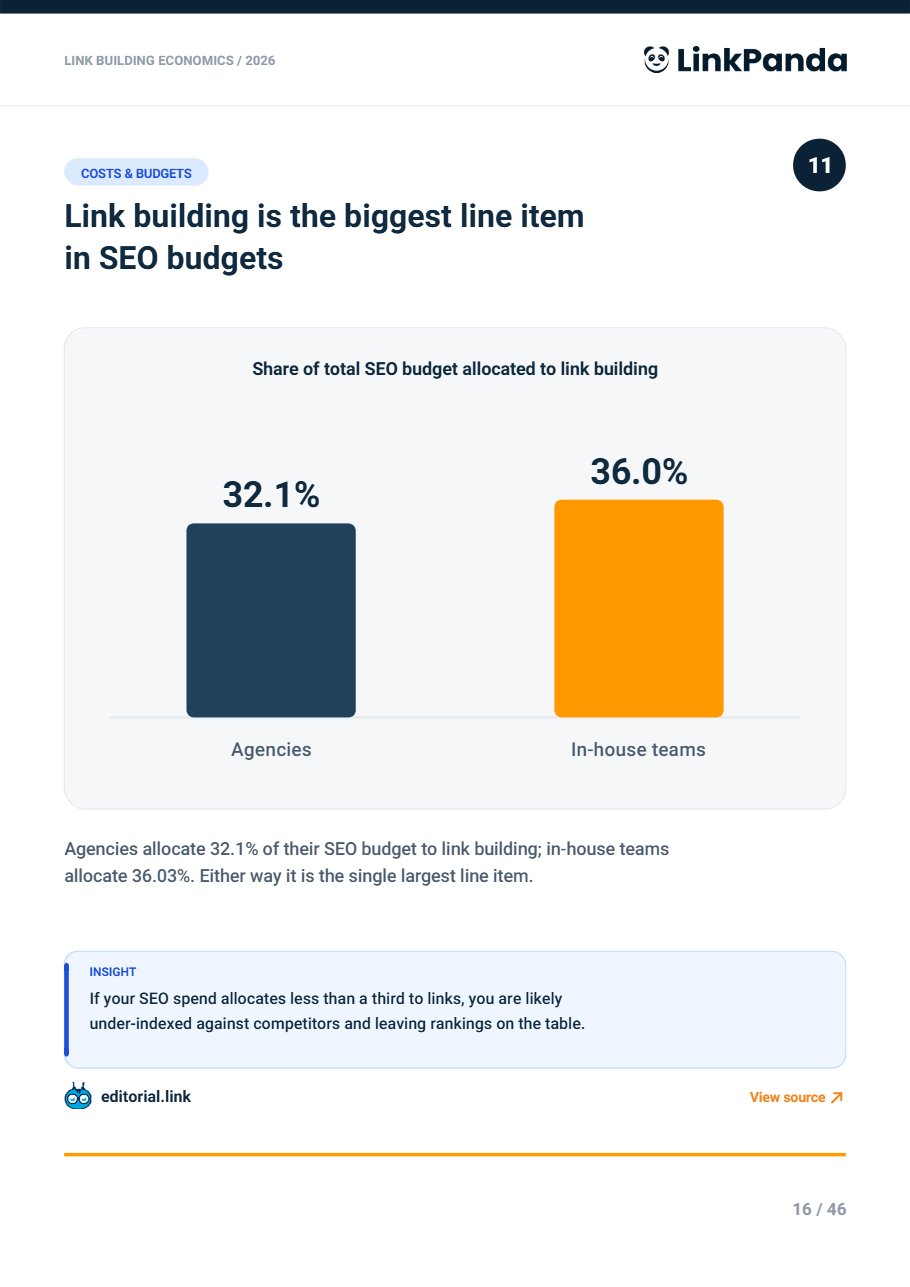
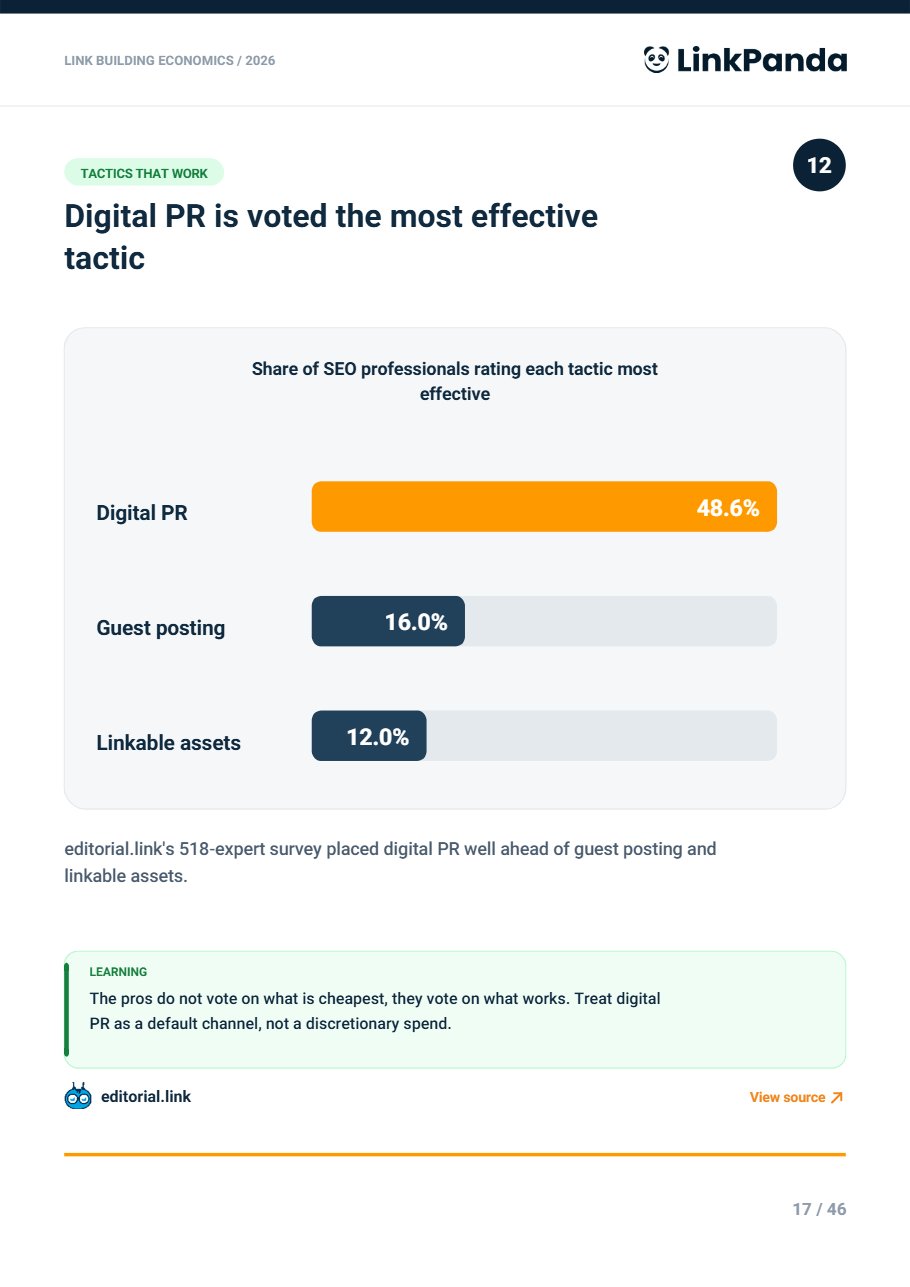
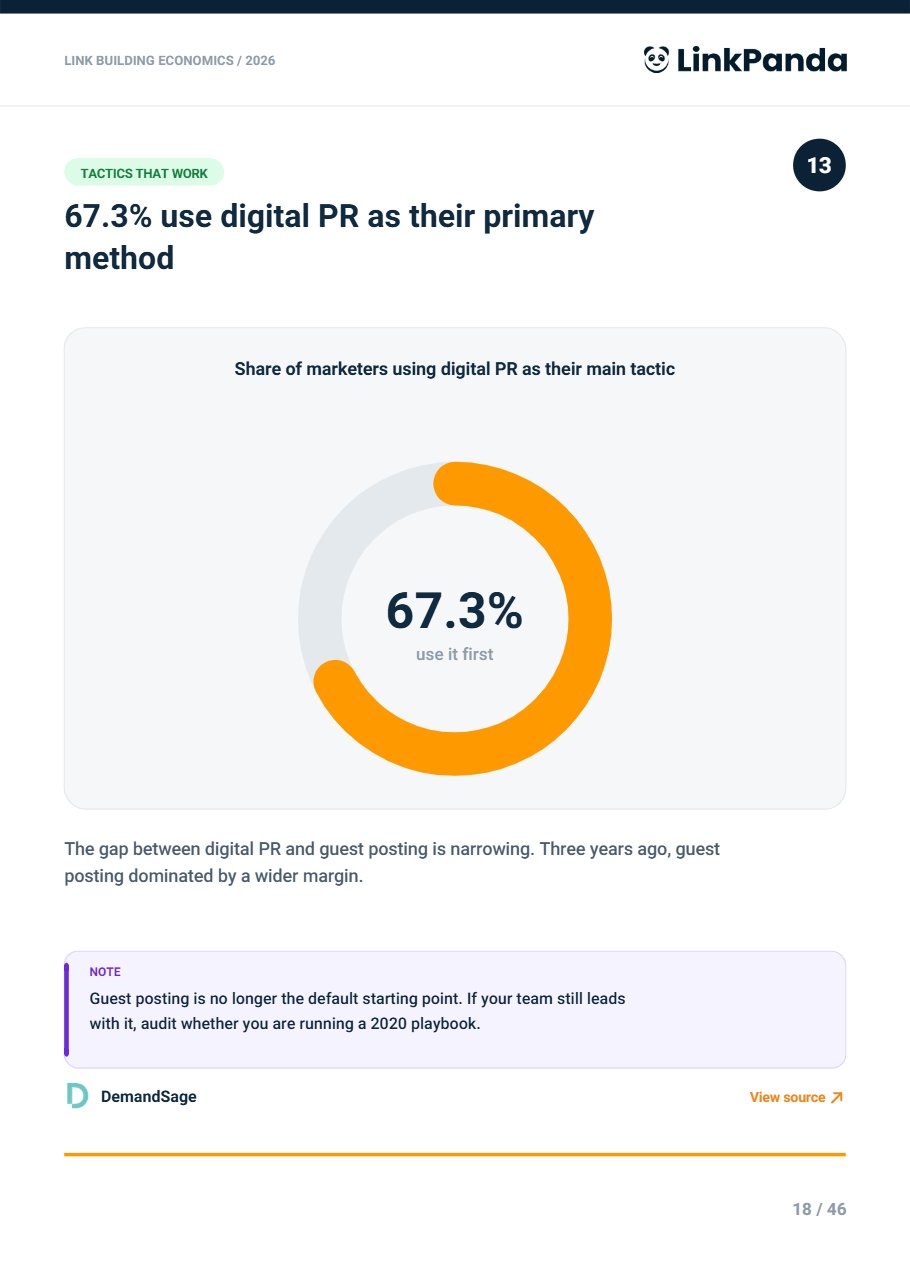
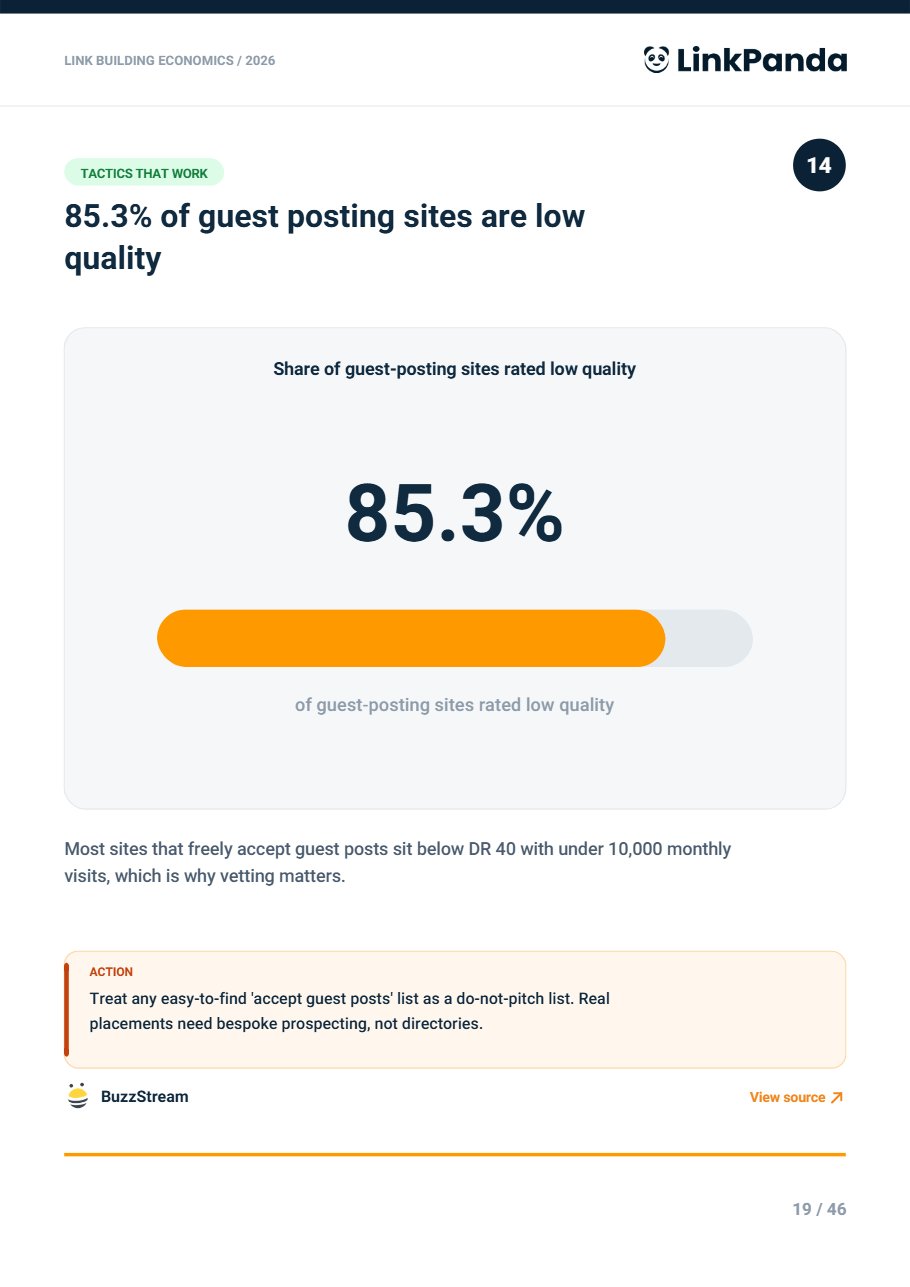
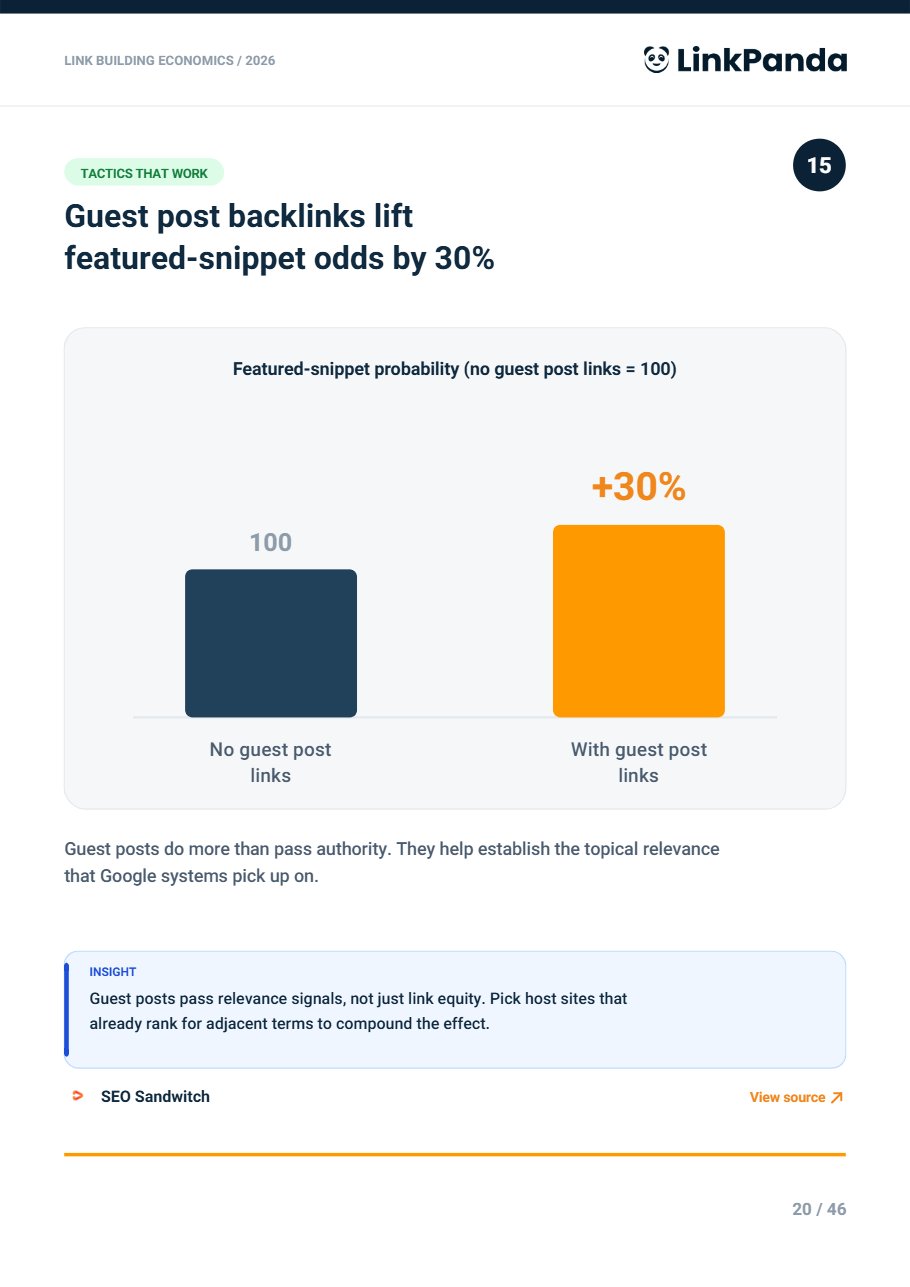
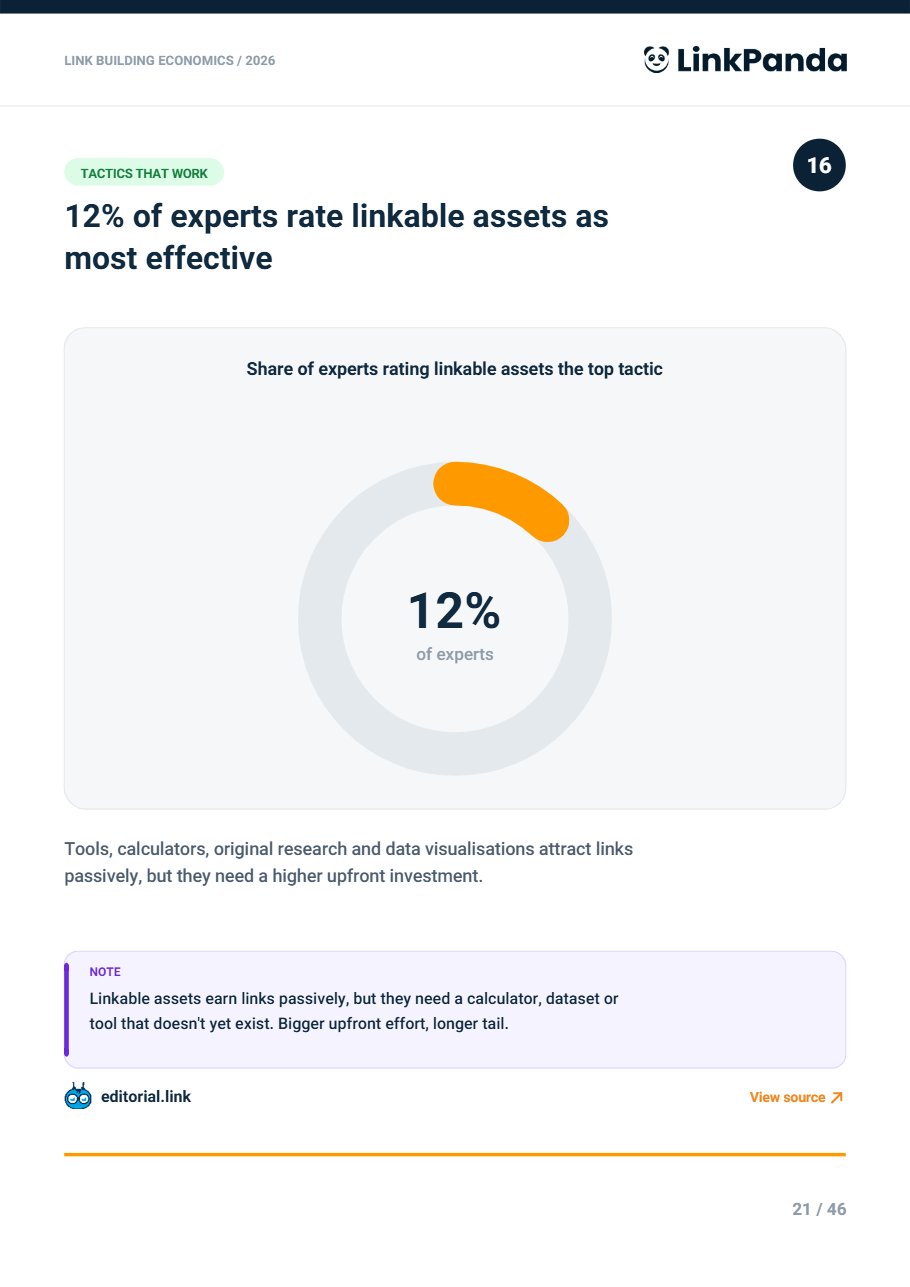
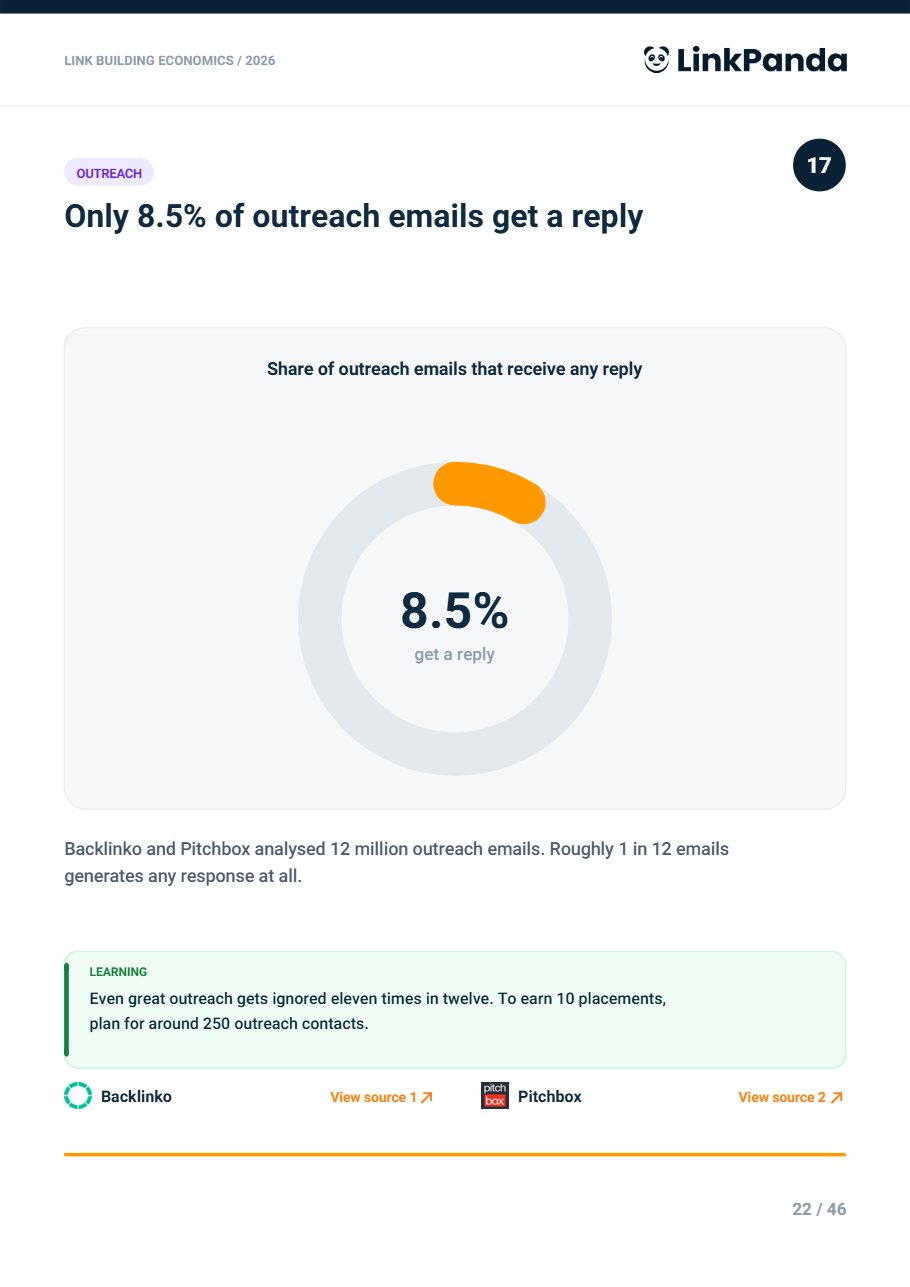
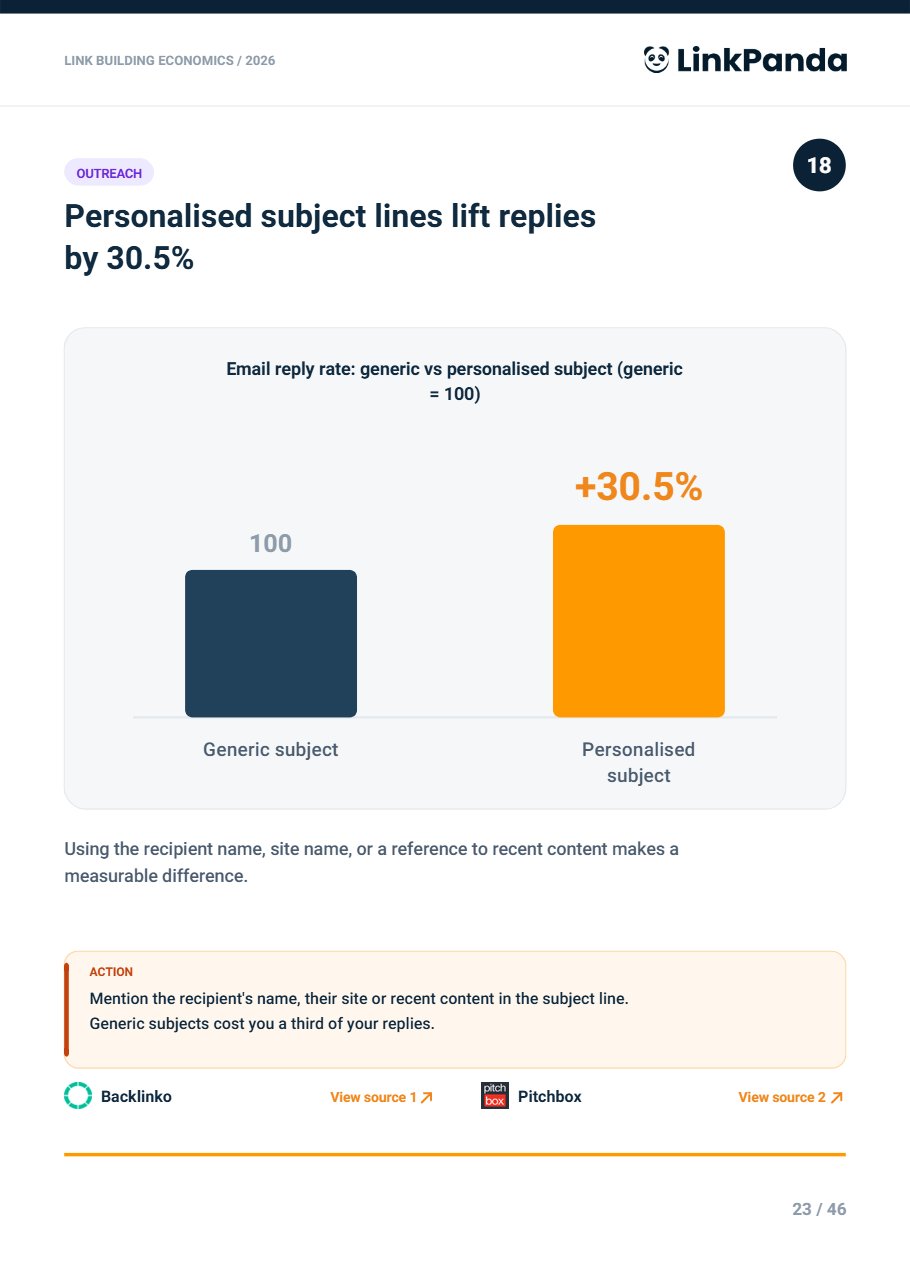
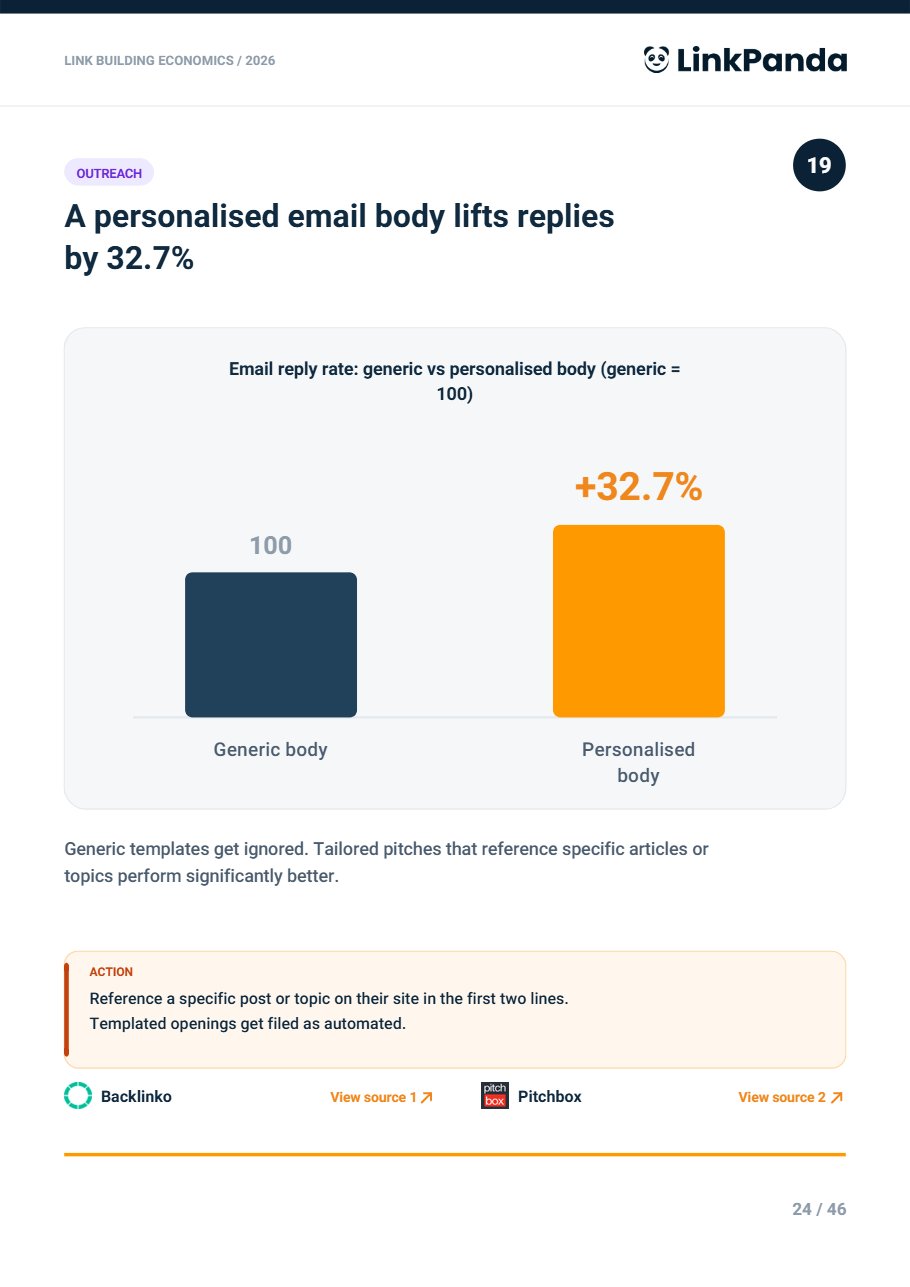
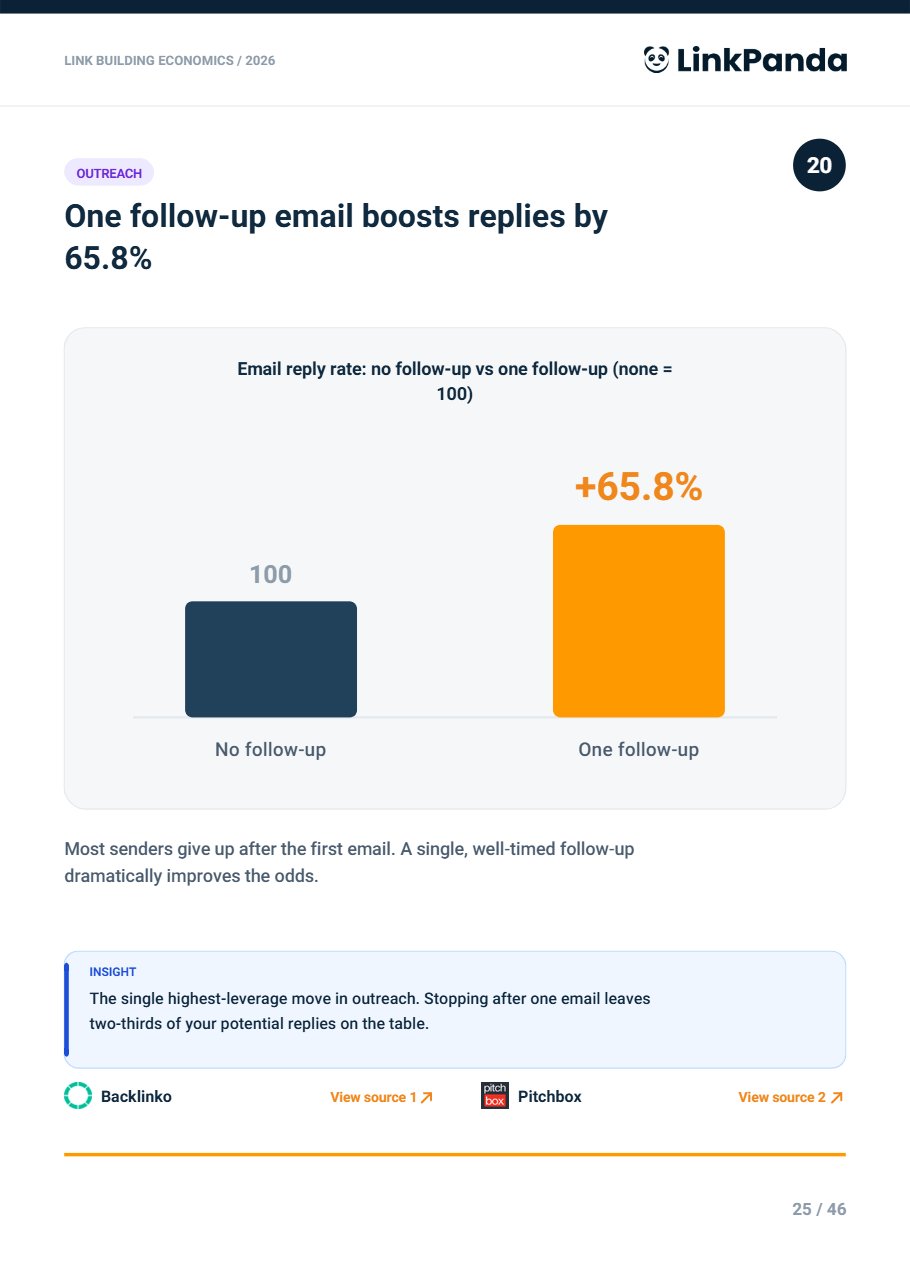
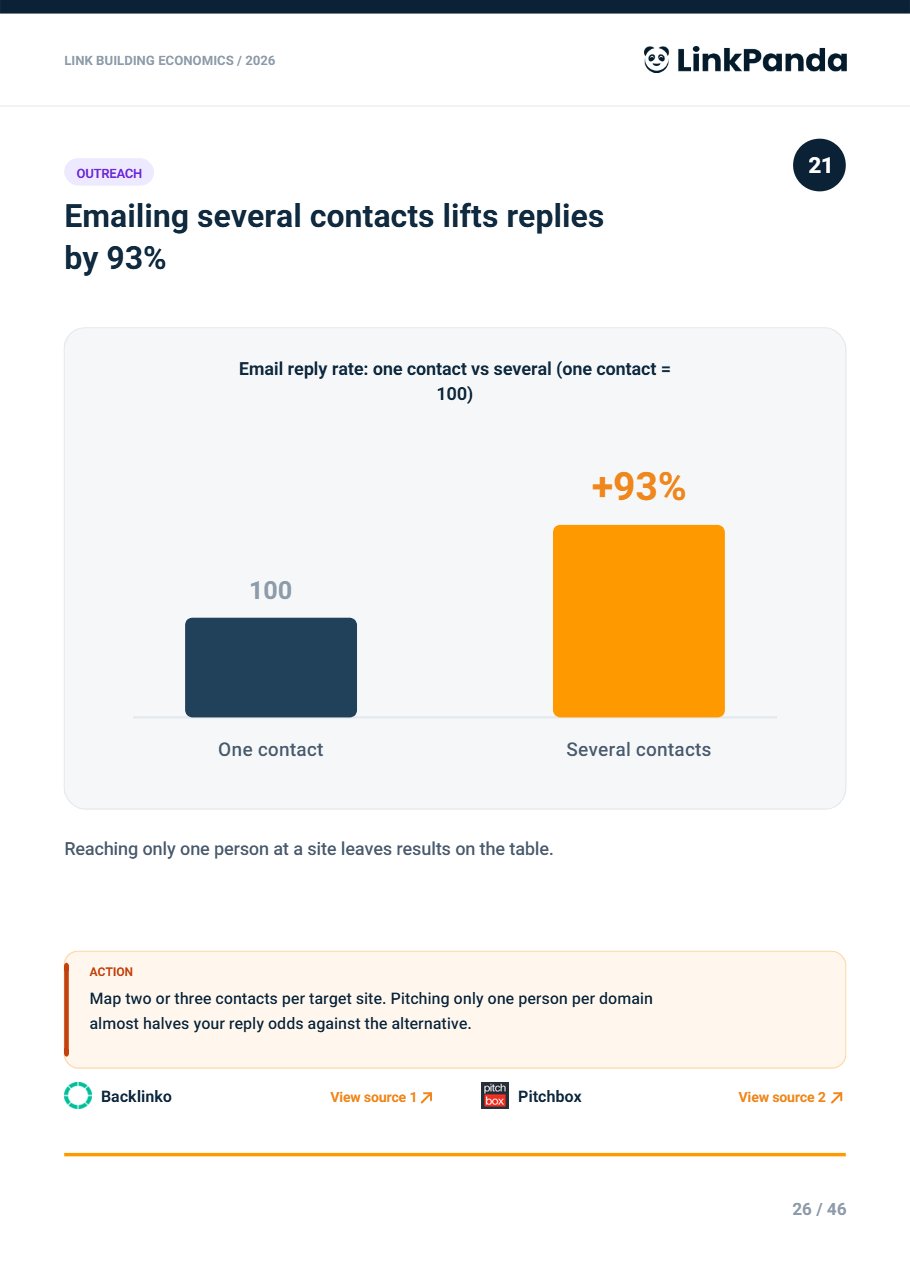
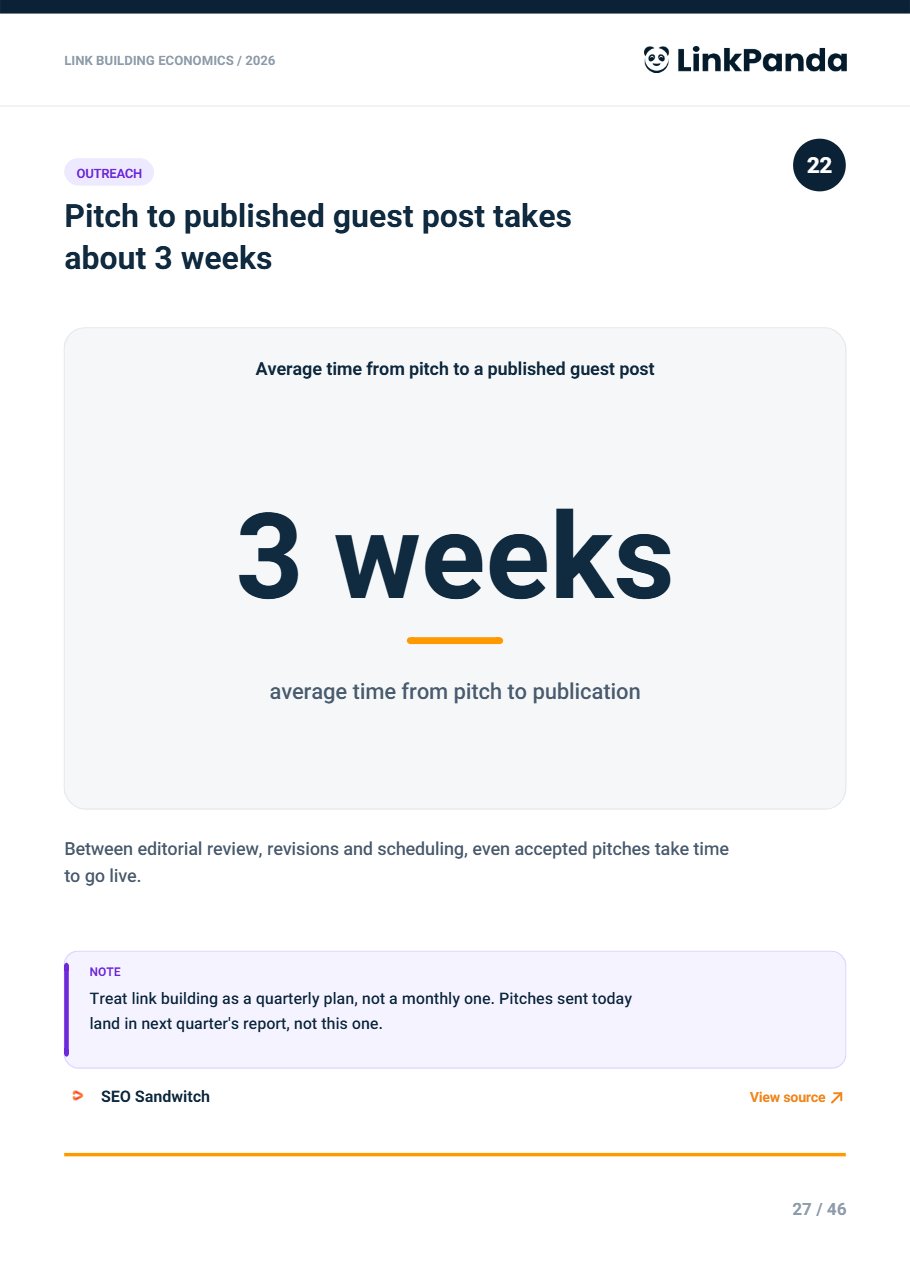
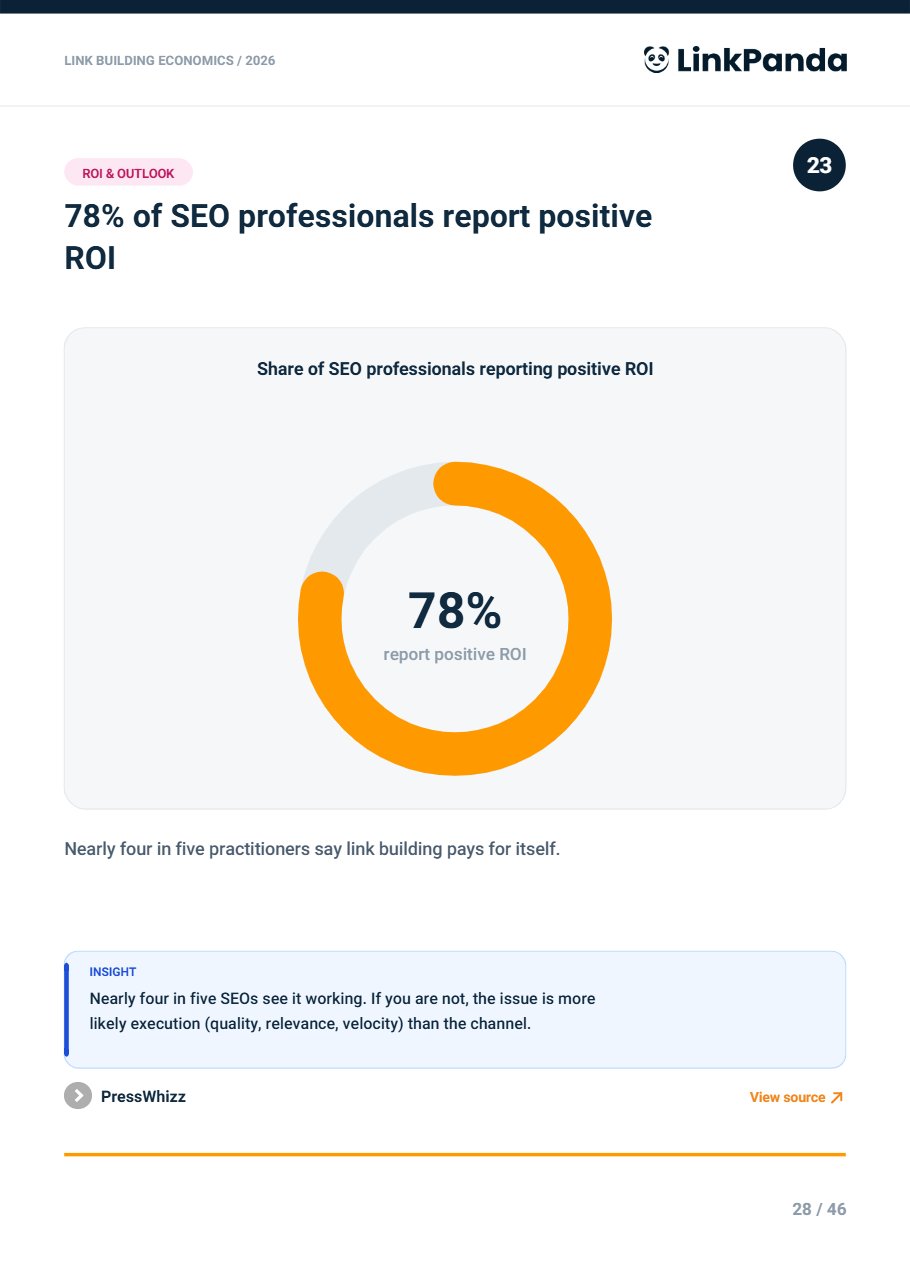
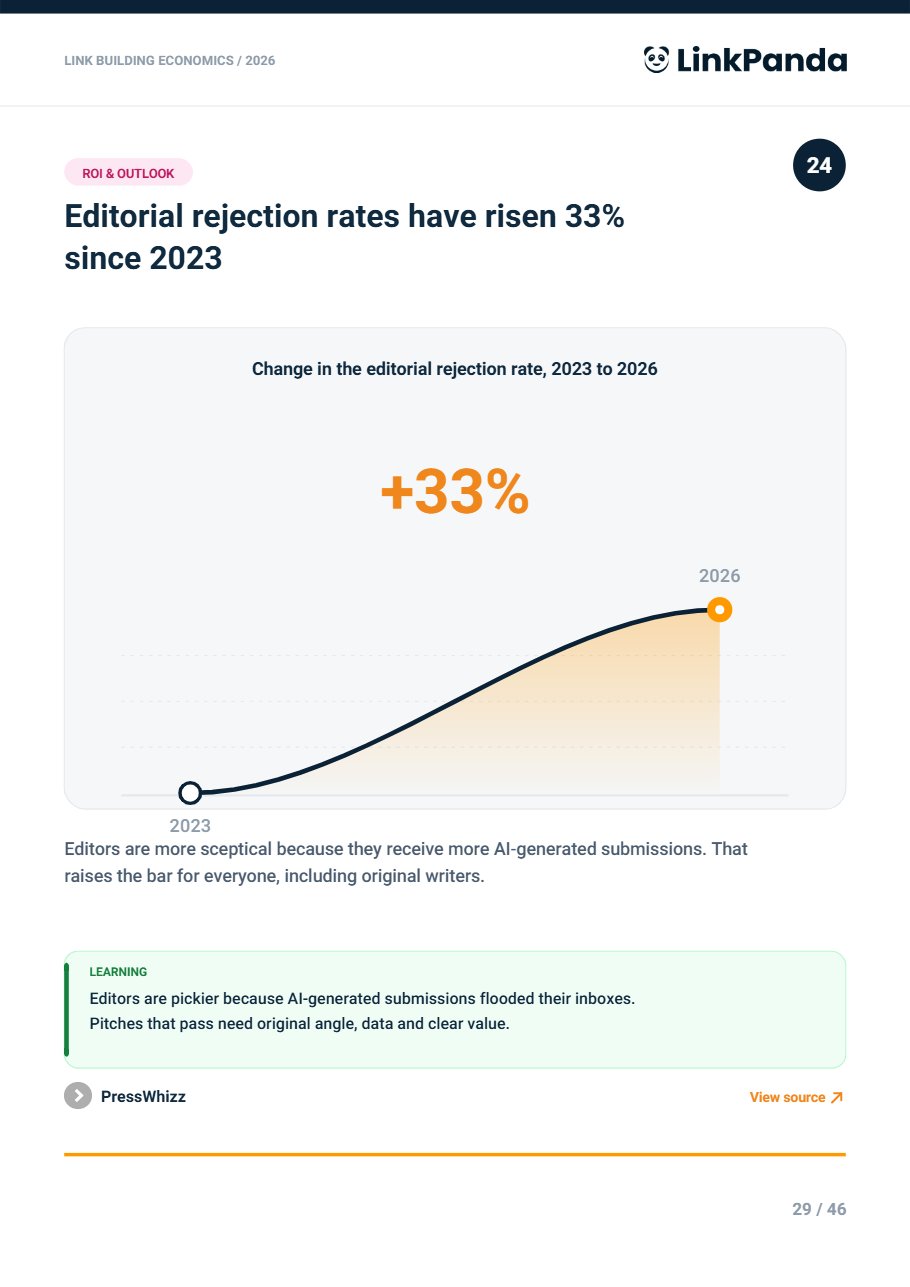
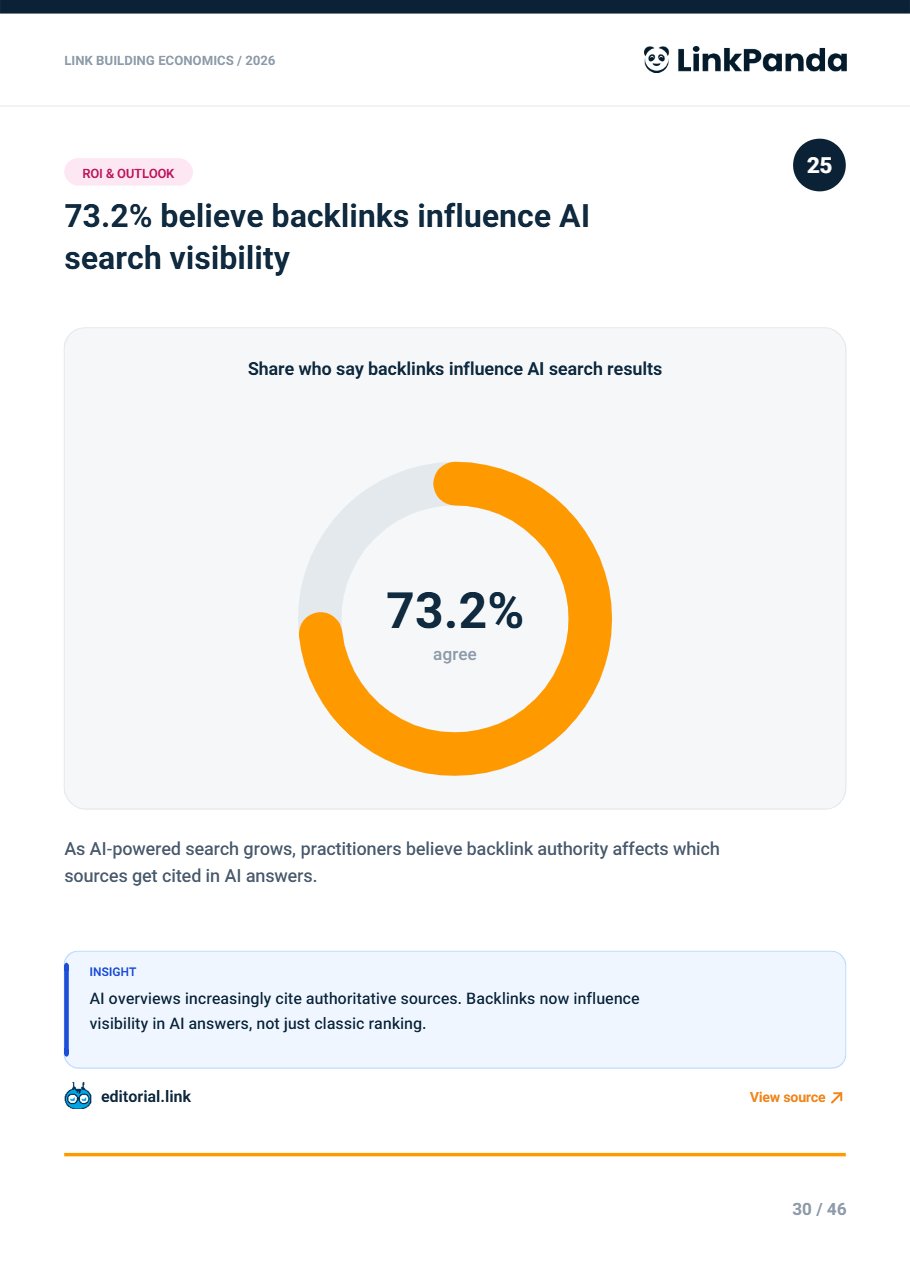
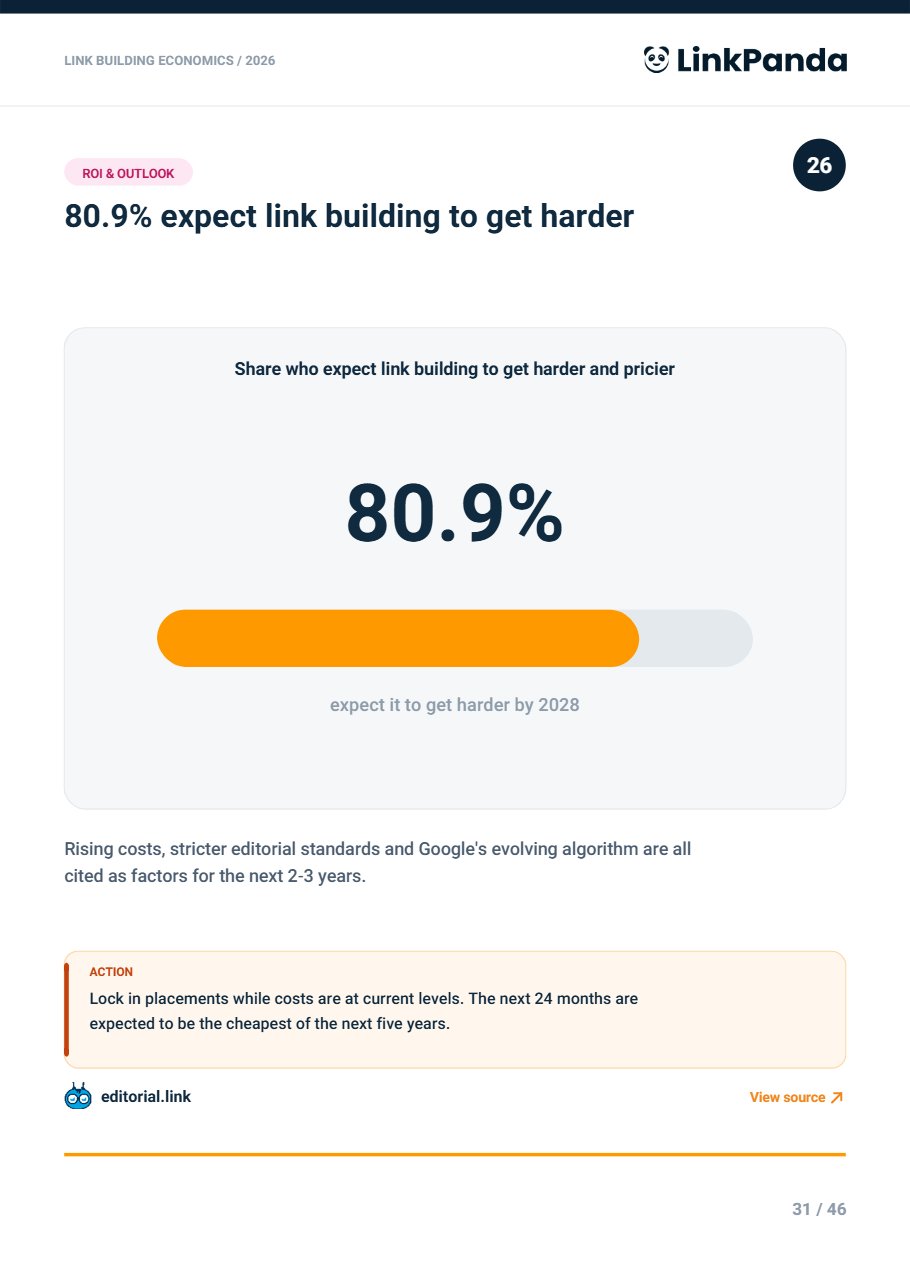
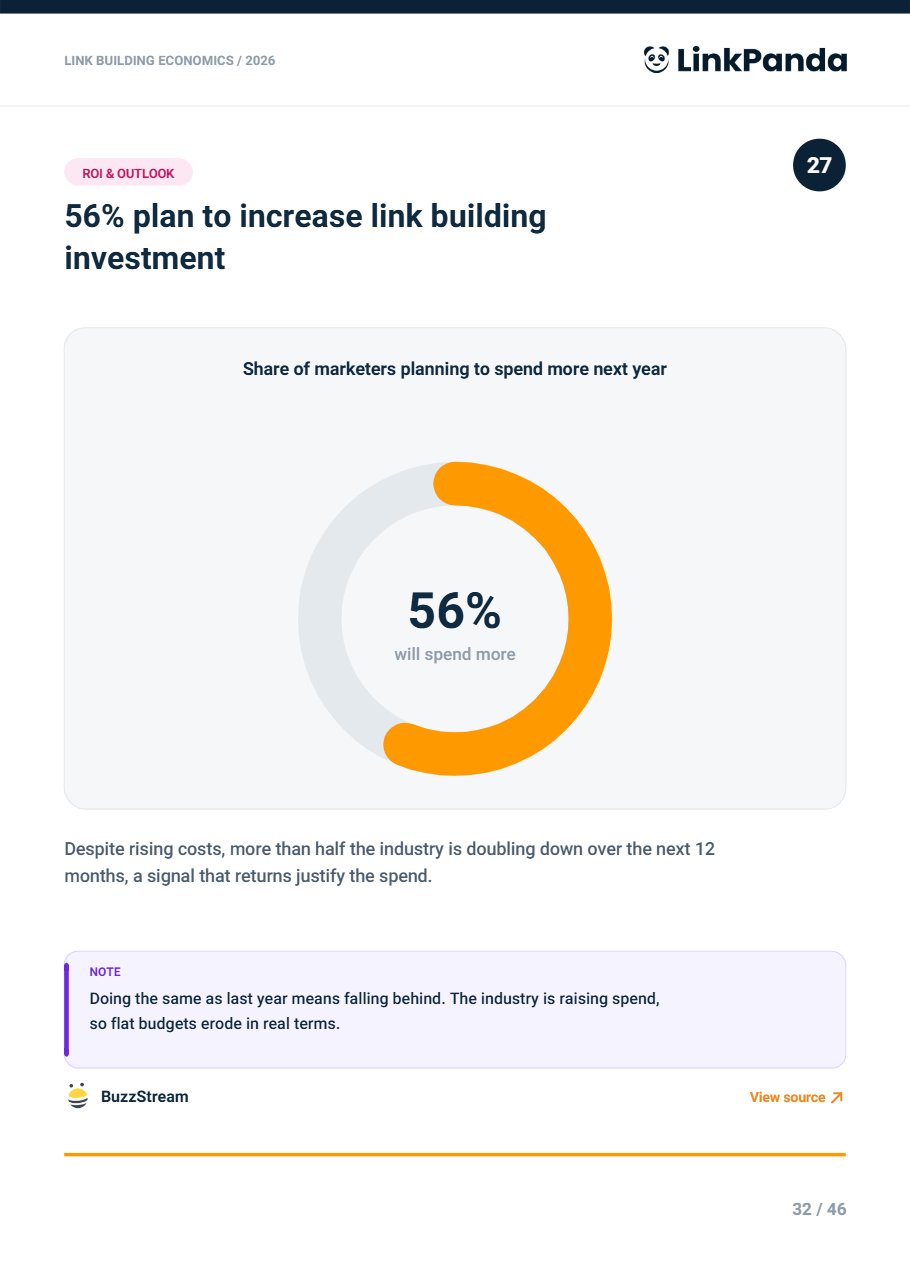
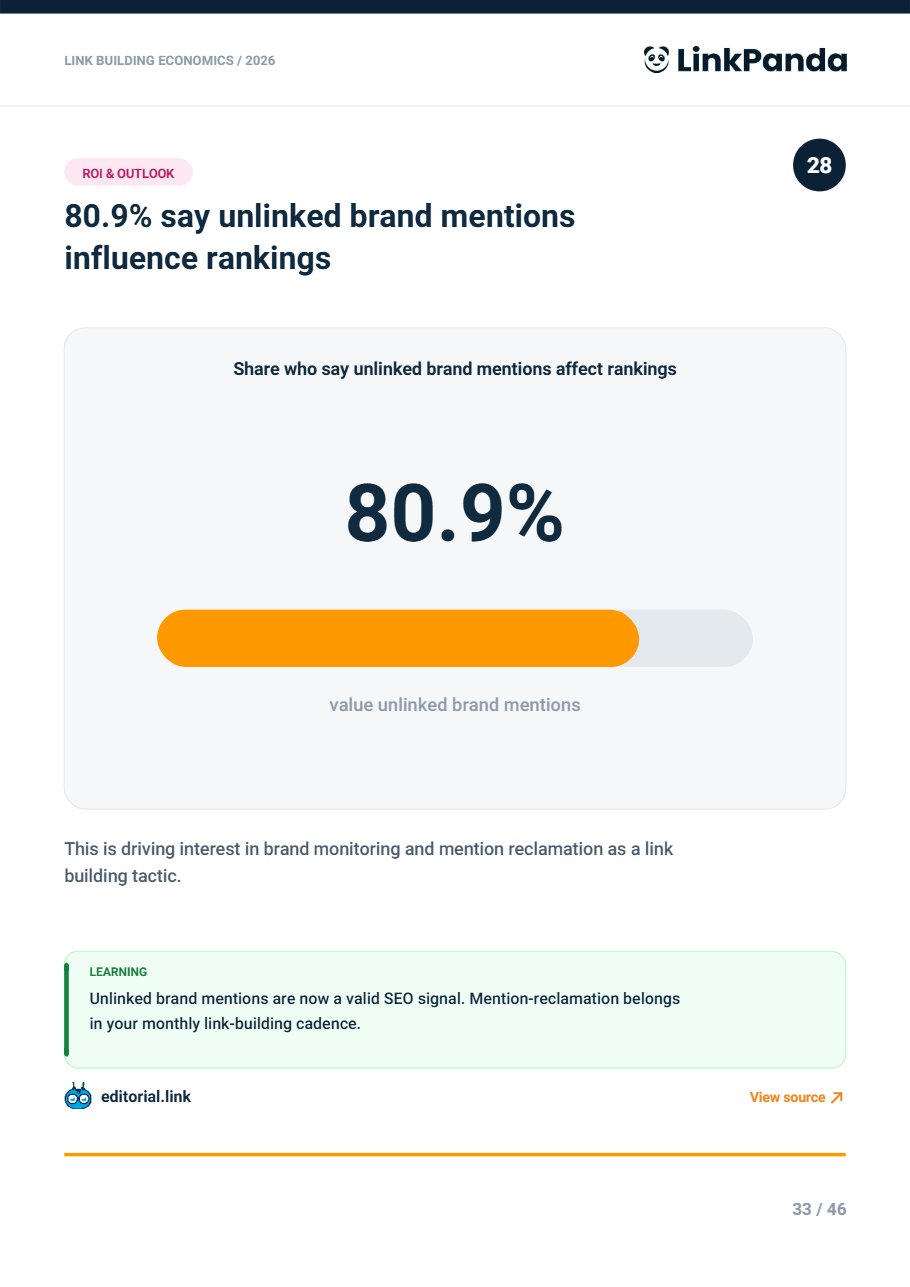
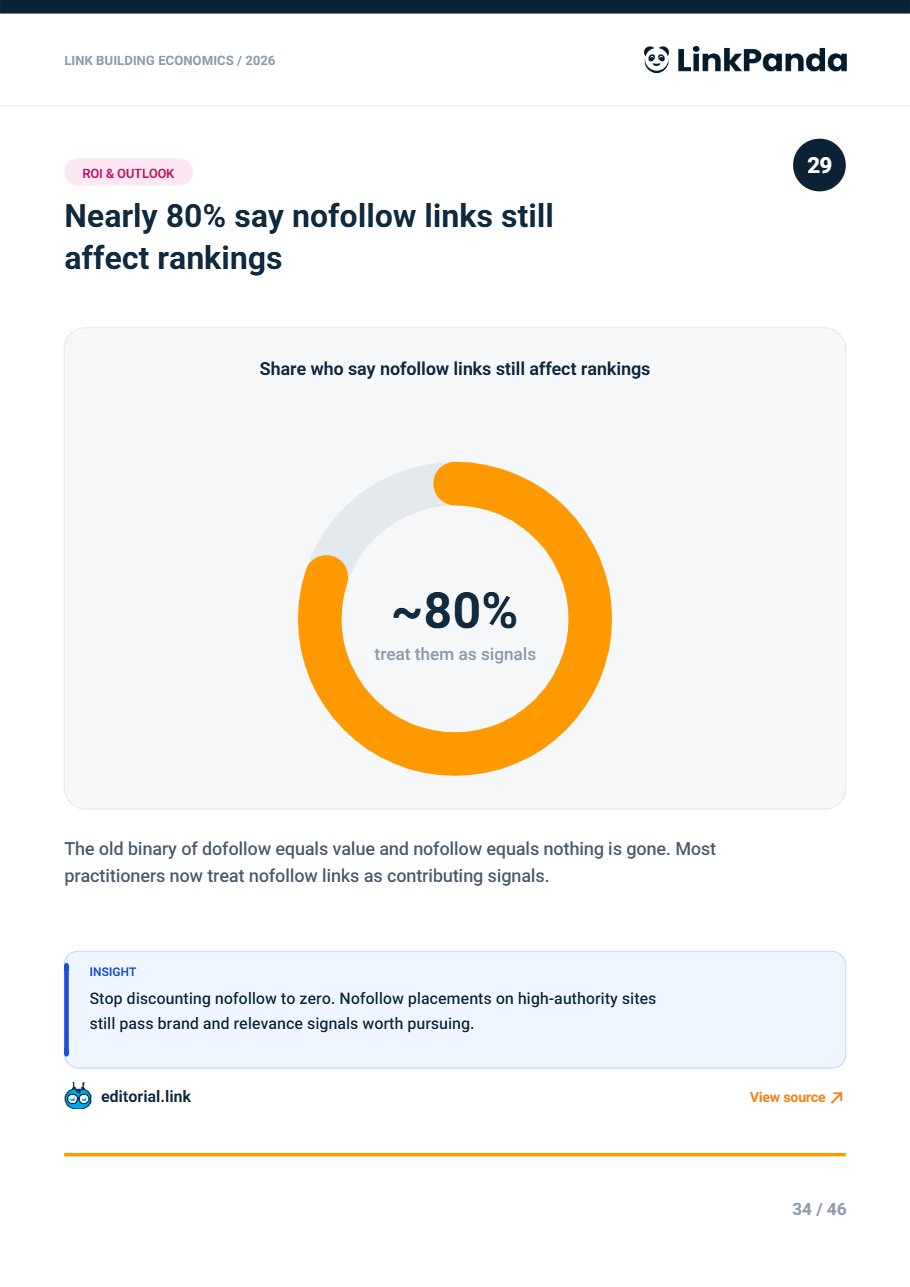
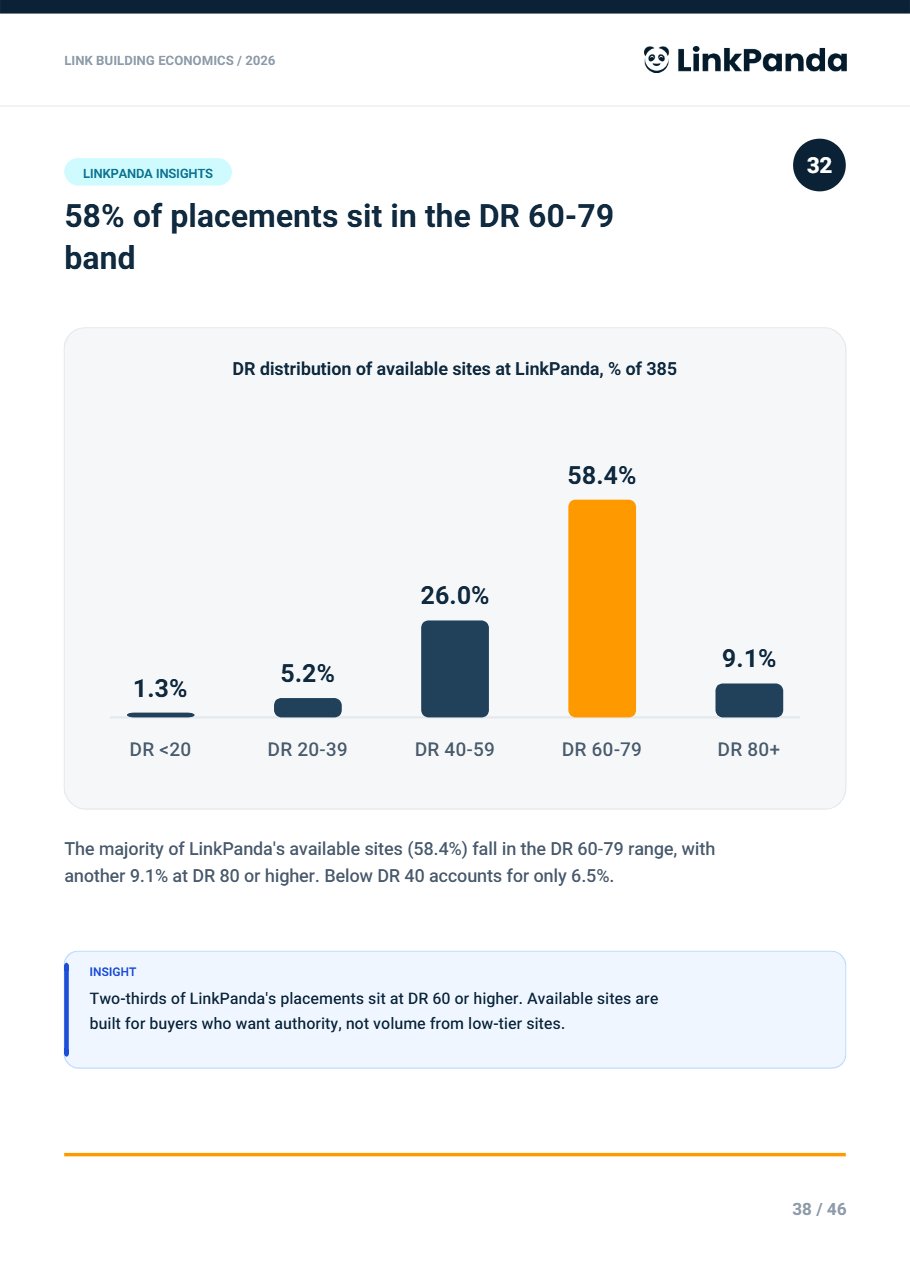
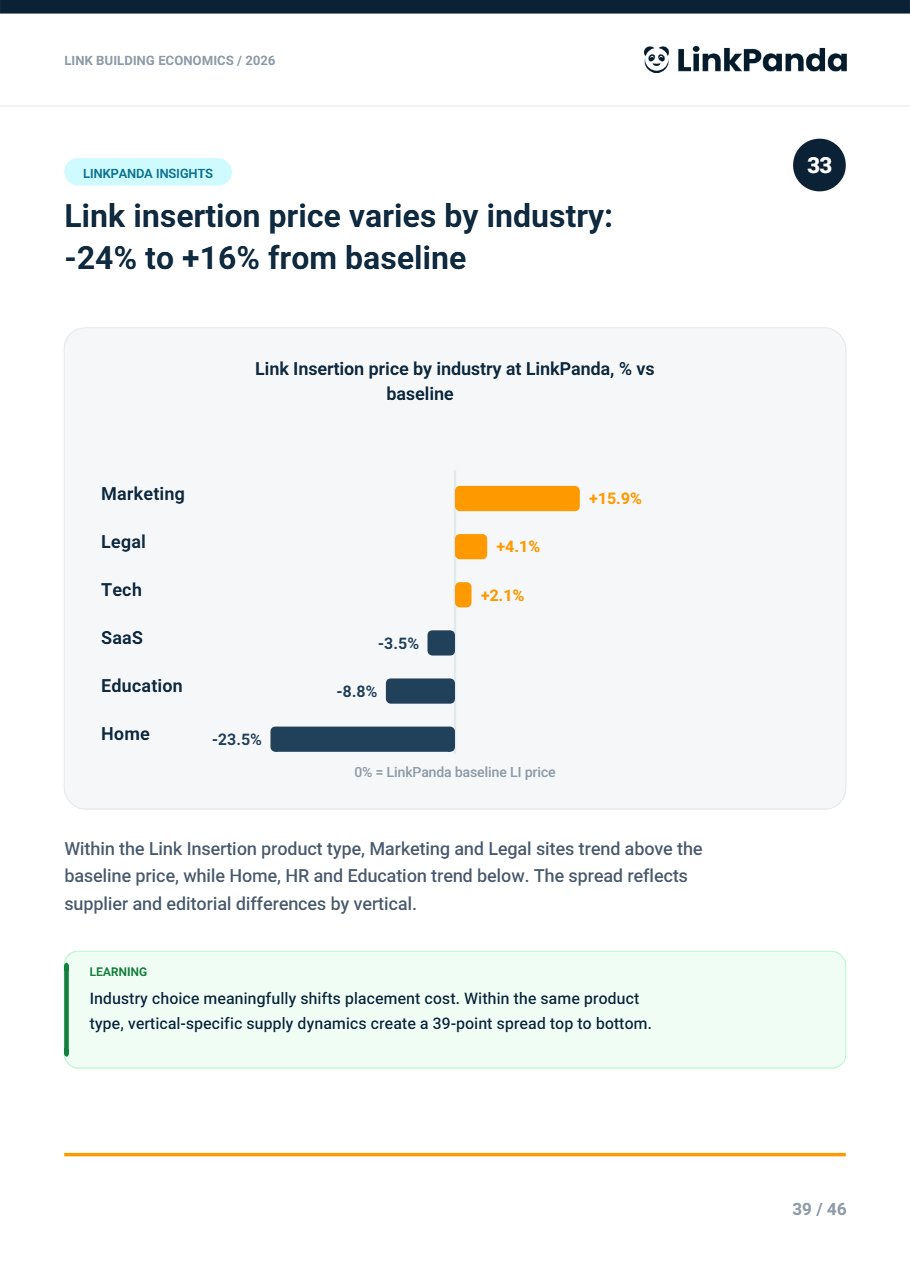
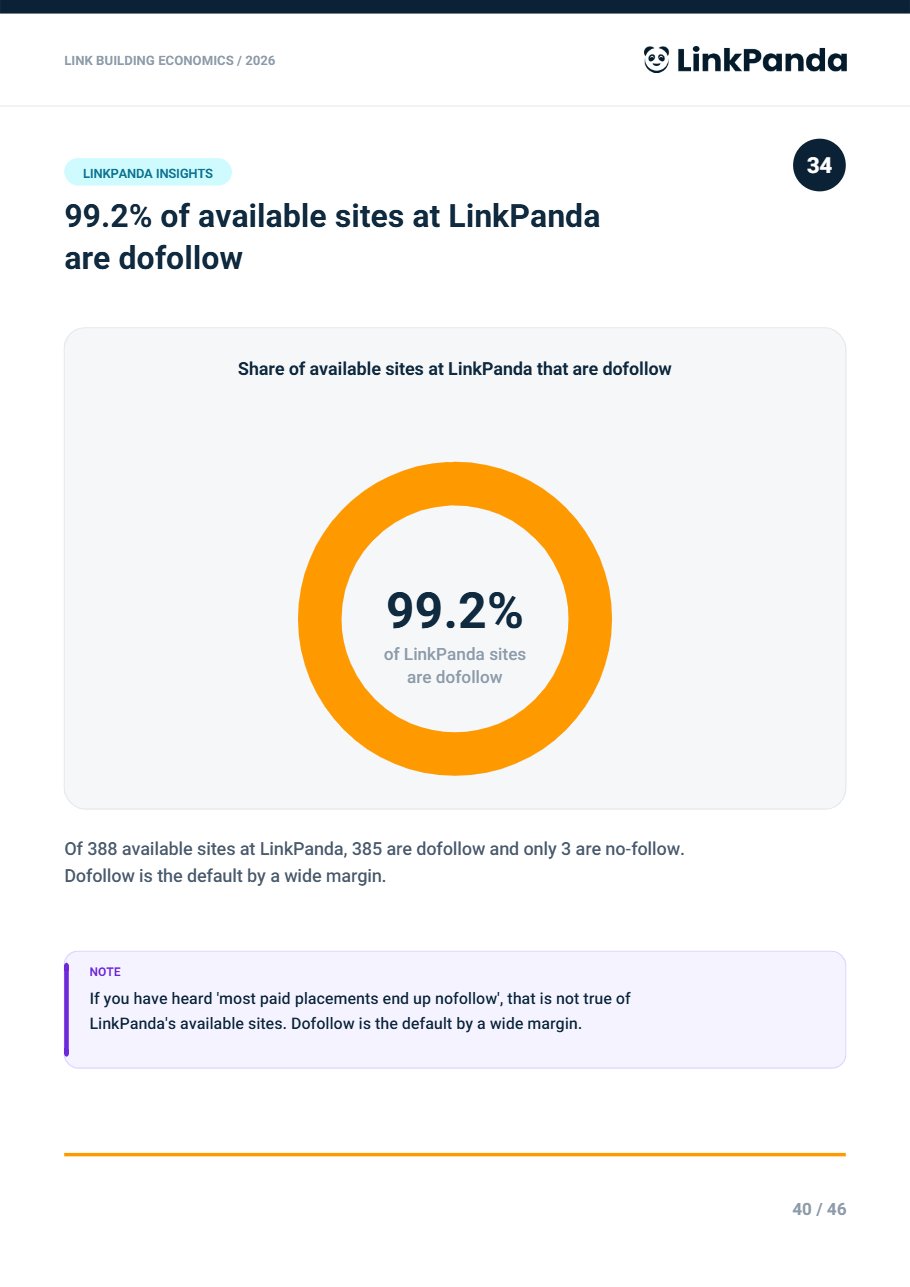
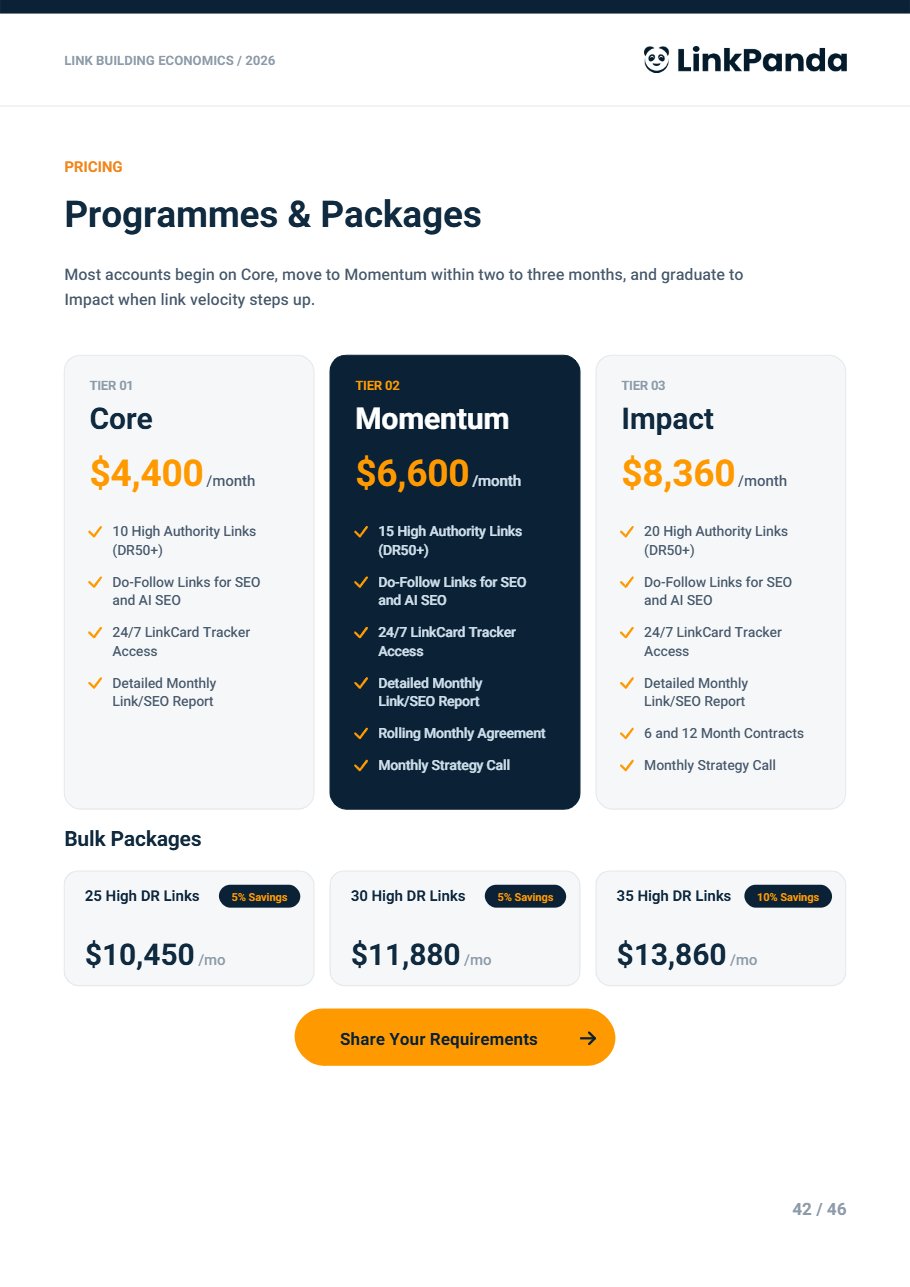
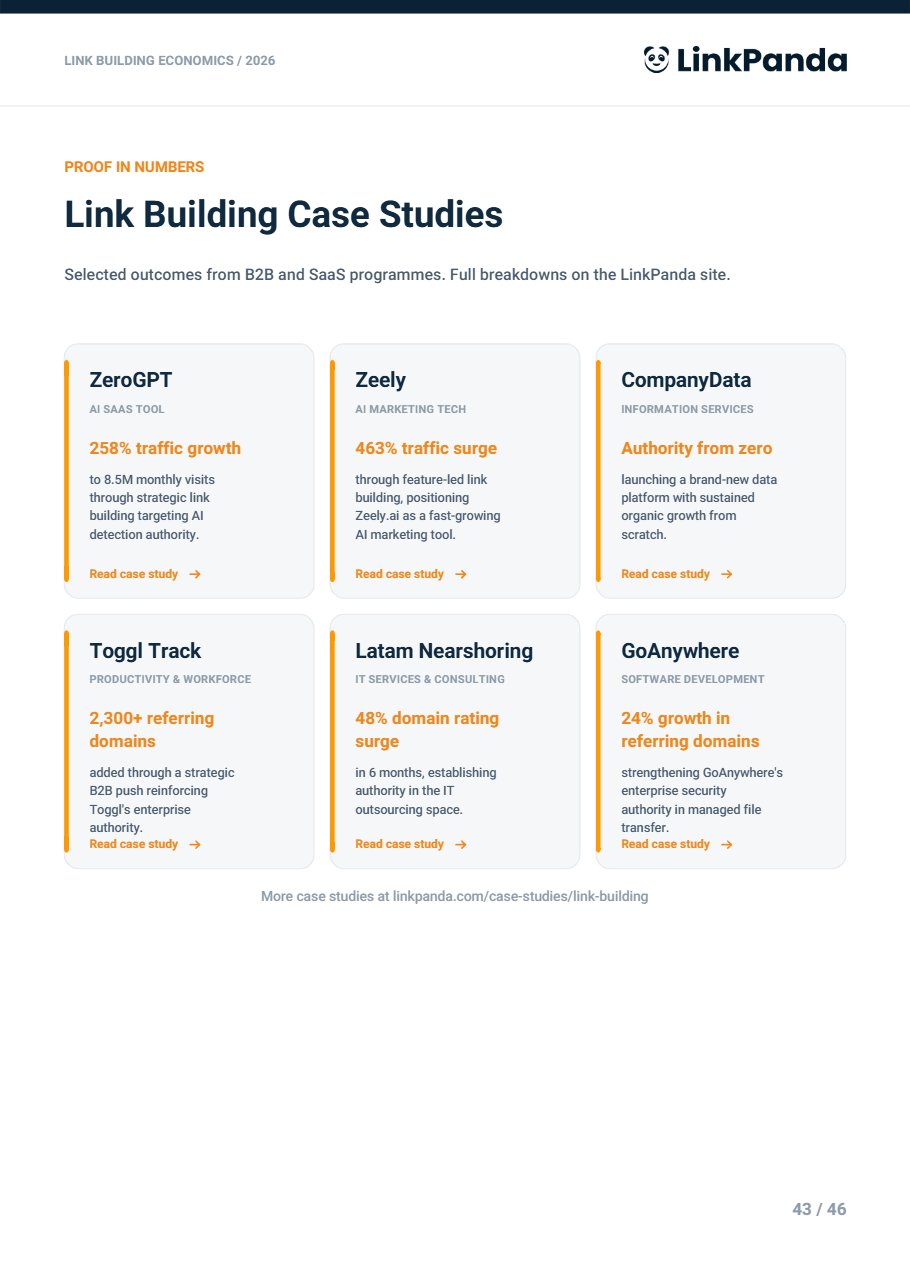
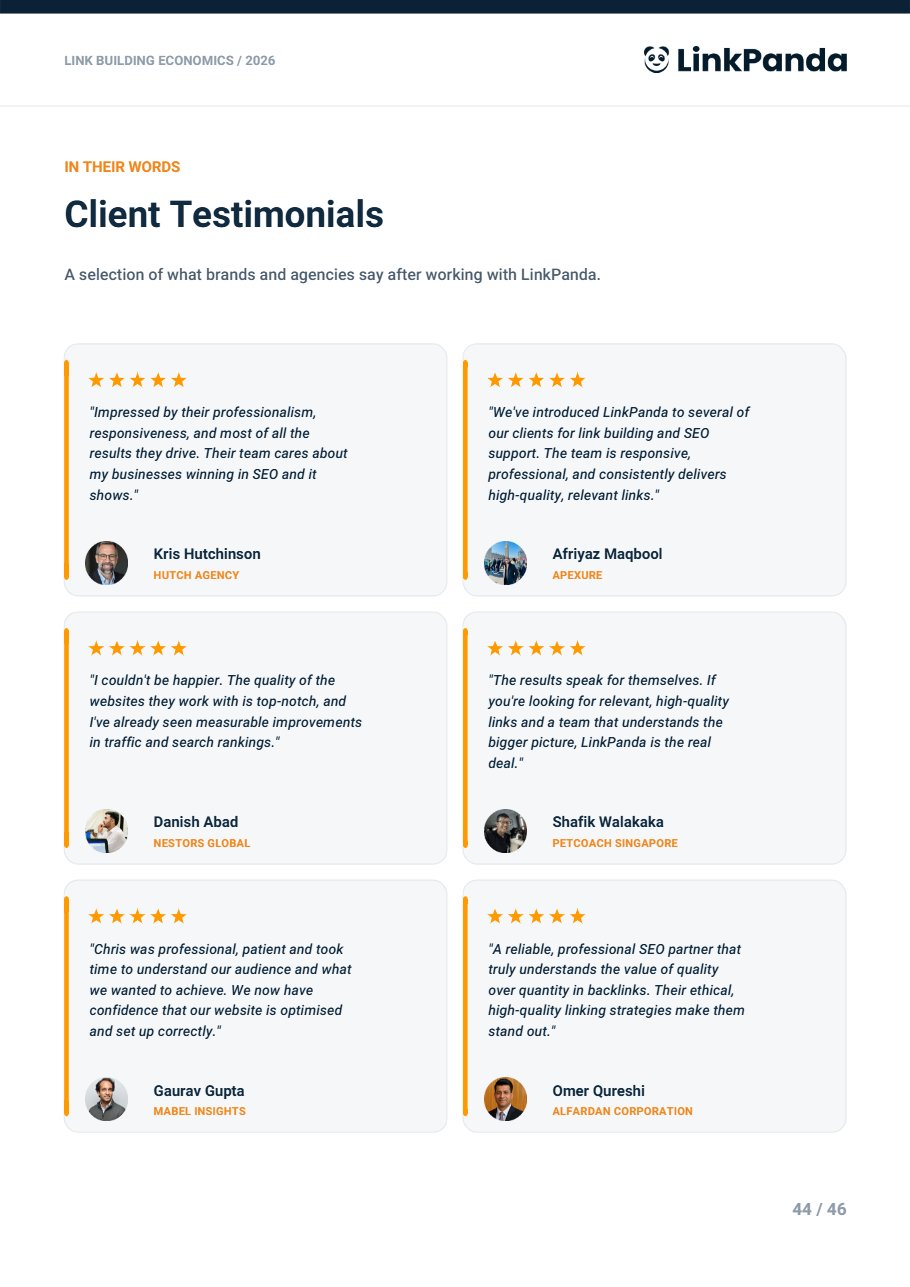
Table of Contents
- How Backlinks Affect Rankings
- Link Building Costs and Pricing
- Most Effective Link Building Tactics
- Outreach and Response Rate Statistics
- Link Building ROI
- AI and Link Building
- Link Building Trends for 2026
- What Our Data From 3,000+ Backlinks Shows
- Key Takeaways
How Backlinks Affect Rankings: The Hard Numbers
Do backlinks still matter in 2026? The studies keep saying yes. And the numbers aren’t subtle.
- The #1 result on Google has 3.8x more backlinks than positions 2-10. This comes from Backlinko’s study of 11.8 million search results – still the largest public dataset on ranking factors. (Backlinko)
- 66.31% of all pages have zero backlinks. Ahrefs analysed over 1 billion pages with Content Explorer. Two-thirds of them had no external links pointing to them at all. (Ahrefs)
- Long-form content (3,000+ words) earns 77.2% more backlinks than short-form articles. Backlinko’s content study found that comprehensive posts attract significantly more links – likely because they’re more useful as reference material. (Backlinko)
None of this is new information. But the consistency across independent studies is what matters – Ahrefs, Backlinko, and Ranktracker all arrive at the same conclusion using different datasets. Backlinks remain the strongest off-page signal Google uses. What’s shifted is how much it costs to earn them.
Two thirds of all web pages have zero backlinks
Ahrefs analysed over 1 billion pages with Content Explorer. Two thirds had no external links pointing to them at all, which means a small number of pages capture nearly all the linking activity online.
The #1 Google result has 3.8x more backlinks
From Backlinko’s study of 11.8 million search results, still the largest public dataset on ranking factors. Position #1 captures dramatically more linking than the rest of the first page combined.
Link Building Costs and Pricing Benchmarks
If you built links in 2023 and haven’t checked pricing since, you’re in for a shock. Costs jumped significantly in 2024 and again in 2025.
- Average cost per quality backlink: $508.95. This comes from editorial.link’s survey of 518 SEO professionals – one of the largest link building surveys published. (editorial.link, 2025)
- Average niche edit / link insertion: $361.44. BuzzStream’s 2025 pricing analysis found niche edits remain cheaper than guest posts, but the gap is narrowing. (BuzzStream, 2025)
- Average guest post link: $364.76 (before vendor markup). With agency or vendor markup, this typically pushes to $700-$3,000 depending on the site’s authority. (BuzzStream, 2025)
- Digital PR average cost per link: $750. Higher upfront cost, but campaigns typically earn multiple links per asset – making the effective CPL competitive with manual outreach. (BuzzStream, 2025)
- Overall, link building costs have risen 20-35% since 2022. AI-generated content flooding the web has made editors pickier. Sites that accept guest contributions now apply heavier editorial filters – which means more work per placement. (editorial.link, 2025)
- 46.5% of respondents spend $5,000-$10,000/month on link building. This comes from uSERP’s State of Link Building report. Another 18% spend over $10,000/month. (uSERP, 2025)
- Average minimum monthly budget for competitive niches: $8,406. If you’re in finance, SaaS, or legal – expect to spend more than average to compete. (editorial.link, 2025)
- Agencies allocate 32.1% of SEO budget to link building; in-house teams allocate 36.03%. Either way, link building is the single largest line item in most SEO budgets. (editorial.link, 2025)
The average quality backlink costs $509
From editorial.link’s survey of 518 SEO professionals, one of the largest link building surveys ever published. Effective pricing rises with vertical competition and editorial standards.
Most Effective Link Building Tactics in 2026
Ask most link builders what they do, and the answer is guest posting. Ask them what works best, and they’ll tell you digital PR. That gap between default behaviour and optimal behaviour is worth understanding.
- Digital PR is the most effective tactic, voted #1 by 48.6% of SEO professionals. Editorial.link’s 518-expert survey placed it well ahead of guest posting (16%) and linkable assets (12%). (editorial.link, 2025)
- 67.3% of marketers use digital PR as their primary link building method. The gap between digital PR usage and guest posting is narrowing – three years ago, guest posting dominated by a wider margin. (DemandSage, 2025)
- 85.3% of guest posting sites are low quality (DR below 40, under 10K monthly traffic). This is why vetting matters. Most sites that accept guest posts freely aren’t worth the placement. (BuzzStream, 2025)
- Websites with guest post backlinks have a 30% higher probability of earning featured snippets. Guest posts do more than pass authority – they help establish topical relevance that Google’s systems pick up on. (SEO Sandwitch, 2025)
- Creating linkable assets is considered most effective by 12% of experts. Tools, calculators, original research, and data visualisations continue to attract links passively – but require higher upfront investment. (editorial.link, 2025)
Digital PR rated the most effective link building tactic
editorial.link’s 518-expert survey ranks digital PR well ahead of guest posting and linkable assets as the most effective link building tactic in 2026.
Outreach and Response Rate Statistics
Link building is an outreach game. And the outreach numbers are sobering. Backlinko and Pitchbox ran the largest email outreach study ever published – 12 million emails. Here’s what they found.
- Only 8.5% of outreach emails get a reply. Backlinko and Pitchbox analysed 12 million outreach emails to arrive at this number. That means roughly 1 in 12 emails generates any response at all. (Backlinko/Pitchbox)
- Personalised subject lines boost response rates by 30.5%. Using the recipient’s name, site name, or a reference to their recent content makes a measurable difference. (Backlinko/Pitchbox)
- Personalised email body increases responses by 32.7%. Generic templates get ignored. Tailored pitches that reference specific articles or topics perform significantly better. (Backlinko/Pitchbox)
- A single follow-up email boosts response rate by 65.8%. Most people give up after the first email. One well-timed follow-up dramatically improves your odds. (Backlinko/Pitchbox)
- Sending to multiple contacts increases response rate by 93%. If you’re only emailing one person at a site, you’re leaving results on the table. (Backlinko/Pitchbox)
- Average time from pitch to guest post publication: 3 weeks. Between editorial review, revisions, and scheduling, even accepted pitches take time to go live. (SEO Sandwitch, 2025)
One follow-up email boosts reply rates by 65.8%
Most senders give up after the first email. A single, well-timed follow-up dramatically improves the odds, and the cost is essentially zero. Reply index, no follow-up baseline = 100.
Only 8.5% of outreach emails get any reply at all
Backlinko and Pitchbox analysed 12 million outreach emails. Roughly 1 in 12 generates any response at all, which is why volume and personalisation both matter.
Link Building ROI: What Returns Can You Expect?
The question clients always ask: “Is this worth it?” The short answer is yes – but with caveats around timelines and expectations.
- 78% of SEO professionals report positive ROI from link building. This is from editorial.link’s 518-expert survey – nearly 4 in 5 practitioners say it pays for itself. (editorial.link, 2025)
78% of SEO professionals report positive ROI from link building
Nearly four in five practitioners say link building pays for itself. The remaining 22% mostly report break-even or no clear measurement, not losses.
AI and Link Building: What the Data Shows
Everyone wants to know whether AI is going to replace link builders. The data says: not yet, and probably not soon. But AI is changing the economics in ways that matter.
- Editorial rejection rates have risen 33% since 2023, partly driven by AI content saturation. Editors are more sceptical of pitches because they’re receiving more AI-generated submissions. This raises the bar for everyone – including those writing original content. (PressWhizz, 2025)
- 73.2% of link builders believe backlinks influence AI search result visibility. As AI-powered search grows, practitioners believe that backlink authority affects which sources get cited in AI responses. (editorial.link, 2025)
There’s a real tension here. AI makes it trivially easy to produce content and send outreach emails. But editors have responded by raising the bar. The result is more pitches competing for fewer slots – which is why costs keep climbing even as production gets cheaper.
Link Building Trends to Watch in 2026
- 80.9% of link builders believe link building will become harder and more expensive in the next 2-3 years. Rising costs, stricter editorial standards, and Google’s evolving algorithm are all contributing factors. (editorial.link, 2025)
- 56% of marketers plan to increase link building investment in the next 12 months. Despite rising costs, more than half the industry is doubling down – a signal that returns are strong enough to justify the spend. (BuzzStream, 2025)
- 80.9% believe unlinked brand mentions influence organic rankings. This is driving interest in brand monitoring and mention reclamation as a link building tactic. (editorial.link, 2025)
- Nearly 80% believe nofollow links still affect search rankings. The old binary of “dofollow = value, nofollow = nothing” is dead. Most practitioners now treat nofollow links as contributing signals. (editorial.link, 2025)
What Our Data From 3,000+ Backlinks Shows
The stats above come from surveys and studies. Useful for benchmarks. But we wanted to share what our own numbers look like – drawn from 3,000+ placements across 800+ client campaigns.
Our average DR is higher than the industry benchmark
The average placement in our campaigns sits at DR 55+. Most link building services advertise “quality links” starting at DR 40. We stopped accepting anything below that threshold two years ago because the campaign data was clear: DR sub-40 links rarely produced measurable ranking movement for competitive terms.
BuzzStream’s analysis found 85.3% of guest posting sites fall below DR 40. Those sites aren’t in our network.
Niche relevance beats raw authority
We’ve watched this play out across hundreds of campaigns. A DR 50 link from a site in the client’s vertical moves rankings faster than a DR 80 link from a general lifestyle magazine. The relevance signal matters more than the raw authority number – and our placement data confirms it consistently.
Concentrated link velocity works
Clients sometimes ask us to spread links across their entire domain. We push back. The campaigns that produce the fastest, most predictable gains are the ones that concentrate 8-12 links per month on a single target URL rather than scattering 20+ links across different pages. The focused approach wins every time in our data.
PetCoach SG: position 20 to #1 with 7 links
PetCoach SG runs dog training courses in Singapore. When they came to us, “dog training singapore” had them stuck at position 20. We placed 7 backlinks – all from niche-relevant, high-authority sites. Five months later, they were #1. Referring domains doubled from 47 to 94.
“This is a super exciting milestone for us because not only did we reach our target for ranking on the first page for a valuable keyword, we’re actually in first position.” – Shafik Walakaka, PetCoach SG
Smartminded: DR 47 to 56 in 9 months
Smartminded publishes SaaS reviews and needed stronger domain authority to compete in that space. We placed 18 backlinks averaging DR 69 – every single one approved by the client before going live. Domain rating climbed from 47 to 56. Referring domains grew 11.15%.
B2B SaaS client: 187% more traffic, 156% better leads
A mid-market SaaS platform was getting traffic but the leads were poor. We ran a 6-month link building campaign targeting high-intent keywords in their niche. Organic traffic went up 187%, but the real win was lead quality – up 156%, with conversions jumping 2.5x. Good links don’t just bring volume. They bring the right people.
Key Takeaways for Link Builders and Agencies
That’s 34 statistics. If you don’t have time to re-read them all, here’s what matters most:
Backlinks still dominate rankings. The correlation between backlinks and Google rankings hasn’t weakened. Pages without backlinks get virtually zero organic traffic. This hasn’t changed, and nothing in Google’s recent updates suggests it will.
Costs are rising and won’t stop. Average cost per link crossed $500 in 2025. AI content saturation is making editorial placements harder to secure. Budget accordingly – if you’re spending less than $5,000/month, you’re below the industry median.
Digital PR delivers the best ROI. It’s more expensive per campaign but earns more links per asset. If you’re still relying exclusively on manual guest post outreach, you’re leaving value on the table.
Quality has won the quality vs. quantity debate. Most practitioners now prioritise quality. Volume-based link building is a relic. Focus on fewer, higher-authority, niche-relevant placements.
Outreach is a numbers game – but personalisation changes the odds. At 8.5% response rates, you need volume. But personalised emails perform 30%+ better. The winning combination is scale plus relevance.
AI hasn’t replaced link builders. Few teams have integrated AI into their link building workflow. The work is still fundamentally relationship-driven. AI helps with content creation and prospecting, but the human elements – outreach, negotiation, quality judgment – remain manual.
Specialists will pull further ahead. Link building is getting harder. Experienced practitioners already build far more links than beginners – and that gap will widen as editorial standards tighten. If link building isn’t what your team does every day, partnering with people who do it full-time is the pragmatic move.
Sources
All statistics in this post are sourced from published research. Primary sources include:
- editorial.link – Survey of 518 SEO professionals (2025)
- Backlinko / Pitchbox – Analysis of 12 million outreach emails
- Backlinko – Study of 11.8 million Google search results
- Ahrefs – Content Explorer analysis of 1 billion+ pages
- BuzzStream – Link building pricing and tactics analysis (2025)
- uSERP – State of Link Building report (2025)
- DemandSage – Digital PR and link building compilation (2025)
Individual source links are provided inline with each statistic. If you spot an error or an outdated figure, let us know – we update this post as new data becomes available.
Sources
External Sources

Backlinko The #1 result on Google has 3.8x more backlinks than positions 2-10.
The #1 result on Google has 3.8x more backlinks than positions 2-10. This comes from Backlinko\’s study of 11.8 million search results – still the largest public dataset on ranking factors. (Backlinko)
Backlinko Long-form content (3,000+ words) earns 77.2% more backlinks than short-form articles.
Long-form content (3,000+ words) earns 77.2% more backlinks than short-form articles. Backlinko\’s content study found that comprehensive posts attract significantly more links – likely because they\’re more useful as refe
editorial.link, 2025 Average cost per quality backlink: $508.95.
Average cost per quality backlink: $508.95. This comes from editorial.link\’s survey of 518 SEO professionals – one of the largest link building surveys published. (editorial.link, 2025)
BuzzStream, 2025 Average niche edit / link insertion: $361.44.
Average niche edit / link insertion: $361.44. BuzzStream\’s 2025 pricing analysis found niche edits remain cheaper than guest posts, but the gap is narrowing. (BuzzStream, 2025)
DemandSage, 2025 67.3% of marketers use digital PR as their primary link building method.
67.3% of marketers use digital PR as their primary link building method. The gap between digital PR usage and guest posting is narrowing – three years ago, guest posting dominated by a wider margin. (DemandSage, 2025)
Websites with guest post backlinks have a 30% higher probability of earning featured snippets. Guest posts do more than pass authority – they help establish topical relevance that Google\’s systems pick up on. (SEO Sandwi
Backlinko/Pitchbox Only 8.5% of outreach emails get a reply.
Only 8.5% of outreach emails get a reply. Backlinko and Pitchbox analysed 12 million outreach emails to arrive at this number. That means roughly 1 in 12 emails generates any response at all. (Backlinko/Pitchbox)
PressWhizz, 2025 Editorial rejection rates have risen 33% since 2023, partly driven by AI content saturation.
Editorial rejection rates have risen 33% since 2023, partly driven by AI content saturation. Editors are more sceptical of pitches because they\’re receiving more AI-generated submissions. This raises the bar for everyone
Internal References
About The Author

Waseem Bashir
Waseem Bashir is a Strategic Advisor at LinkPanda and the CEO and Founder of Apexure. With over a decade of experience in building high-converting landing pages, he has collaborated with Fortune 500 leaders and helped businesses optimize their conversion strategies. Having worked with both free and premium landing page builder tools, he understands which solutions best fit different business needs and growth goals.
You May Also Like
Link Reclamation: How to Find and Recover Lost Backlinks
23 Best Tech Startups in Finland: The Nordic’s Startup Hall of Fame

Best Enterprise SEO Agency Picks for 2026

Best AI SEO Tools for 2026 (Reviewed and Compared)
Best Link Building Tools for 2026 (Reviewed and Compared)
Top SEO Companies & Agencies in the USA
The 15 Best SEO Agencies in the UK (2026)
Backlinks vs. Referring Domains: The Metric That Actually Predicts Rankings
How to Build a Global SEO Strategy That Actually Scales

Getting Cited by ChatGPT and Perplexity: A Practical SEO Playbook

How AI Overviews Are Rewriting the Rules of Link Building in 2026